


-
Book Overview & Buying
-
Table Of Contents

Spring System Design in Practice
By :


Spring System Design in Practice
By:
Overview of this book
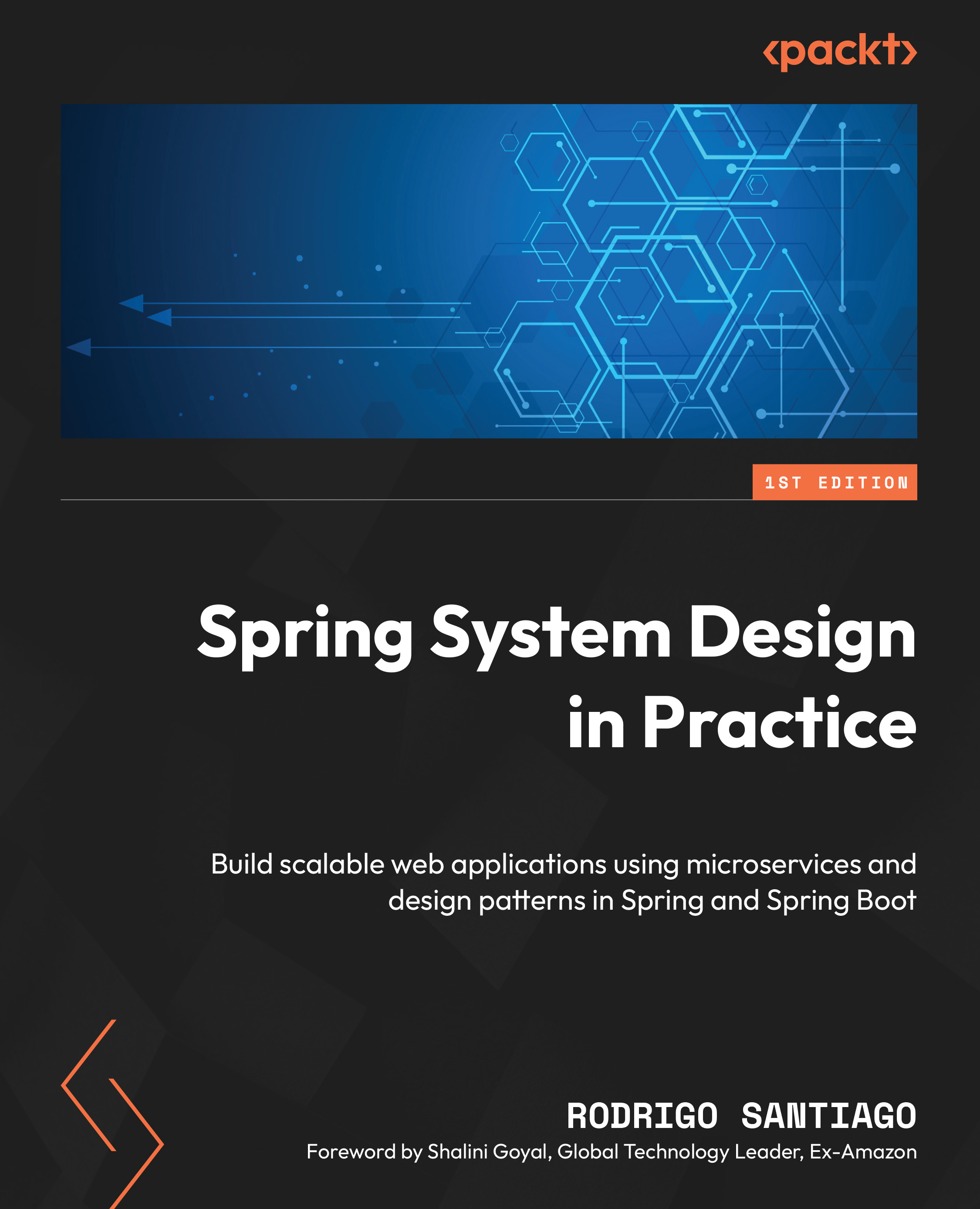
Software system design goes beyond just writing code—it requires a structured approach to translating real-world requirements into scalable, maintainable solutions. With Rodrigo Santiago’s hands-on mentoring style and Java Spring expertise, he makes system design accessible to developers at all levels.
Spring System Design in Practice guides you through building robust software architectures with Spring. From breaking down complex business needs into actionable use cases to implementing services using Spring Boot, this book equips you with the tools and best practices needed for developing secure, high-performance applications. You'll explore inter-service communication, security, and aspect-oriented programming to streamline development. Covering microservices architecture, the book demonstrates how to create self-configuring, resilient, and event-driven services that integrate seamlessly into the cloud. Through hands-on experience, you'll apply best practices to enhance reliability and scalability while tackling complex challenges such as state management, resilience patterns, concurrency issues, and distributed transactions—including bottlenecks related to asynchronous and reactive programming.By the end of this book, you'll have the confidence to analyze system requirements and design well-structured, scalable architectures.
Table of Contents (19 chapters)
Preface


Part 1: Foundations for System Design

 Free Chapter
Chapter 1: What are the Product Requirements?
Chapter 2: Sorting Complex Requirements into Features, Use Cases, and Stories
Chapter 3: Defining Domains for Your Application
Chapter 4: Defining Services for Your Domains
Part 2: Designing Great Spring Services
Chapter 5: Writing Your Services – Introducing REST APIs with the Spring Framework
Chapter 6: Translating Business Requirements into Well-Designed Spring APIs
Chapter 7: Handling Data and Evolving Your Microservice
Part 3: Security, Performance, and Scalability
Chapter 8: Securing Services with Spring Security and OAuth 2.0
Chapter 9: High-Performance Secure Communication Between Spring Services
Chapter 10: Building Asynchronous, Event-Driven Systems With NoSQL Databases
Part 4: Orchestrating Resilient Services
Chapter 11: Launching Your Self-Organizing Microservice Cloud
Chapter 12: Optimizing Your Services
Index


