


-
Book Overview & Buying
-
Table Of Contents

React and React Native - Fifth Edition
By :


React and React Native
By:
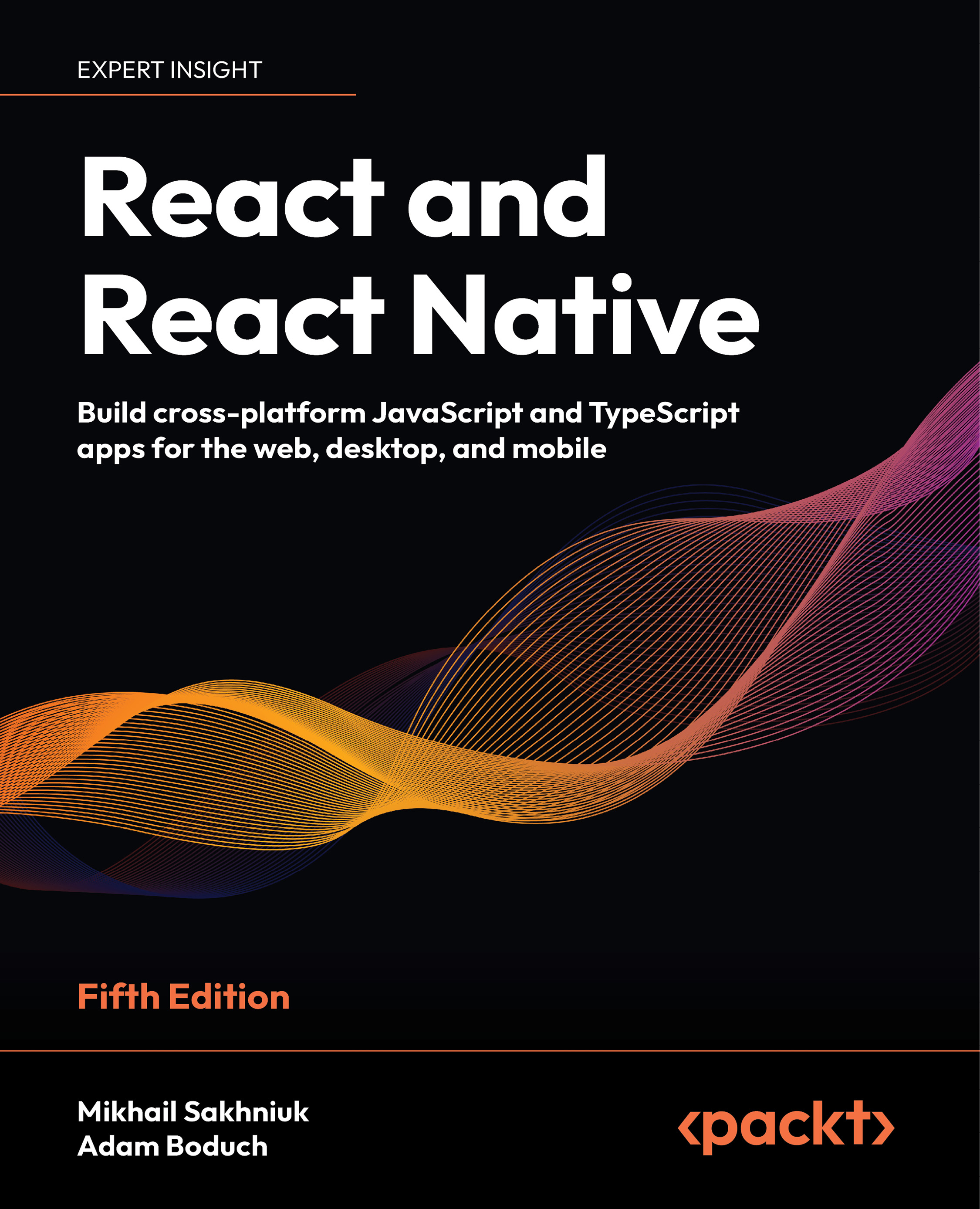
Overview of this book
Welcome to your big-picture guide to the React ecosystem.
If you’re new to React and looking to become a professional React developer, this book is for you. This updated fifth edition reflects the current state of React, including React framework coverage as well as TypeScript.
Part 1 introduces you to React. You’ll discover JSX syntax, hooks, functional components, and event handling, learn techniques to fetch data from a server, and tackle the tricky problem of state management. Once you’re comfortable with writing React in JavaScript, you’ll pick up TypeScript development in later chapters.
Part 2 transitions you into React Native for mobile development. React Native goes hand-in-hand with React. With your React knowledge behind you, you’ll appreciate where and how React Native differs as you write shared components for Android and iOS apps. You’ll learn how to build responsive layouts, use animations, and implement geolocation.
By the end of this book, you’ll have a big-picture view of React and React Native and be able to build applications with both.
Table of Contents (34 chapters)
Preface


Part 1: React
 Free Chapter
Why React?
Rendering with JSX
Understanding React Components and Hooks
Event Handling in the React Way

Crafting Reusable Components
Type-Checking and Validation with TypeScript
Handling Navigation with Routes
Code Splitting Using Lazy Components and Suspense
User Interface Framework Components
High-Performance State Updates
Fetching Data from a Server
State Management in React
Server-Side Rendering
Unit Testing in React
Part 2: React Native
Why React Native?
React Native under the Hood
Kick-Starting React Native Projects
Building Responsive Layouts with Flexbox
Navigating Between Screens
Rendering Item Lists
Geolocation and Maps
Collecting User Input
Responding to User Gestures
Showing Progress
Displaying Modal Screens
Using Animations
Controlling Image Display
Going Offline
Unlock Your Book’s Exclusive Benefits
Other Books You May Enjoy
Index


