


-
Book Overview & Buying
-
Table Of Contents

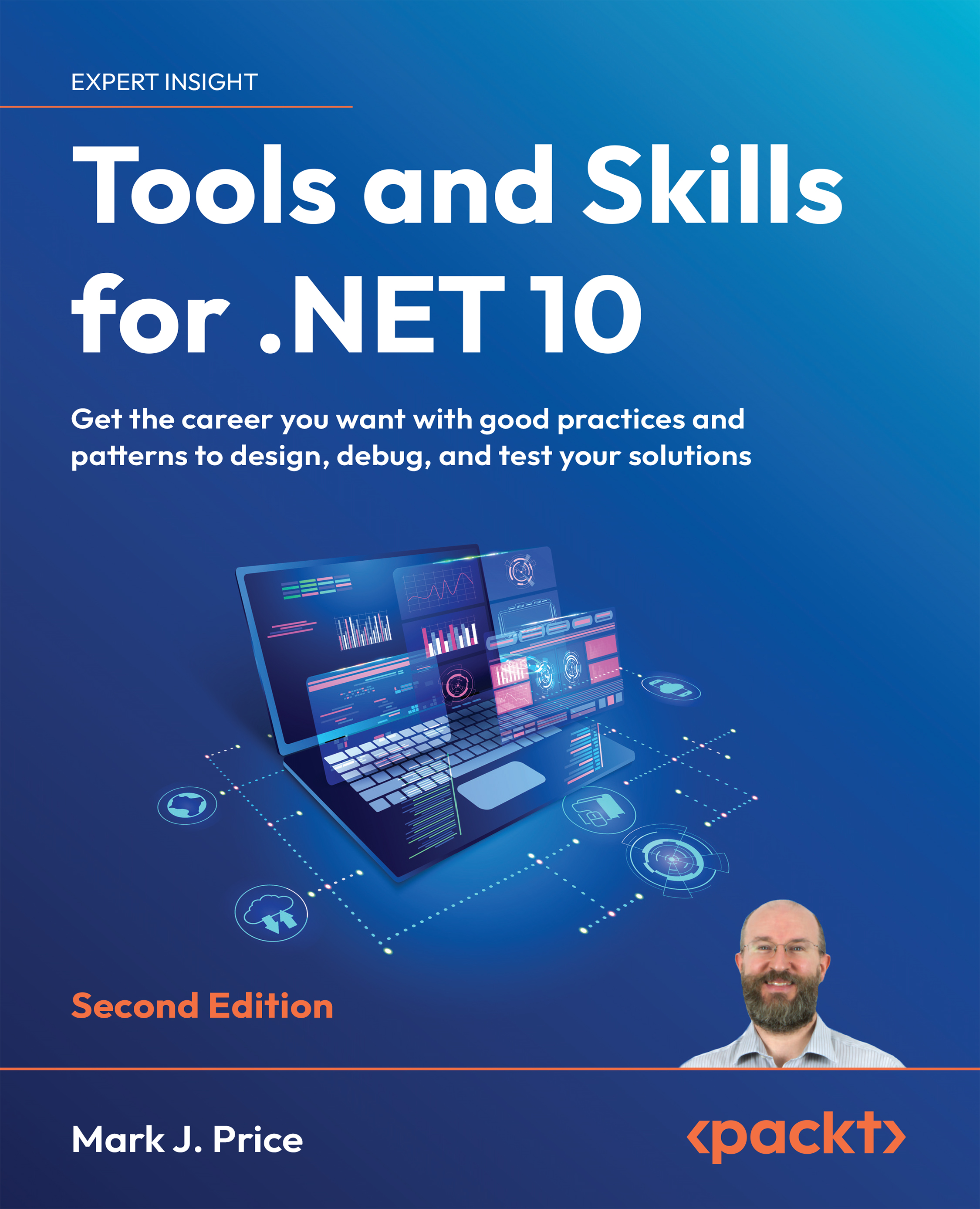
Tools and Skills for .NET 10 - Second Edition
By :


Tools and Skills for .NET 10
By:
Overview of this book
.NET is more powerful—and more complex—than ever. As the ecosystem evolves, so do the expectations from developers. Mastering the tools and patterns of professional .NET development can be the difference between simply shipping code and delivering resilient, scalable software. Tools and Skills for .NET 10 is a practical guide to leveling up in today’s .NET world, offering both hard technical skills and career strategies to help you thrive.
Inside, you’ll learn how to manage codebases with Git and implement debugging and memory analysis techniques that save hours of guesswork. The book also covers best practices for writing and maintaining documentation for your code, services, and APIs, which is crucial for team collaboration. You’ll explore cryptography for securing data and concurrency for building responsive apps. Further chapters explore dependency injection, testing for performance and reliability, and packaging your apps in Docker containers.
By the end of this book, you’ll be equipped not only with technical skills but also with the confidence to apply them in real environments. Whether you're aiming for a promotion, switching jobs, or preparing for technical interviews, you'll have the skills and the language to present yourself as a capable, well-rounded .NET developer ready for anything the industry throws at you.
Table of Contents (23 chapters)
Preface


 Free Chapter
Introducing Tools and Skills for .NET
Making the Most of the Tools in Your Code Editor
Source Code Management Using Git
Debugging and Memory Troubleshooting
Logging, Tracing, and Metrics for Observability
Documenting Your Code, APIs, and Services
Observing and Modifying Code Execution Dynamically
Protecting Data and Apps Using Cryptography
Multitasking and Concurrency
Dependency Injection, Containers, and Service Lifetime
Unit Testing and Mocking

Integration and Security Testing
Benchmarking Performance, Load, and Stress Testing
Functional and End-to-End Testing of Websites and Services
Containerization Using Docker
Cloud-Native Development Using Aspire
Design Patterns and Principles
Software and Solution Architecture Foundations
Your Career, Teamwork, and Interviews
Epilogue
Unlock Your Exclusive Benefits
Index


