


-
Book Overview & Buying
-
Table Of Contents

React Key Concepts - Second Edition
By :


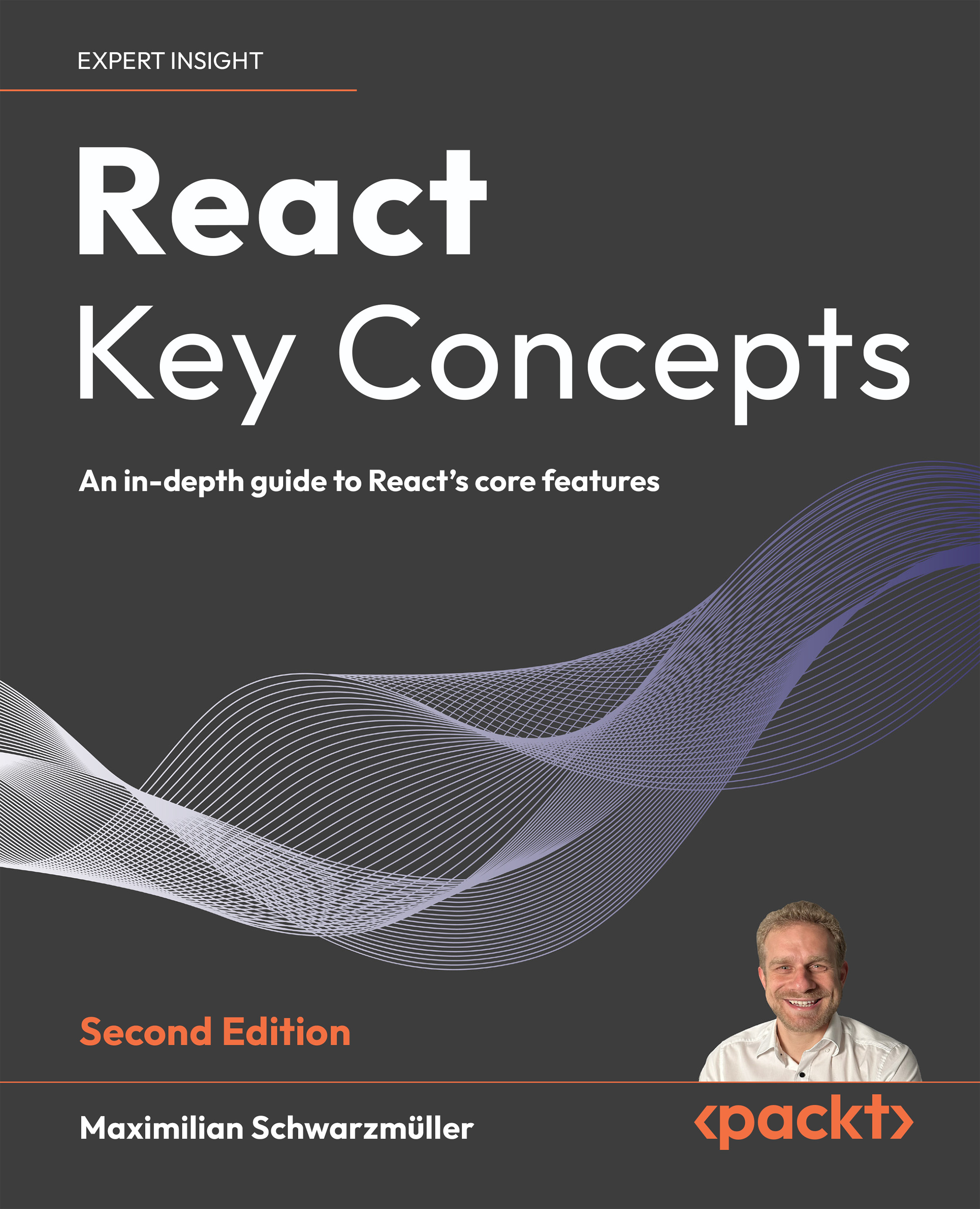
React Key Concepts
By:
Overview of this book
Maximilian Schwarzmüller is a bestselling instructor who has helped more than three million students worldwide learn how to code. His bestselling React video course, “React – The Complete Guide”, has over nine hundred thousand students on Udemy.
Max has written this quick-start reference that distills the core concepts of React. Simple explanations, relevant examples, and step-by-step derivations make this guide the ideal resource for busy developers. In this second edition, Max guides you through changes brought by React 19, including the new use() hook, form actions, and how to think about React on the server.
This book will support you through your next React projects in giving you a behind-the-scenes understanding of the framework – whether you've just finished Max's video course and are looking for a handy reference, or you’re using a variety of other learning materials and need a single study guide to bring everything together.
You’ll find full solutions to all end-of-chapter quizzes and exercises in the book’s GitHub repository.
Table of Contents (21 chapters)
Preface


 Free Chapter
React – What and Why
Understanding React Components and JSX
Components and Props
Working with Events and State
Rendering Lists and Conditional Content

Styling React Apps
Portals and Refs
Handling Side Effects
Handling User Input & Forms with Form Actions
Behind the Scenes of React and Optimization Opportunities
Working with Complex State
Building Custom React Hooks
Multipage Apps with React Router
Managing Data with React Router
Server-side Rendering & Building Fullstack Apps with Next.js
React Server Components & Server Actions
Understanding React Suspense & The use() Hook
Next Steps and Further Resources
Other Books You May Enjoy


