
Sign In Start Free Trial
Account

Add to playlist

Create a Playlist

Modal Close icon
You need to login to use this feature.
  • Book Overview & Buying Azure for Architects
  • Table Of Contents Toc
Azure for Architects

Azure for Architects

By : Ritesh Modi
3.9 (23)
close
close
Azure for Architects

Azure for Architects

3.9 (23)
By: Ritesh Modi

Overview of this book

Over the years, Azure cloud services has grown quickly, and the number of organizations adopting Azure for their cloud services is also gradually increasing. Leading industry giants are finding that Azure fulfills their extensive cloud requirements. This book will guide you through all the important and tough decision-making aspects involved in architecturing a Azure public cloud for your organization. The book starts with an extensive introduction to all the categories of designs available with Azure. These design patterns focus on different aspects of cloud such as high availability, data management, and so on. Gradually, we move on to various aspects such as building your cloud structure and architecture. It will also include a brief description about different types of services provided by Azure, such as Azure functions and Azure Analytics, which can prove beneficial for an organization. This book will cover each and every aspect and function required to develop a Azure cloud based on your organizational requirements. By the end of this book, you will be in a position to develop a full-fledged Azure cloud.
Table of Contents (13 chapters)
close
close

What is Azure?

According to Wikipedia:

"Azure is a cloud computing service created by Microsoft for building, deploying, and managing applications and services through a global network of Microsoft-managed data centers. It provides software as a service, platform as a service and infrastructure as a service and supports many different programming languages, tools and frameworks, including both Microsoft-specific and third-party software and systems."

Azure obviously provides all the benefits of cloud, but it is also an open and flexible cloud. Azure cloud supports a variety of operating systems, languages, tools, platforms, utilities, and frameworks. It supports both Linux and Windows, SQL Server, MySQL, Postgres and more, C#, Python, Java, Node.js, Bash, and more languages, MongoDB and DocumentDB NoSQL databases, and Jenkins to VSTS as continuous integration tools. The whole idea behind this ecosystem is to enable users to have their choice and freedom of language, their choice of platform and operating system, their choice of databases, and their choice of storage, their choice of tools and utilities. Users should not be constrained from the technology perspective, instead, they should be able to build and focus on their business solution and Azure provides them with world-class technology stack. Azure is compatible with the user's choice of technology stack.

For example, Azure provides availability of all popular (open source or commercial) database environments. Azure provides Azure SQL, MySQL, and Postgres PaaS service. It provides a Hadoop ecosystem and offers HDInsight, a 100% Apache Hadoop-based PaaS services. It also provides Hadoop on Linux VM implementation for customers who prefer IaaS approach. Azure also provides a Redis cache service and supports other popular database environments, such as MongoDB, Couchbase, Oracle, and many others as an IaaS implementation.

The number of services is increasing by the day and the following figure just provides the rich set of services provided by Azure. Not all services are shown here and it keeps on growing.
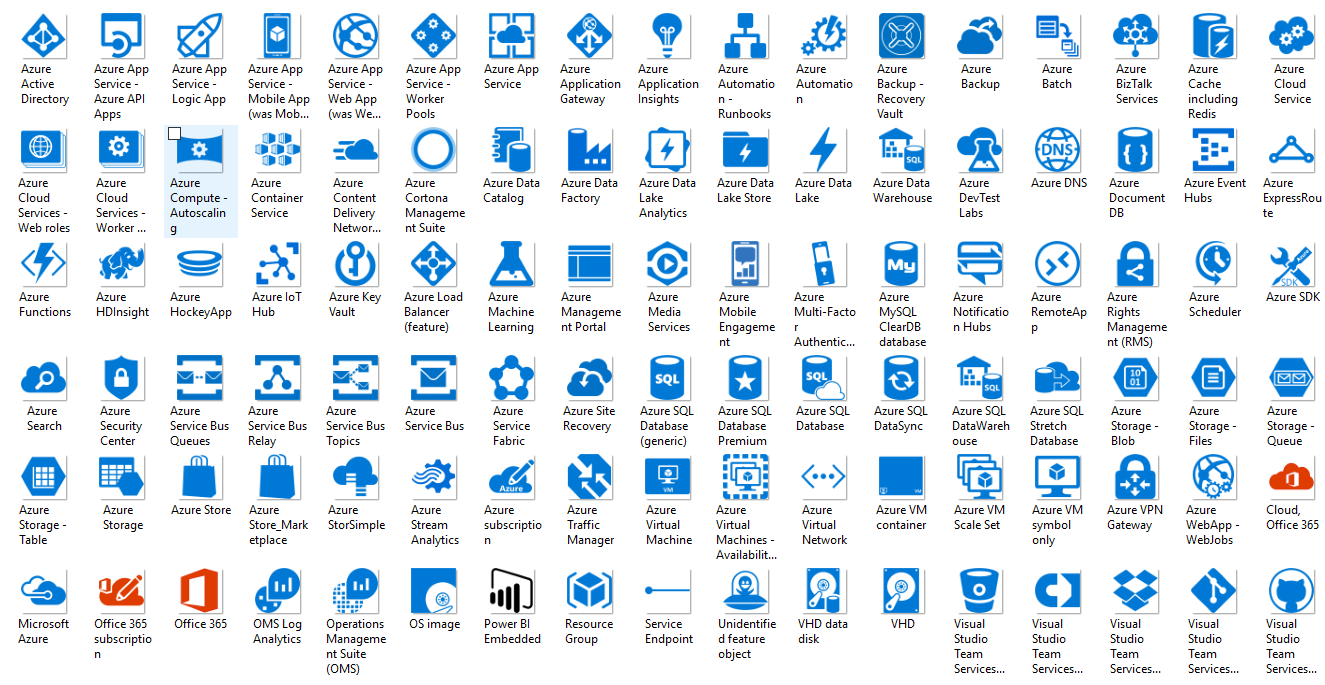
Azure services

Azure also provides a unique cloud computing paradigm--the Hybrid cloud. Hybrid cloud refers to a deployment strategy in which a subset of services are deployed on a public cloud, while other services are deployed in an on-premise private cloud or data center. There is a Virtual Private Network (VPN) connection between both the public and private cloud. Azure provides users the flexibility to divide and deploy their workload on both public cloud and on-premise data center. 

Azure has data centers across the globe. Azure combines these data centers into regions. Each region has multiple data centers to ensure that recovery from disasters is quick and efficient. At the time of writing, there are 38 regions across the globe. This provides users the flexibility to deploy their services at their choice of location and regions. They can also combine these regions to deploy a solution that is disaster resistant and deployed near their customer base.
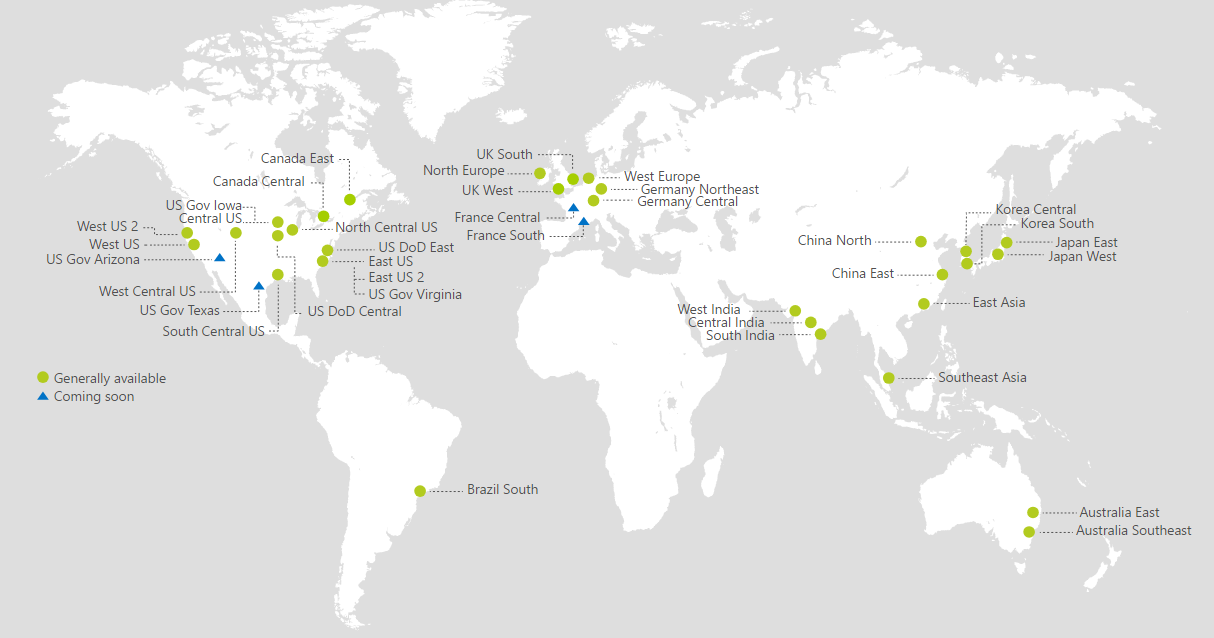
Azure regions and locations
Azure also has separate clouds for China, Germany, and the governments.
CONTINUE READING
83
Tech Concepts
36
Programming languages
73
Tech Tools
Icon Unlimited access to the largest independent learning library in tech of over 8,000 expert-authored tech books and videos.
Icon Innovative learning tools, including AI book assistants, code context explainers, and text-to-speech.
Icon 50+ new titles added per month and exclusive early access to books as they are being written.
Azure for Architects
notes
bookmark Notes and Bookmarks search Search in title playlist Add to playlist download Download options font-size Font size

Change the font size

margin-width Margin width

Change margin width

day-mode Day/Sepia/Night Modes

Change background colour

Close icon Search
Country selected

Close icon Your notes and bookmarks

Confirmation

Modal Close icon
claim successful

Buy this book with your credits?

Modal Close icon
Are you sure you want to buy this book with one of your credits?
Close
YES, BUY

Submit Your Feedback

Modal Close icon
Modal Close icon
Modal Close icon