Sign In Start Free Trial
Account

Add to playlist

Create a Playlist

Modal Close icon
You need to login to use this feature.
  • Book Overview & Buying Hands-On Data Preprocessing in Python
  • Table Of Contents Toc
Hands-On Data Preprocessing in Python

Hands-On Data Preprocessing in Python

By : Jafari
5 (20)
close
close
Hands-On Data Preprocessing in Python

Hands-On Data Preprocessing in Python

5 (20)
By: Jafari

Overview of this book

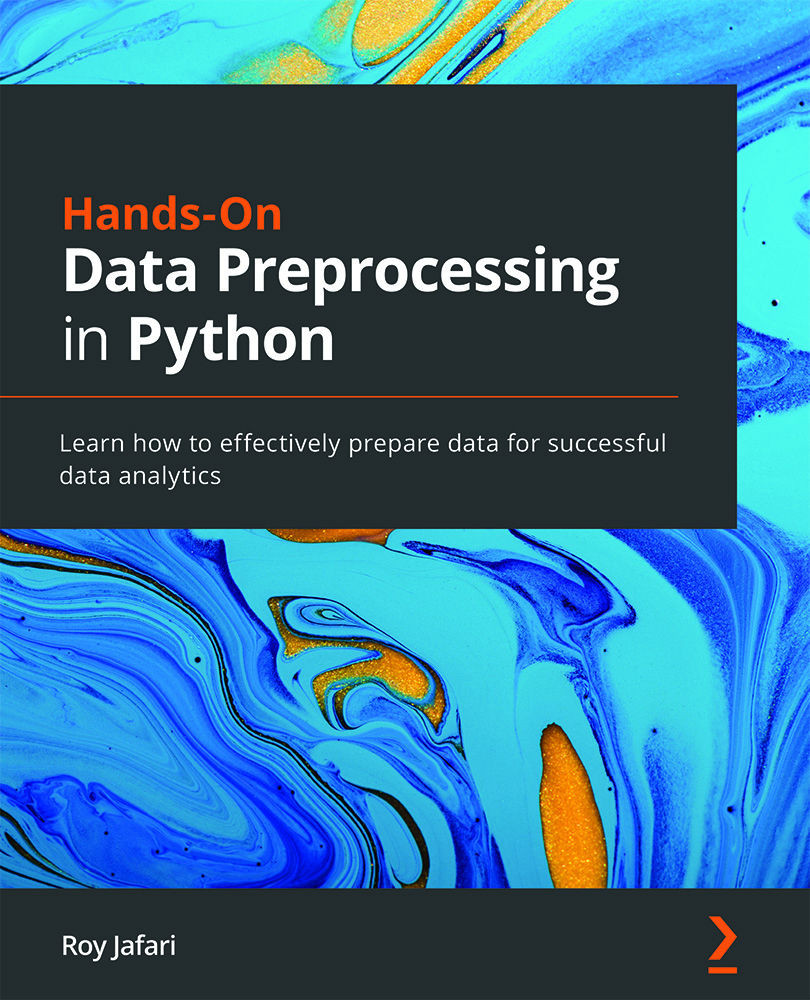
Hands-On Data Preprocessing is a primer on the best data cleaning and preprocessing techniques, written by an expert who’s developed college-level courses on data preprocessing and related subjects. With this book, you’ll be equipped with the optimum data preprocessing techniques from multiple perspectives, ensuring that you get the best possible insights from your data. You'll learn about different technical and analytical aspects of data preprocessing – data collection, data cleaning, data integration, data reduction, and data transformation – and get to grips with implementing them using the open source Python programming environment. The hands-on examples and easy-to-follow chapters will help you gain a comprehensive articulation of data preprocessing, its whys and hows, and identify opportunities where data analytics could lead to more effective decision making. As you progress through the chapters, you’ll also understand the role of data management systems and technologies for effective analytics and how to use APIs to pull data. By the end of this Python data preprocessing book, you'll be able to use Python to read, manipulate, and analyze data; perform data cleaning, integration, reduction, and transformation techniques, and handle outliers or missing values to effectively prepare data for analytic tools.
Table of Contents (24 chapters)
close
close
1
Part 1:Technical Needs
6
Part 2: Analytic Goals
11
Part 3: The Preprocessing
18
Part 4: Case Studies

What this book covers

Chapter 1, Review of the Core Modules of NumPy and Pandas, introduces two of three main modules used for data manipulation, using real dataset examples to show their relevant capabilities.

Chapter 2, Review of Another Core Module – Matplotlib, introduces the last of the three modules used for data manipulation, using real dataset examples to show its relevant capabilities.

Chapter 3, Data – What Is It Really?, puts forth a technical definition of data and introduces data concepts and languages that are necessary for data preprocessing.

Chapter 4, Databases, explains the role of databases, the different kinds, and teaches you how to connect and pull data from relational databases. It also teaches you how to pull data from databases using APIs.

Chapter 5, Data Visualization, showcases some analytics examples using data visualizations to inform you of the potential of data visualization.

Chapter 6, Prediction, introduces predictive models and explains how to use Multivariate Regression and a Multi-Layered Perceptron (MLP).

Chapter 7, Classification, introduces classification models and explains how to use Decision Trees and K-Nearest Neighbors (KNN).

Chapter 8, Clustering Analysis, introduces clustering models and explains how to use K-means.

Chapter 9, Data Cleaning Level I – Cleaning Up the Table, introduces three different levels of data cleaning and covers the first level through examples.

Chapter 10, Data Cleaning Level II – Unpacking, Restructuring, and Reformulating the Table, covers the second level of data cleaning through examples.

Chapter 11, Data Cleaning Level III – Missing Values, Outliers, and Errors, covers the third level of data cleaning through examples.

Chapter 12, Data Fusion and Data Integration, covers the technique for mixing different data sources.

Chapter 13, Data Reduction, introduces data reduction and, with the help of examples, shows how its different cases and versions can be done via Python.

Chapter 14, Data Transformation and Massaging, introduces data transformation and massaging and, through many examples, shows their requirements and capabilities for analysis.

Chapter 15, Case Study 1 – Mental Health in Tech, introduces an analytic problem and preprocesses the data to solve it.

Chapter 16, Case Study 2 – Predicting COVID-19 Hospitalizations, introduces an analytic problem and preprocesses the data to solve it.

Chapter 17, Case Study 3 – United States Counties Clustering Analysis, introduces an analytic problem and preprocesses the data to solve it.

Chapter 18, Summary, Practice Case Studies, and Conclusions, introduces some possible practice cases that users can use to learn in more depth and start creating their analytics portfolios.

CONTINUE READING
83
Tech Concepts
36
Programming languages
73
Tech Tools
Icon Unlimited access to the largest independent learning library in tech of over 8,000 expert-authored tech books and videos.
Icon Innovative learning tools, including AI book assistants, code context explainers, and text-to-speech.
Icon 50+ new titles added per month and exclusive early access to books as they are being written.
Hands-On Data Preprocessing in Python
notes
bookmark Notes and Bookmarks search Search in title playlist Add to playlist download Download options font-size Font size

Change the font size

margin-width Margin width

Change margin width

day-mode Day/Sepia/Night Modes

Change background colour

Close icon Search
Country selected

Close icon Your notes and bookmarks

Confirmation

Modal Close icon
claim successful

Buy this book with your credits?

Modal Close icon
Are you sure you want to buy this book with one of your credits?
Close
YES, BUY

Submit Your Feedback

Modal Close icon
Modal Close icon
Modal Close icon