


-
Book Overview & Buying
-
Table Of Contents

Graph Machine Learning - Second Edition
By :


Graph Machine Learning
By:
Overview of this book
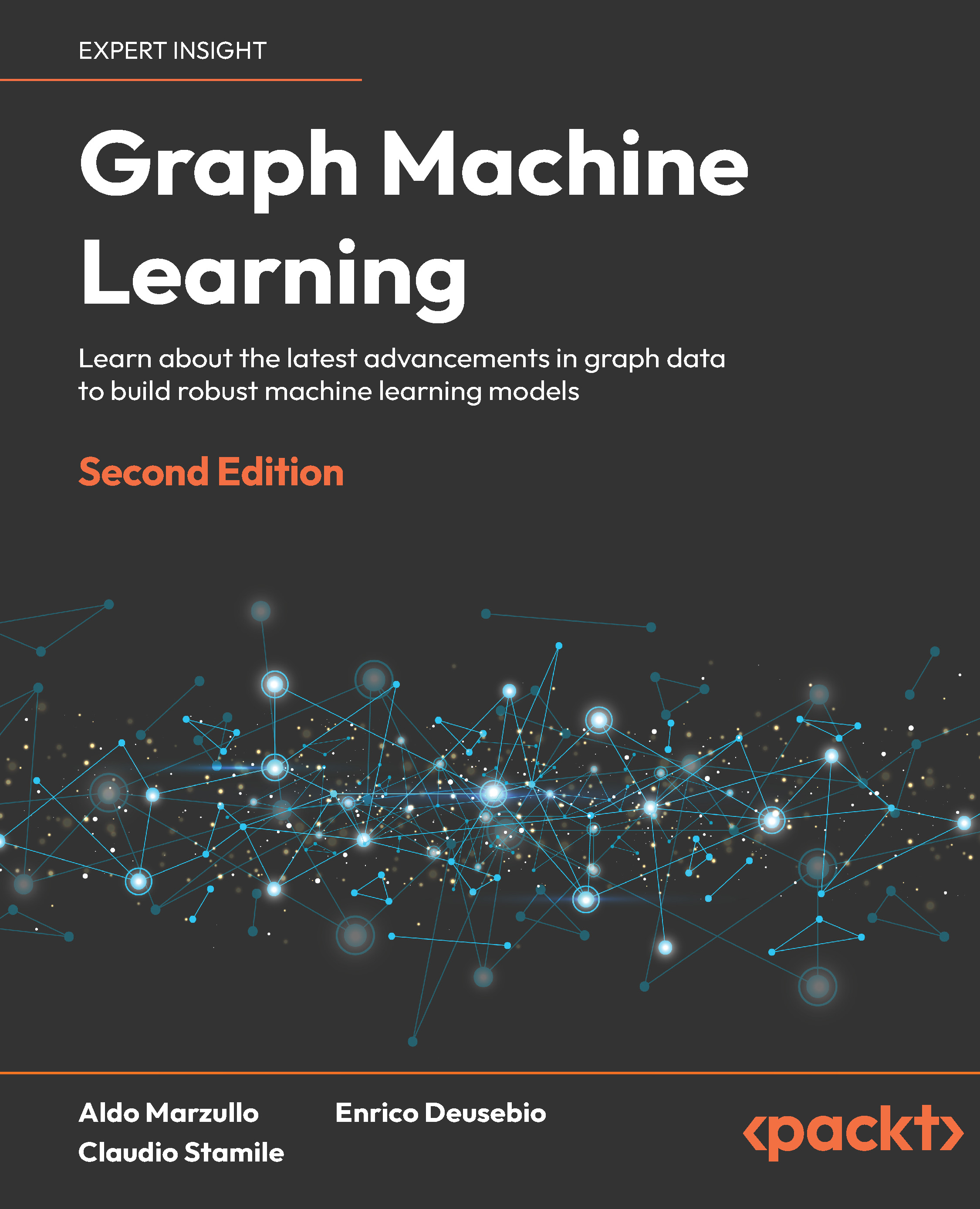
Graph Machine Learning, Second Edition builds on its predecessor’s success, delivering the latest tools and techniques for this rapidly evolving field. From basic graph theory to advanced ML models, you’ll learn how to represent data as graphs to uncover hidden patterns and relationships, with practical implementation emphasized through refreshed code examples. This thoroughly updated edition replaces outdated examples with modern alternatives such as PyTorch and DGL, available on GitHub to support enhanced learning.
The book also introduces new chapters on large language models and temporal graph learning, along with deeper insights into modern graph ML frameworks. Rather than serving as a step-by-step tutorial, it focuses on equipping you with fundamental problem-solving approaches that remain valuable even as specific technologies evolve. You will have a clear framework for assessing and selecting the right tools.
By the end of this book, you’ll gain both a solid understanding of graph machine learning theory and the skills to apply it to real-world challenges.
*Email sign-up and proof of purchase required -
Table of Contents (20 chapters)
Preface


Part 1: Introduction to Graph Machine Learning
 Free Chapter
Getting Started with Graphs
Graph Machine Learning
Neural Networks and Graphs
Part 2: Machine Learning on Graphs
Unsupervised Graph Learning
Supervised Graph Learning

Solving Common Graph-Based Machine Learning Problems
Part 3: Practical Applications of Graph Machine Learning
Social Network Graphs
Text Analytics and Natural Language Processing Using Graphs
Graph Analysis for Credit Card Transactions
Building a Data-Driven Graph-Powered Application
Part 4: Advanced topics in Graph Machine Learning
Temporal Graph Machine Learning
GraphML and LLMs
Novel Trends on Graphs
Index
Other Books You May Enjoy


