


-
Book Overview & Buying
-
Table Of Contents

Polars Cookbook
By :


Polars Cookbook
By:
Overview of this book
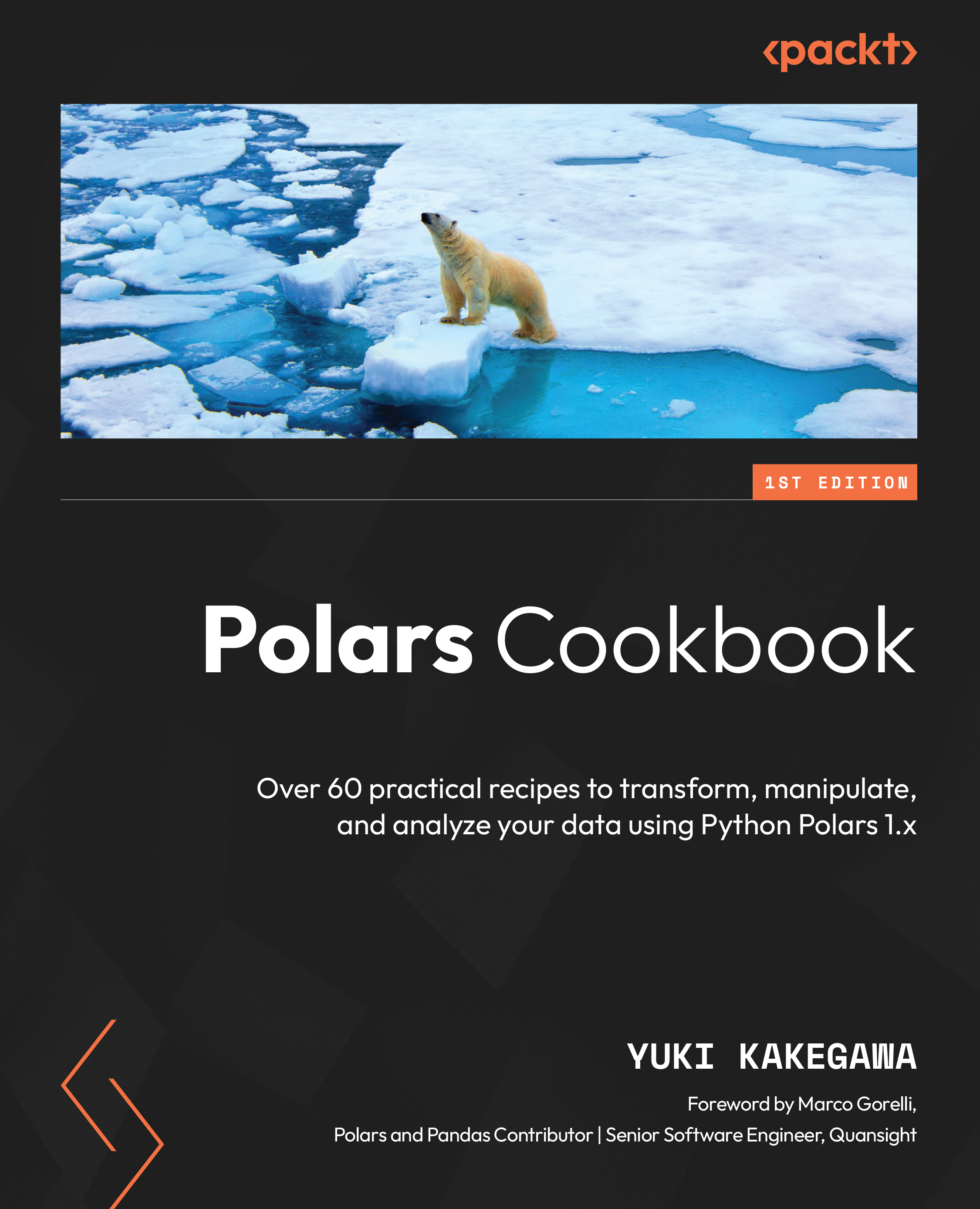
The Polars Cookbook is a comprehensive, hands-on guide to Python Polars, one of the first resources dedicated to this powerful data processing library. Written by Yuki Kakegawa, a seasoned data analytics consultant who has worked with industry leaders like Microsoft and Stanford Health Care, this book offers targeted, real-world solutions to data processing, manipulation, and analysis challenges. The book also includes a foreword by Marco Gorelli, a core contributor to Polars, ensuring expert insights into Polars' applications.
From installation to advanced data operations, you’ll be guided through data manipulation, advanced querying, and performance optimization techniques. You’ll learn to work with large datasets, conduct sophisticated transformations, leverage powerful features like chaining, and understand its caveats. This book also shows you how to integrate Polars with other Python libraries such as pandas, numpy, and PyArrow, and explore deployment strategies for both on-premises and cloud environments like AWS, BigQuery, GCS, Snowflake, and S3.
With use cases spanning data engineering, time series analysis, statistical analysis, and machine learning, Polars Cookbook provides essential techniques for optimizing and securing your workflows. By the end of this book, you'll possess the skills to design scalable, efficient, and reliable data processing solutions with Polars.
Table of Contents (15 chapters)
Preface


 Free Chapter
Chapter 1: Getting Started with Python Polars
Chapter 2: Reading and Writing Files
Chapter 3: An Introduction to Data Analysis in Python Polars
Chapter 4: Data Transformation Techniques

Chapter 5: Handling Missing Data
Chapter 6: Performing String Manipulations
Chapter 7: Working with Nested Data Structures
Chapter 8: Reshaping and Tidying Data
Chapter 9: Time Series Analysis
Chapter 10: Interoperability with Other Python Libraries
Chapter 11: Working with Common Cloud Data Sources
Chapter 12: Testing and Debugging in Polars
Index


