


-
Book Overview & Buying
-
Table Of Contents

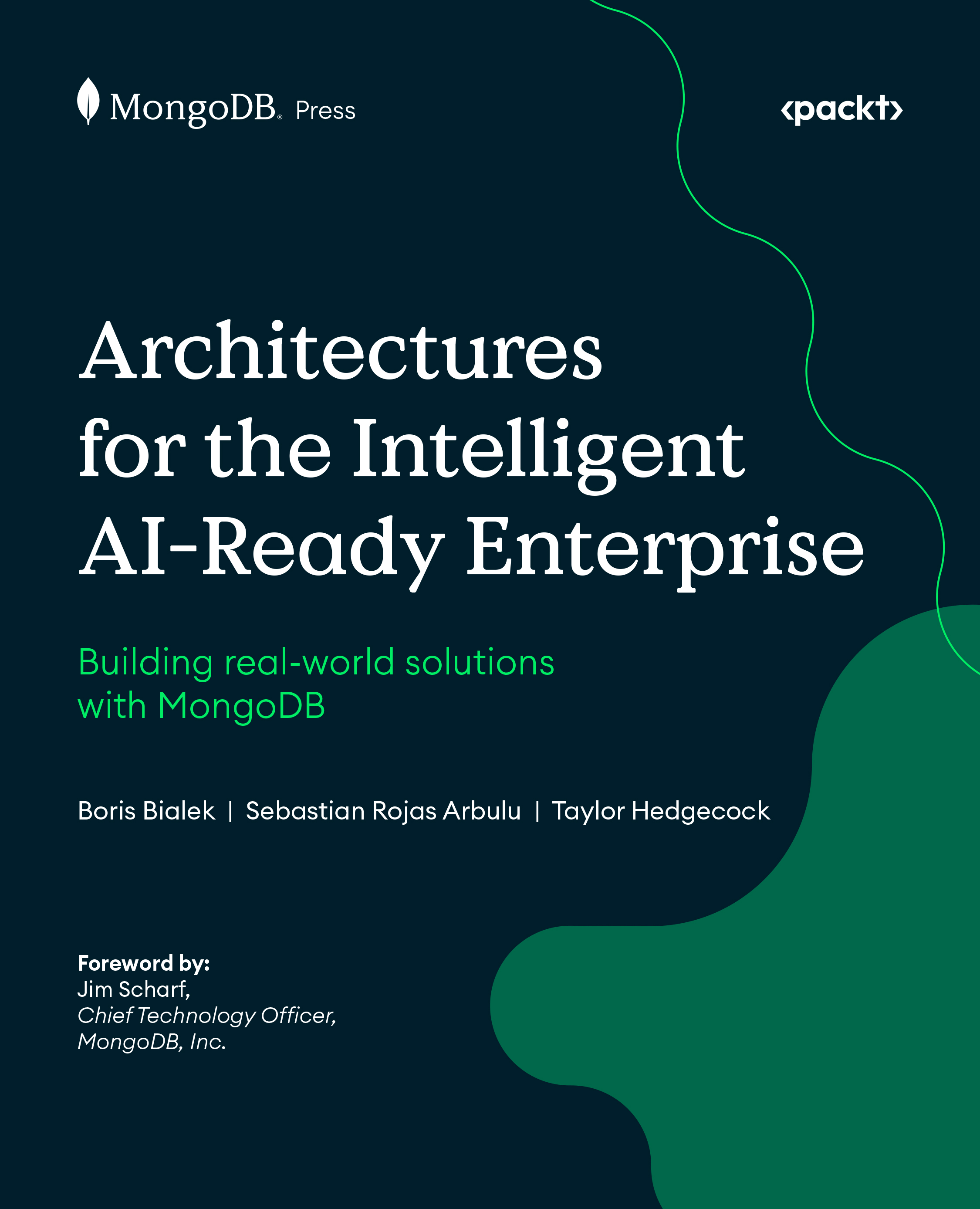
Architectures for the Intelligent AI-Ready Enterprise
By :


Architectures for the Intelligent AI-Ready Enterprise
By:
Overview of this book
AI is reshaping industries, yet most organizations struggle to scale beyond pilots. Architectures for the Intelligent AI-Ready Enterprise bridges this gap with practical frameworks for building AI-ready architectures that deliver lasting business value.
The book helps you explore System of Action databases and see why they're revolutionizing real-time decision-making. Through real-world applications across industries, from manufacturing and healthcare to financial services and retail, you'll discover how leading organizations transform their operations. You'll learn semantic data protection techniques that enable AI in regulated industries, as well as master advanced patterns including agentic AI and multi-agent orchestration.
Written by MongoDB and industry practitioners, this book combines strategy with technical depth and proven business value. You’ll modernize by enabling AI innovation while preserving existing investments, implement trustworthy AI with governance frameworks, and build scalable solutions using a unified data platform like MongoDB that delivers measurable ROI and transformation.
Whether you're architecting next-generation systems or modernizing legacy infrastructure, this book provides the patterns, case studies, and expert guidance to build enterprises that’ll thrive in an intelligent future.
Table of Contents (26 chapters)
Preface


AI Modernization to Innovation
What Sets GenAI, RAG, and Agentic AI Apart
The System of Action
Trustworthy AI, Compliance, and Data Governance
Modernization Using AI
Part 2: Real-World Case Studies and Implementations
Practical Applications of Agentic and GenAI in Manufacturing – Part 1
Practical Applications of Agentic and GenAI in Manufacturing – Part 2
AI-Driven Strategies for Media and Telecommunication Industries
Cognigy’s Voice and Chatbots in the Time of Agentic AI
Harnessing AI to Transform the Retail Industry
Financial Services and the Next Wave of AI
RegData, MongoDB, and Voyage AI: Semantic Data Protection in FSI
Driving Client Success in Banking with GenAI Copilots
Delivering Business Value with AI in Insurance
Automating Insurance Underwriting with Fireworks AI and MongoDB
AI-Powered Transformation of Healthcare and Life Sciences

Part 3: The Future of Intelligent Enterprise
Enterprise Document Management with MongoDB and AI
Democratizing Agentic AI for Enterprise with Dataworkz and MongoDB
Outlook: Beyond Today’s AI
Index
Other Books You May Enjoy


