-
Book Overview & Buying
-
Table Of Contents

Ship an MCP Server in Python - Fast
By :


Ship an MCP Server in Python - Fast
By:
Overview of this book
Discover how to build and ship a Python MCP server Fast so your AI workflows can call real tools with confidence. This short book gives you a clear, end-to-end path from a working local server to a deployable service, without wading through scattered docs or guesswork.
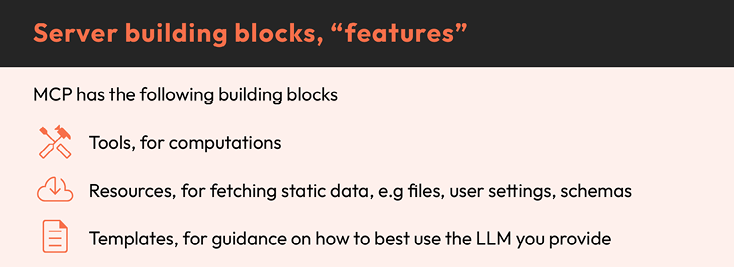
This book takes you through creating an MCP reference server in Python: you implement practical tools, add a reusable resource, and package prompt templates that make tool use more reliable. You also wire everything into real hosts using mcp.json, so you can run your server from environments like VS Code agent mode and Claude Desktop.
You validate behavior early using MCP Inspector in both GUI and CLI modes, so you can list tools, call them deterministically, and turn your checks into CI-friendly smoke tests. You then migrate from local stdio to streamable HTTP, applying pragmatic security patterns (such as bearer tokens and OAuth-style middleware) to prepare your MCP server for real-world deployment.
By the end, you can confidently implement, test, and integrate a production-ready Python MCP server, and reuse the same approach to expose new capabilities as your agentic applications grow.
Table of Contents (19 chapters)
 Free Chapter
Chapter 01: Anchor Your MCP Server and Mental Model


Chapter 02: Set Up and Build a Minimal Python MCP Server

Chapter 03: Design Tools, Resources, and Prompts That AIs Select Correctly
Chapter 04: Integrate With Hosts Using mcp.json
Next actions
Chapter 05: Build a Programmatic Client With an LLM in the Loop
Starting and negotiating
Converting tools for the LLM
Chapter 06: Migrate to Streamable HTTP and Add Pragmatic Security
HTTP server shape
Next actions
Chapter 07: Putting It All Together: Build and Rollout Plan
UV setup and dependencies
Host integration
Security decisions
Maintenance and troubleshooting
Build-and-rollout snapshot
Expanding your domain
Next actions