


-
Book Overview & Buying
-
Table Of Contents

Learn Microsoft Fabric
By :


Learn Microsoft Fabric
By:
Overview of this book
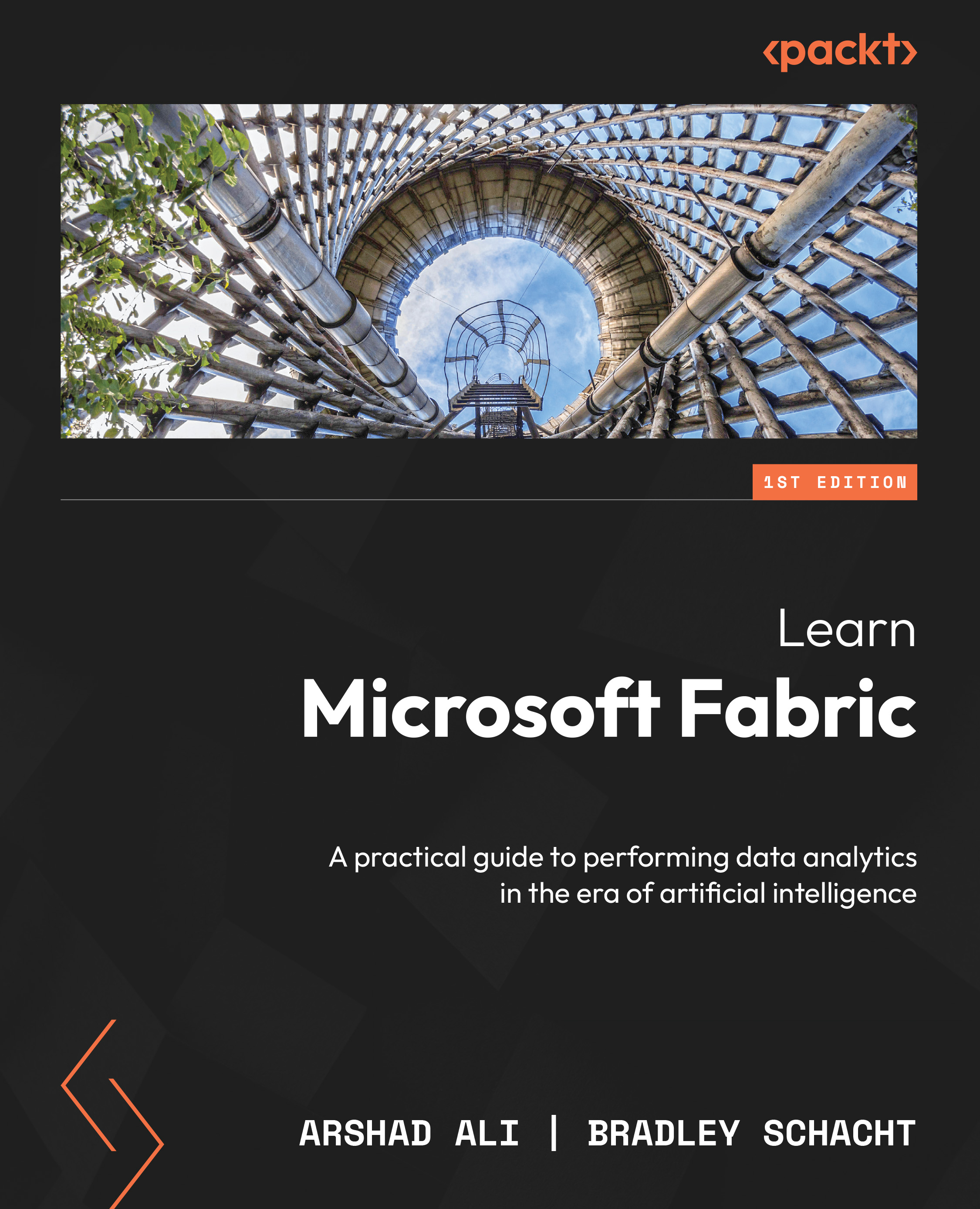
Discover the capabilities of Microsoft Fabric, the premier unified solution designed for the AI era, seamlessly combining data integration, OneLake, transformation, visualization, universal security, and a unified business model. This book provides an overview of Microsoft Fabric, its components, and the wider analytics landscape.
In this book, you'll explore workloads such as Data Factory, Synapse Data Engineering, data science, data warehouse, real-time analytics, and Power BI. You’ll learn how to build end-to-end lakehouse and data warehouse solutions using the medallion architecture, unlock the real-time analytics, and implement machine learning and AI models. As you progress, you’ll build expertise in monitoring workloads and administering Fabric across tenants, capacities, and workspaces. The book also guides you step by step through enhancing security and governance practices in Microsoft Fabric and implementing CI/CD workflows with Azure DevOps or GitHub. Finally, you’ll discover the power of Copilot, an AI-driven assistant that accelerates your analytics journey.
By the end of this book, you’ll have unlocked the full potential of AI-driven data analytics, gaining a comprehensive understanding of the analytics landscape and mastery over the essential concepts and principles of Microsoft Fabric.
Table of Contents (19 chapters)
Preface


 Free Chapter
Part 1: An Introduction to Microsoft Fabric
Chapter 1: Overview of Microsoft Fabric and Understanding Its Different Concepts
Chapter 2: Understanding Different Workloads and Getting Started with Microsoft Fabric
Part 2: Building End-to-End Analytics Systems
Chapter 3: Building an End-to-End Analytics System – Lakehouse
Chapter 4: Building an End-to-End Analytics System – Data Warehouse

Chapter 5: Building an End-to-End Analytics System – Real-Time Analytics
Chapter 6: Building an End-to-End Analytics System – Data Science
Part 3: Administration and Monitoring
Chapter 7: Monitoring Overview and Monitoring Different Workloads
Chapter 8: Administering Fabric
Part 4: Security and Developer Experience
Chapter 9: Security and Governance Overview
Chapter 10: Continuous Integration and Continuous Deployment (CI/CD)
Part 5: AI Assistance with Copilot Integration
Chapter 11: Overview of AI Assistance and Copilot Integration
Index


