


-
Book Overview & Buying
-
Table Of Contents

Data Science for Web3
By :


Data Science for Web3
By:
Overview of this book
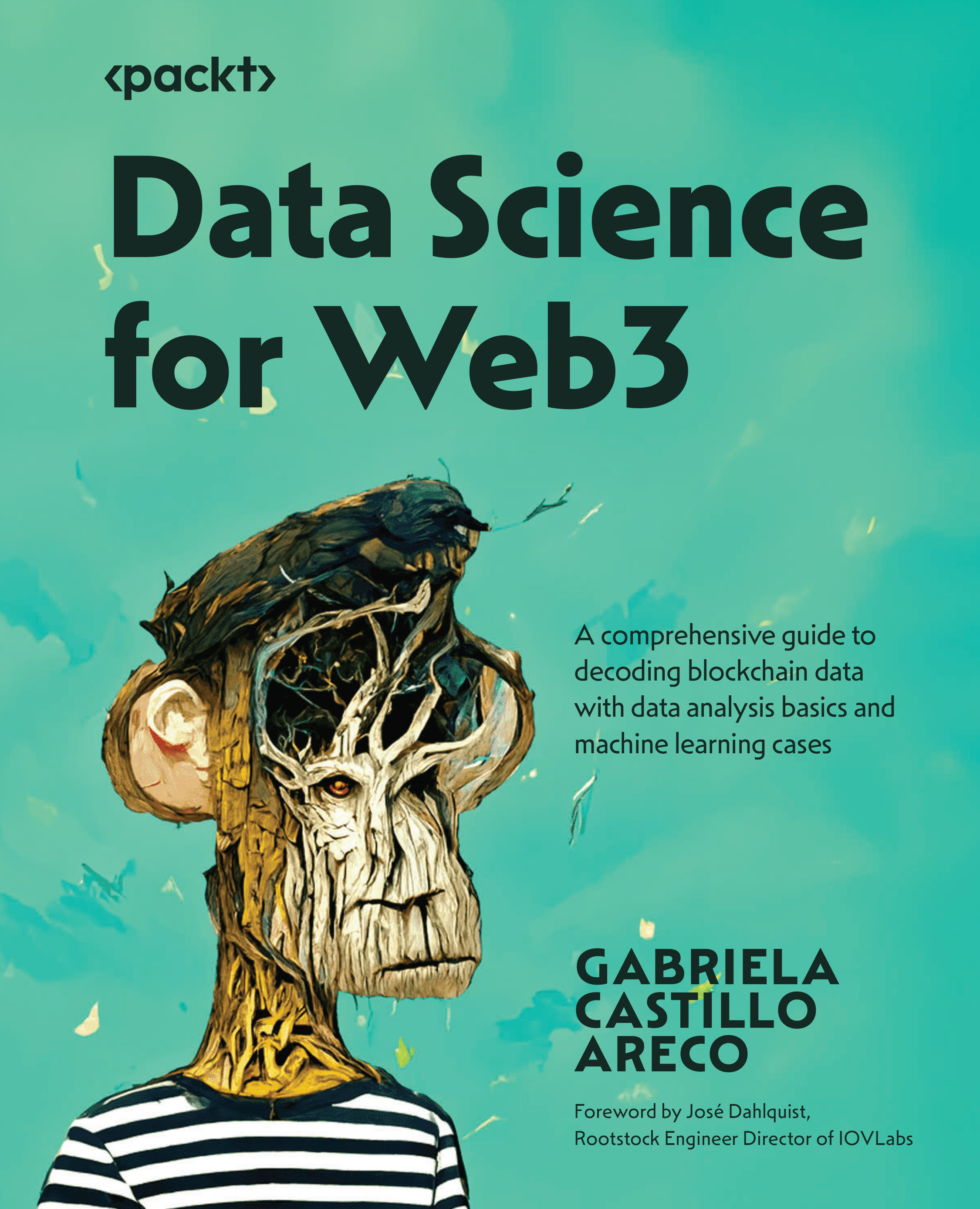
Data is the new oil and Web3 is generating it at an unprecedented rate. Complete with practical examples, detailed explanations, and ideas for portfolio development, this comprehensive book serves as a step-by-step guide covering the industry best practices, tools, and resources needed to easily navigate the world of data in Web3.
You’ll begin by acquiring a solid understanding of key blockchain concepts and the fundamental data science tools essential for Web3 projects. The subsequent chapters will help you explore the main data sources that can help address industry challenges, decode smart contracts, and build DeFi- and NFT-specific datasets. You’ll then tackle the complexities of feature engineering specific to blockchain data and familiarize yourself with diverse machine learning use cases that leverage Web3 data.
The book includes interviews with industry leaders providing insights into their professional journeys to drive innovation in the Web 3 environment. Equipped with experience in handling crypto data, you’ll be able to demonstrate your skills in job interviews, academic pursuits, or when engaging potential clients.
By the end of this book, you’ll have the essential tools to undertake end-to-end data science projects utilizing blockchain data, empowering you to help shape the next-generation internet.
Table of Contents (23 chapters)
Preface


Part 1 Web3 Data Analysis Basics
 Free Chapter
Chapter 1: Where Data and Web3 Meet
Chapter 2: Working with On-Chain Data
Chapter 3: Working with Off-Chain Data
Chapter 4: Exploring the Digital Uniqueness of NFTs – Games, Art, and Identity
Chapter 5: Exploring Analytics on DeFi
Part 2 Web3 Machine Learning Cases
Chapter 6: Preparing and Exploring Our Data
Chapter 7: A Primer on Machine Learning and Deep Learning

Chapter 8: Sentiment Analysis – NLP and Crypto News
Chapter 9: Generative Art for NFTs
Chapter 10: A Primer on Security and Fraud Detection
Chapter 11: Price Prediction with Time Series
Chapter 12: Marketing Discovery with Graphs
Part 3 Appendix
Chapter 13: Building Experience with Crypto Data – BUIDL
Chapter 14: Interviews with Web3 Data Leaders
Index
Other Books You May Enjoy
Appendix 1
Appendix 2
Appendix 3


