Sign In Start Free Trial
Account

Add to playlist

Create a Playlist

Modal Close icon
You need to login to use this feature.
  • Book Overview & Buying Learning Go Programming
  • Table Of Contents Toc
  • Feedback & Rating feedback
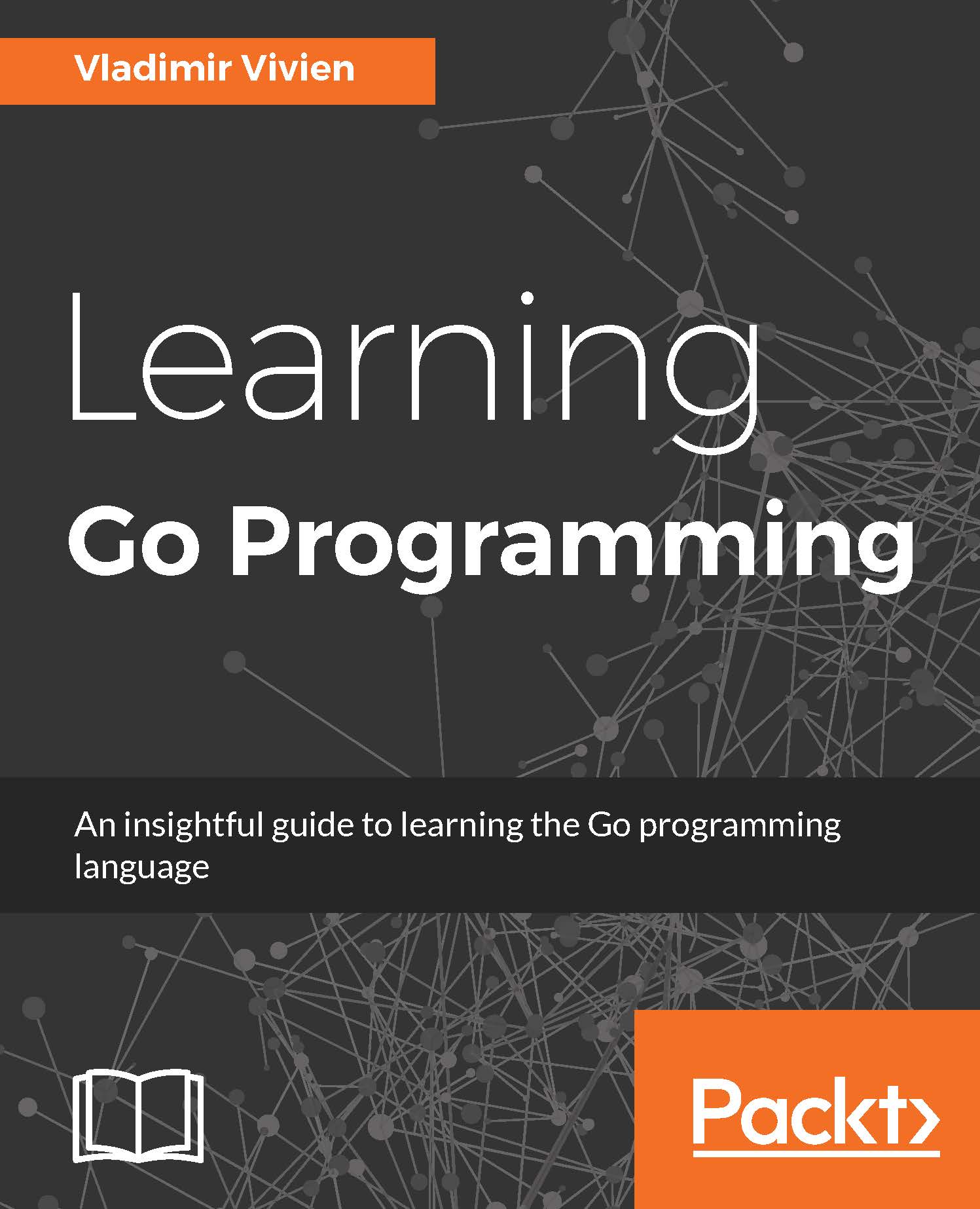
Learning Go Programming

Learning Go Programming

4.8 (5)
close
close
Learning Go Programming

Learning Go Programming

4.8 (5)

Overview of this book

The Go programming language has firmly established itself as a favorite for building complex and scalable system applications. Go offers a direct and practical approach to programming that let programmers write correct and predictable code using concurrency idioms and a full-featured standard library. This is a step-by-step, practical guide full of real world examples to help you get started with Go in no time at all. We start off by understanding the fundamentals of Go, followed by a detailed description of the Go data types, program structures and Maps. After this, you learn how to use Go concurrency idioms to avoid pitfalls and create programs that are exact in expected behavior. Next, you will be familiarized with the tools and libraries that are available in Go for writing and exercising tests, benchmarking, and code coverage. Finally, you will be able to utilize some of the most important features of GO such as, Network Programming and OS integration to build efficient applications. All the concepts are explained in a crisp and concise manner and by the end of this book; you would be able to create highly efficient programs that you can deploy over cloud.
Table of Contents (13 chapters)
close
close

Numeric types

Go's numeric types include support for integral and decimal values with a variety of sizes ranging from 8 to 64 bits. Each numeric type has its own layout in memory and is considered unique by the type system. As a way of enforcing this, and to avoid any sort of confusion when porting Go on different platforms, the name of a numeric type reflects its size requirement. For instance, type int16 indicates an integer type that uses 16 bits for internal storage. This means that numberic values must be explicitly be converted when crossing type boundaries in assignments, expressions, and operations.

The following program is not all that functional, since all values are assigned to the blank identifier. However, it illustrates all of the numeric data types supported in Go.

package main 
import ( 
   "math" 
   "unsafe" 
) 
 
var _ int8 = 12 
var _ int16 = -400 
var _ int32 = 12022 
var _ int64 = 1 << 33 
var _ int = 3 + 1415 
 
var _ uint8 = 18 
var...
Visually different images
CONTINUE READING
83
Tech Concepts
36
Programming languages
73
Tech Tools
Icon Unlimited access to the largest independent learning library in tech of over 8,000 expert-authored tech books and videos.
Icon Innovative learning tools, including AI book assistants, code context explainers, and text-to-speech.
Icon 50+ new titles added per month and exclusive early access to books as they are being written.
Learning Go Programming
notes
bookmark Notes and Bookmarks search Search in title playlist Add to playlist download Download options font-size Font size

Change the font size

margin-width Margin width

Change margin width

day-mode Day/Sepia/Night Modes

Change background colour

Close icon Search
Country selected

Close icon Your notes and bookmarks

Confirmation

Modal Close icon
claim successful

Buy this book with your credits?

Modal Close icon
Are you sure you want to buy this book with one of your credits?
Close
YES, BUY

Submit Your Feedback

Modal Close icon
Modal Close icon
Modal Close icon