


I was born in the late seventies, which means that I grew up during the birth of the video game industry. My first video game console was the Atari 2600, and it was because of that specific video game console that I decided that I wanted to be a programmer and make video games. I never got a job within the gaming industry, however, but I still love playing video games, and in, my spare time, I try to develop my own games.
To this day, I still go around the internet—especially eBay—buying old video games to bring back my nice childhood memories when all the family, my parents, and my sister, used to play Atari 2600 games together.
Because of my interest in vintage video games, we are going to develop a vintage video game online store; this will be a great way to develop something fun and also learn a lot about web development...
-
Book Overview & Buying
-
Table Of Contents

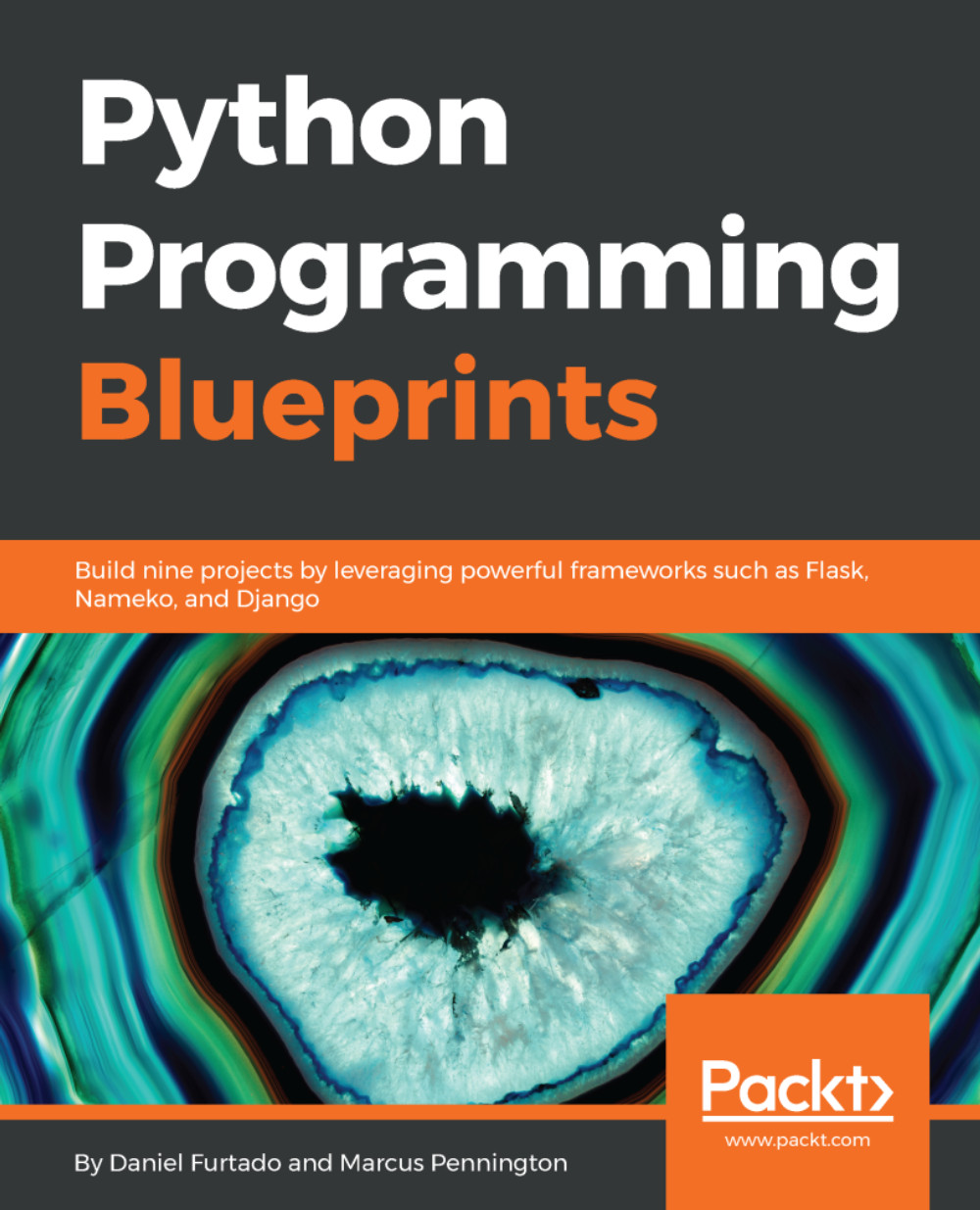
Python Programming Blueprints
By :


Python Programming Blueprints
By:
Overview of this book
Python is a very powerful, high-level, object-oriented programming language. It's known for its simplicity and huge community support. Python Programming Blueprints will help you build useful, real-world applications using Python.
In this book, we will cover some of the most common tasks that Python developers face on a daily basis, including performance optimization and making web applications more secure. We will familiarize ourselves with the associated software stack and master asynchronous features in Python. We will build a weather application using command-line parsing. We will then move on to create a Spotify remote control where we'll use OAuth and the Spotify Web API. The next project will cover reactive extensions by teaching you how to cast votes on Twitter the Python way. We will also focus on web development by using the famous Django framework to create an online game store. We will then create a web-based messenger using the new Nameko microservice framework. We will cover topics like authenticating users and, storing messages in Redis.
By the end of the book, you will have gained hands-on experience in coding with Python.
Table of Contents (11 chapters)
Preface

 Free Chapter
Implementing the Weather Application
Creating a Remote-Control Application with Spotify
Casting Votes on Twitter
Exchange Rates and the Currency Conversion Tool
Building a Web Messenger with Microservices
Extending TempMessenger with a User Authentication Microservice
Online Video Game Store with Django

Order Microservice
Notification Serverless Application
Other Books You May Enjoy


