Sign In Start Free Trial
Account

Add to playlist

Create a Playlist

Modal Close icon
You need to login to use this feature.
  • Book Overview & Buying Everyday data structures
  • Table Of Contents Toc
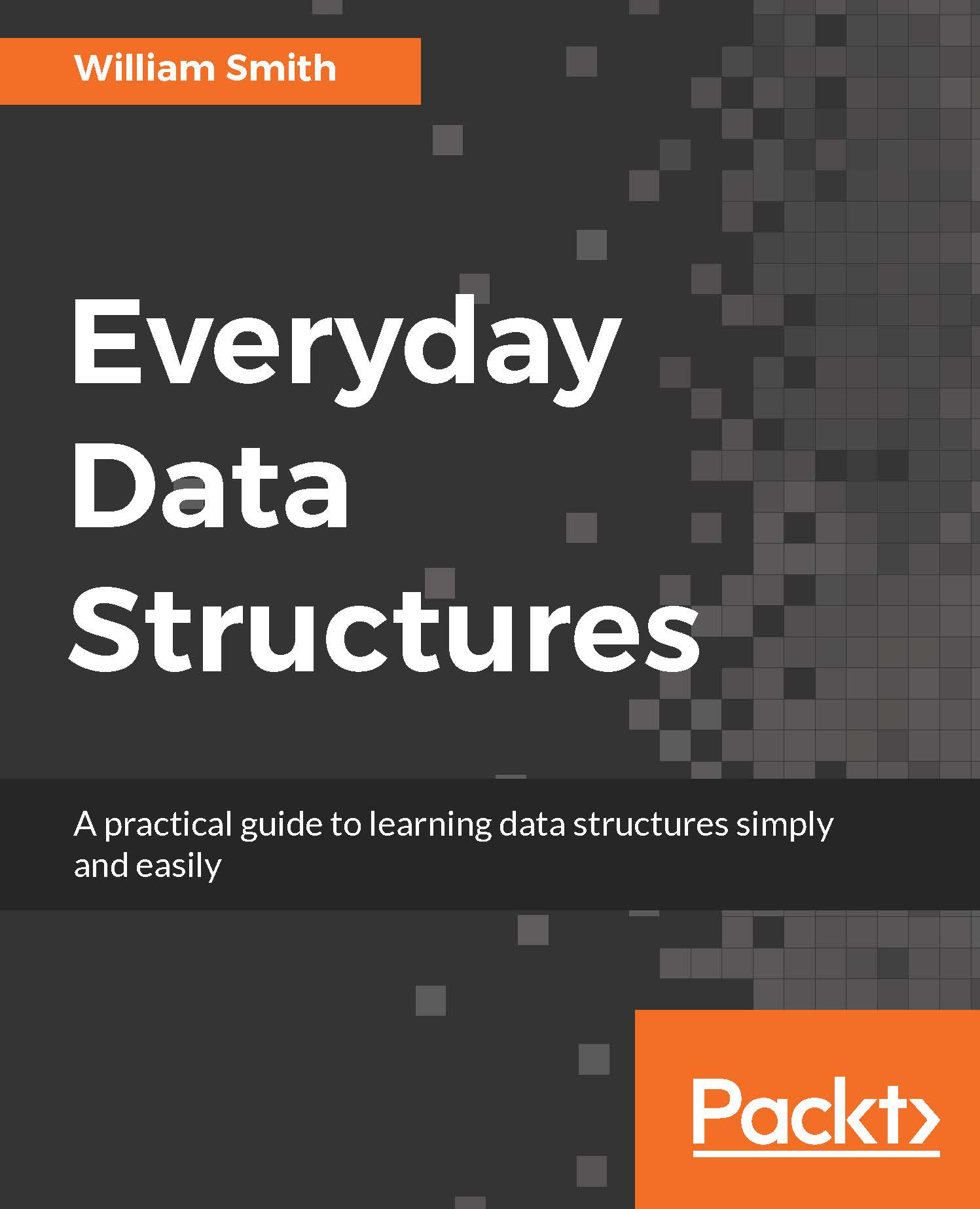
Everyday data structures

Everyday data structures

By : Smith
close
close
Everyday data structures

Everyday data structures

By: Smith

Overview of this book

Explore a new world of data structures and their applications easily with this data structures book. Written by software expert William Smith, you?ll learn how to master basic and advanced data structure concepts. ? Fully understand data structures using Java, C and other common languages ? Work through practical examples and learn real-world applications ? Get to grips with data structure problem solving using case studies
Table of Contents (14 chapters)
close
close
Lock Free Chapter
1
1. Data Types: Foundational Structures

Conventions

In this book, you will find a number of text styles that distinguish between different kinds of information. Here are some examples of these styles and an explanation of their meaning.

Each chapter of this book will also include a case study, or similar code example, that will be broken down and detailed to explain how the data structure is applied.  As such, this book is full of code examples.

A block of code is set as follows:

    public boolean isEmpty()
    {
        return this._commandStack.empty();
    }

When we wish to draw your attention to a particular part of a code block, the relevant lines or items are set in bold:

    func canAddUser(user: EDSUser) -> Bool 
    { 
        if (_users.contains(user)) 
        { 
            return false; 
        } else {
            return true; 
    }

New terms and important words are shown in bold. Words that you see on the screen, for example, in menus or dialog boxes, appear in the text like this: "The first validation method, isFull(), checks if our stack has reached its capacity."

We will also discuss algorithms and mathematical concepts related to algorithms in this text. Whenever operational cost values written in Big-O notation are shown they appear as follows: "This is small consolation, however, because the selection sort algorithm still has an O(n2) complexity cost."

Likewise, when mathematical formulas and algorithms are used, they will appear as follows: "Our algorithm will find the smallest value in S[0...4], which in this case is 3, and place it at the beginning of S[0...4]."

Note

Warnings or important notes appear in a box like this.

Tip

Tips and tricks appear like this.

CONTINUE READING
83
Tech Concepts
36
Programming languages
73
Tech Tools
Icon Unlimited access to the largest independent learning library in tech of over 8,000 expert-authored tech books and videos.
Icon Innovative learning tools, including AI book assistants, code context explainers, and text-to-speech.
Icon 50+ new titles added per month and exclusive early access to books as they are being written.
Everyday data structures
notes
bookmark Notes and Bookmarks search Search in title playlist Add to playlist download Download options font-size Font size

Change the font size

margin-width Margin width

Change margin width

day-mode Day/Sepia/Night Modes

Change background colour

Close icon Search
Country selected

Close icon Your notes and bookmarks

Confirmation

Modal Close icon
claim successful

Buy this book with your credits?

Modal Close icon
Are you sure you want to buy this book with one of your credits?
Close
YES, BUY

Submit Your Feedback

Modal Close icon
Modal Close icon
Modal Close icon