
Sign In Start Free Trial
Account

Add to playlist

Create a Playlist

Modal Close icon
You need to login to use this feature.
  • Book Overview & Buying Secret Recipes of the Python Ninja
  • Table Of Contents Toc
  • Feedback & Rating feedback
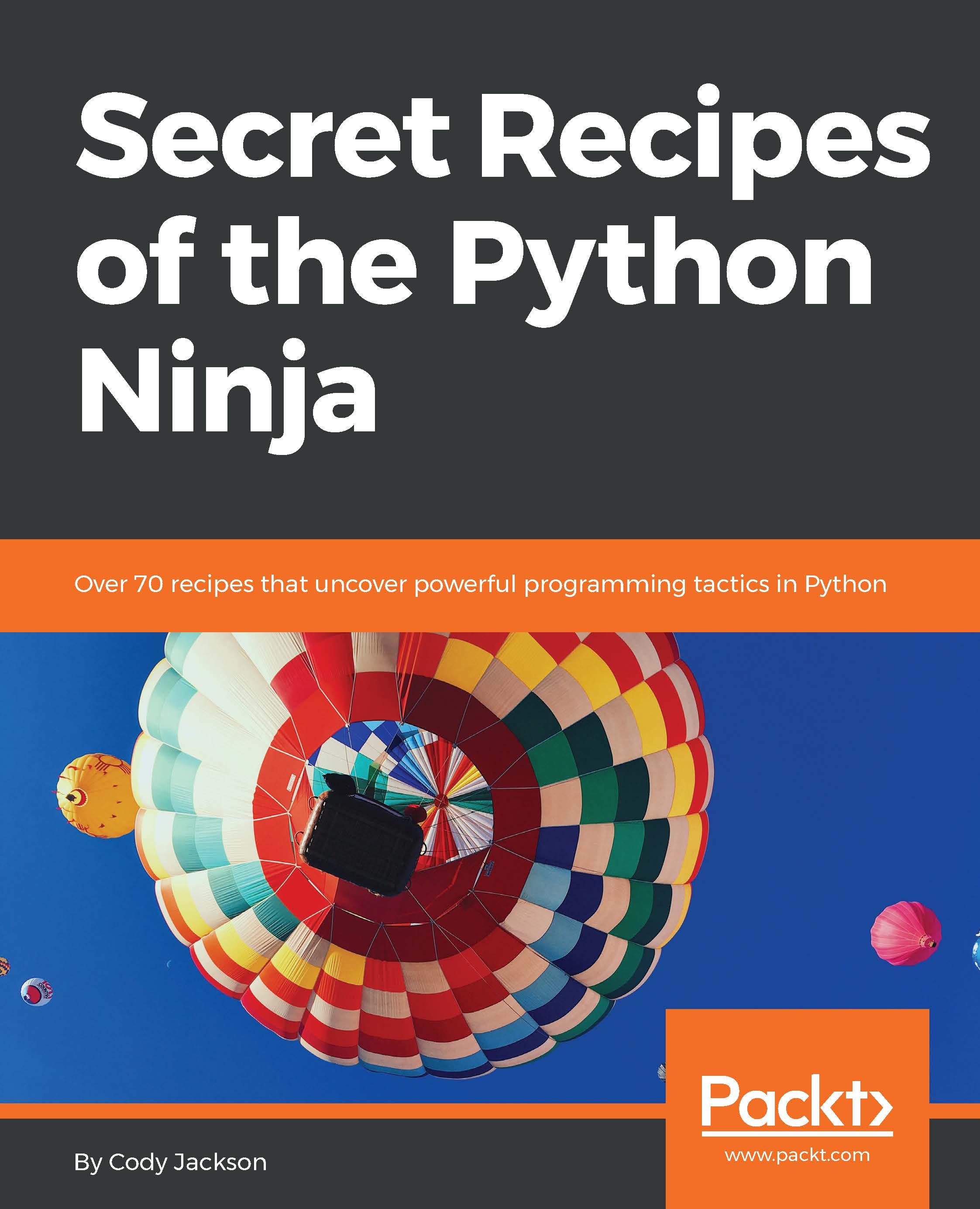
Secret Recipes of the Python Ninja

Secret Recipes of the Python Ninja

close
close
Secret Recipes of the Python Ninja

Secret Recipes of the Python Ninja

Overview of this book

This book covers the unexplored secrets of Python, delve into its depths, and uncover its mysteries. You’ll unearth secrets related to the implementation of the standard library, by looking at how modules actually work. You’ll understand the implementation of collections, decimals, and fraction modules. If you haven’t used decorators, coroutines, and generator functions much before, as you make your way through the recipes, you’ll learn what you’ve been missing out on. We’ll cover internal special methods in detail, so you understand what they are and how they can be used to improve the engineering decisions you make. Next, you’ll explore the CPython interpreter, which is a treasure trove of secret hacks that not many programmers are aware of. We’ll take you through the depths of the PyPy project, where you’ll come across several exciting ways that you can improve speed and concurrency. Finally, we’ll take time to explore the PEPs of the latest versions to discover some interesting hacks.
Table of Contents (11 chapters)
close
close

Introduction

Python modules are the highest-level components of Python programs. As suggested by their name, modules are modular, capable of being plugged in with other modules as part of an overall program to provide better separation of code while combining together to create a cohesive application.

Modules allow easy reuse of code, and provide separate namespaces to prevent variable shadowing between blocks of code. Variable shadowing involves having duplicate variables in different namespaces, possibly causing the interpreter to use an incorrect variable. Each Python file a developer creates is considered a separate module, allowing different files to be imported into a single, overall file that forms the final application.

Realistically, any Python file can be made a module by simply removing the .py extension; this is most commonly seen when importing libraries. Python packages are collections of modules; what makes a package special is the inclusion of an __init__.py file. We will cover the differences in detail later, so for now just recognize that there are several names for the same items.

Visually different images
CONTINUE READING
83
Tech Concepts
36
Programming languages
73
Tech Tools
Icon Unlimited access to the largest independent learning library in tech of over 8,000 expert-authored tech books and videos.
Icon Innovative learning tools, including AI book assistants, code context explainers, and text-to-speech.
Icon 50+ new titles added per month and exclusive early access to books as they are being written.
Secret Recipes of the Python Ninja
notes
bookmark Notes and Bookmarks search Search in title playlist Add to playlist download Download options font-size Font size

Change the font size

margin-width Margin width

Change margin width

day-mode Day/Sepia/Night Modes

Change background colour

Close icon Search
Country selected

Close icon Your notes and bookmarks

Confirmation

Modal Close icon
claim successful

Buy this book with your credits?

Modal Close icon
Are you sure you want to buy this book with one of your credits?
Close
YES, BUY

Submit Your Feedback

Modal Close icon
Modal Close icon
Modal Close icon