Sign In Start Free Trial
Account

Add to playlist

Create a Playlist

Modal Close icon
You need to login to use this feature.
  • Book Overview & Buying Modern Python Standard Library Cookbook
  • Table Of Contents Toc
  • Feedback & Rating feedback
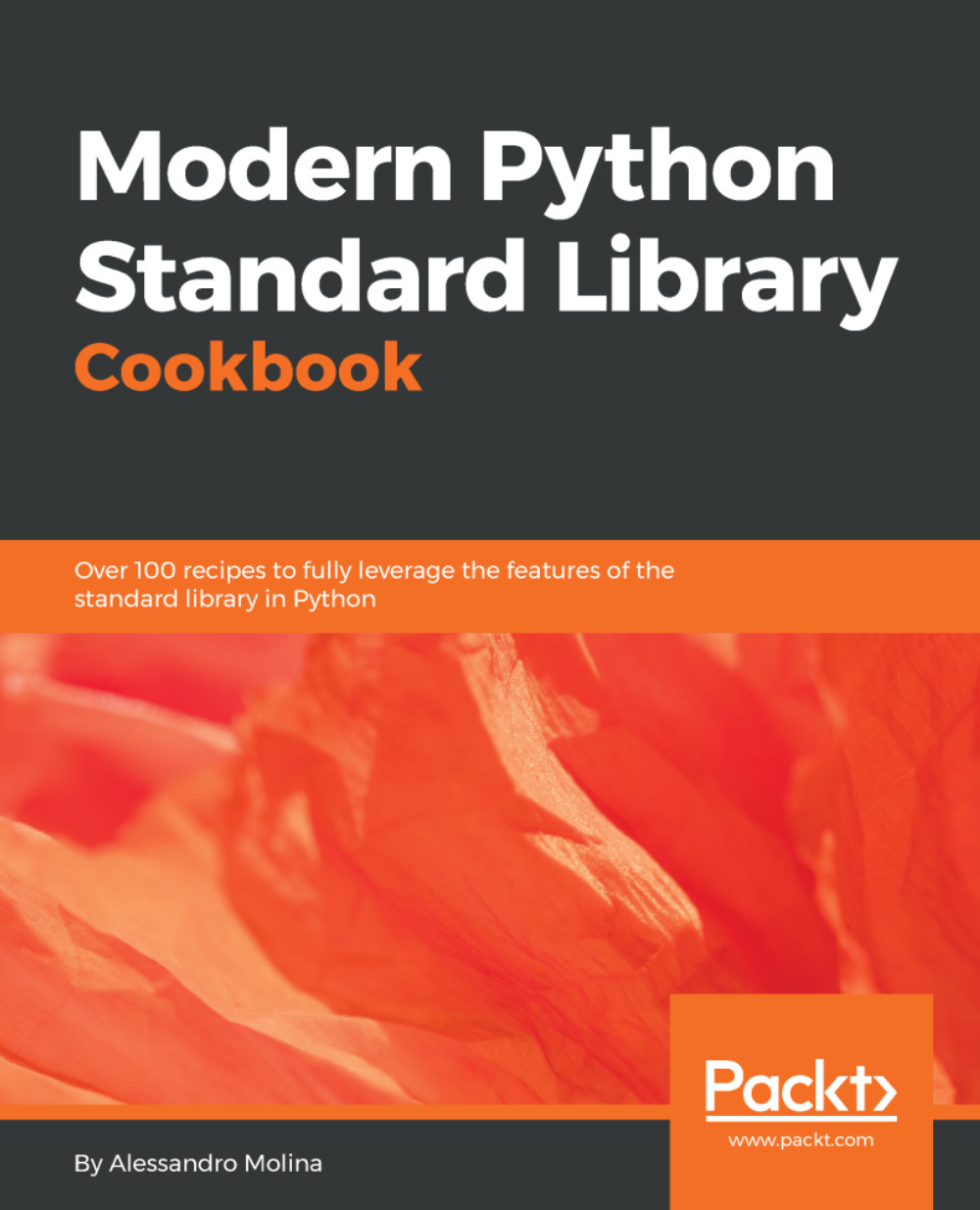
Modern Python Standard Library Cookbook

Modern Python Standard Library Cookbook

By : Molina
4.4 (7)
close
close
Modern Python Standard Library Cookbook

Modern Python Standard Library Cookbook

4.4 (7)
By: Molina

Overview of this book

The Python 3 Standard Library is a vast array of modules that you can use for developing various kinds of applications. It contains an exhaustive list of libraries, and this book will help you choose the best one to address specific programming problems in Python. The Modern Python Standard Library Cookbook begins with recipes on containers and data structures and guides you in performing effective text management in Python. You will find Python recipes for command-line operations, networking, filesystems and directories, and concurrent execution. You will learn about Python security essentials in Python and get to grips with various development tools for debugging, benchmarking, inspection, error reporting, and tracing. The book includes recipes to help you create graphical user interfaces for your application. You will learn to work with multimedia components and perform mathematical operations on date and time. The recipes will also show you how to deploy different searching and sorting algorithms on your data. By the end of the book, you will have acquired the skills needed to write clean code in Python and develop applications that meet your needs.
Table of Contents (16 chapters)
close
close

Coroutines


Threads are the most common way to implement concurrency in most languages and use cases, but they are expensive in terms of cost, and while ThreadPool can be a good solution for cases when thousands of threads are involved, it's usually unreasonable to involve thousands of threads. Especially when long-lived I/O is involved, you might easily reach thousands of operations running concurrently (think of the amount of concurrent HTTP requests an HTTP server might have to handle) and most of those tasks will be sitting doing nothing, just waiting for data from the network or from the disk most of the time.

In those cases, asynchronous I/O is the preferred approach. Compared to synchronous blocking I/O where your code is sitting there waiting for the read or write operation to complete, asynchronous I/O allows a task that needs data to initiate the read operation, switch to doing something else, and once the data is available, go back to what it was doing.

In some cases, the notification...

Visually different images
CONTINUE READING
83
Tech Concepts
36
Programming languages
73
Tech Tools
Icon Unlimited access to the largest independent learning library in tech of over 8,000 expert-authored tech books and videos.
Icon Innovative learning tools, including AI book assistants, code context explainers, and text-to-speech.
Icon 50+ new titles added per month and exclusive early access to books as they are being written.
Modern Python Standard Library Cookbook
notes
bookmark Notes and Bookmarks search Search in title playlist Add to playlist download Download options font-size Font size

Change the font size

margin-width Margin width

Change margin width

day-mode Day/Sepia/Night Modes

Change background colour

Close icon Search
Country selected

Close icon Your notes and bookmarks

Confirmation

Modal Close icon
claim successful

Buy this book with your credits?

Modal Close icon
Are you sure you want to buy this book with one of your credits?
Close
YES, BUY

Submit Your Feedback

Modal Close icon
Modal Close icon
Modal Close icon