Sign In Start Free Trial
Account

Add to playlist

Create a Playlist

Modal Close icon
You need to login to use this feature.
  • Book Overview & Buying JSF 1.2 Components
  • Table Of Contents Toc
  • Feedback & Rating feedback
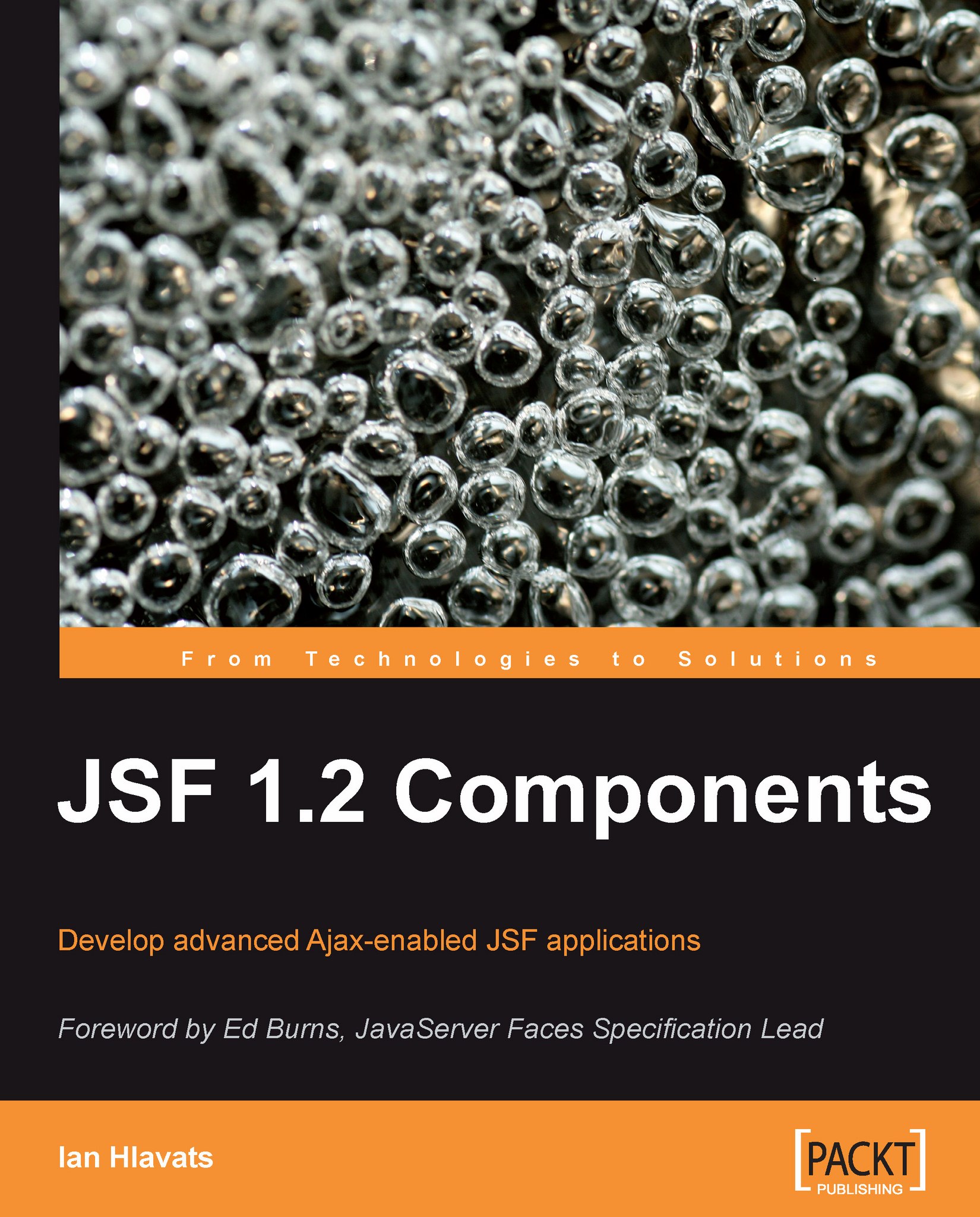
JSF 1.2 Components

JSF 1.2 Components

By : IAN HLAVATS
3 (2)
close
close
JSF 1.2 Components

JSF 1.2 Components

3 (2)
By: IAN HLAVATS

Overview of this book

Today's web developers need powerful tools to deliver richer, faster, and smoother web experiences. JavaServer Faces includes powerful, feature-rich, Ajax-enabled UI components that provide all the functionality needed to build web applications in a Web 2.0 world. It's the perfect way to build rich, interactive, and "Web 2.0-style" Java web apps. This book provides a comprehensive introduction to the most popular JSF components available today and demonstrate step-by-step how to build increasingly sophisticated JSF user interfaces with standard JSF, Facelets, Apache Tomahawk/Trinidad, ICEfaces, JBoss Seam, JBoss RichFaces/Ajax4jsf, and JSF 2.0 components. JSF 1.2 Components is both an excellent starting point for new JSF developers, and a great reference and “how to” guide for experienced JSF professionals. This book progresses logically from an introduction to standard JSF HTML, and JSF Core components to advanced JSF UI development. As you move through the book, you will learn how to build composite views using Facelets tags, implement common web development tasks using Tomahawk components, and add Ajax capabilities to your JSF user interface with ICEfaces components. You will also learn how to solve the complex web application development challenges with the JBoss Seam framework. At the end of the book, you will be introduced to the new and up-coming JSF component libraries that will provide a road map of the future JSF technologies.
Table of Contents (14 chapters)
close
close
JSF 1.2 Components
Credits
Foreword
About the Author
About the Reviewers
Preface

Validating user input


In Chapter 1, we saw how to use some of the converters and validators included in the JSF framework, and we saw how to create our own custom converters and validators.

In one example, we looked at a customer registration form that required the user to enter their name, contact information, date of birth, country of origin, and relevant interests. We registered our custom date validator on the date of birth field to ensure that the date entered by the user was correctly formatted and represented a legitimate birth date.

What we didn't do, however, was validate the phone number and e-mail address entered by the user. Let's look at this example again to see how we can validate these form fields using the Tomahawk validation tags.

The Tomahawk component library includes several validation tags based on the Jakarta Commons Validator utility class library for Java. Tomahawk includes built-in validator tags, such as<t:validateCreditCard> for verifying credit card numbers...

Visually different images
CONTINUE READING
83
Tech Concepts
36
Programming languages
73
Tech Tools
Icon Unlimited access to the largest independent learning library in tech of over 8,000 expert-authored tech books and videos.
Icon Innovative learning tools, including AI book assistants, code context explainers, and text-to-speech.
Icon 50+ new titles added per month and exclusive early access to books as they are being written.
JSF 1.2 Components
notes
bookmark Notes and Bookmarks search Search in title playlist Add to playlist font-size Font size

Change the font size

margin-width Margin width

Change margin width

day-mode Day/Sepia/Night Modes

Change background colour

Close icon Search
Country selected

Close icon Your notes and bookmarks

Confirmation

Modal Close icon
claim successful

Buy this book with your credits?

Modal Close icon
Are you sure you want to buy this book with one of your credits?
Close
YES, BUY

Submit Your Feedback

Modal Close icon
Modal Close icon
Modal Close icon