
Sign In Start Free Trial
Account

Add to playlist

Create a Playlist

Modal Close icon
You need to login to use this feature.
  • Book Overview & Buying Mastering Reverse Engineering
  • Table Of Contents Toc
Mastering Reverse Engineering

Mastering Reverse Engineering

By : Wong
3 (5)
close
close
Mastering Reverse Engineering

Mastering Reverse Engineering

3 (5)
By: Wong

Overview of this book

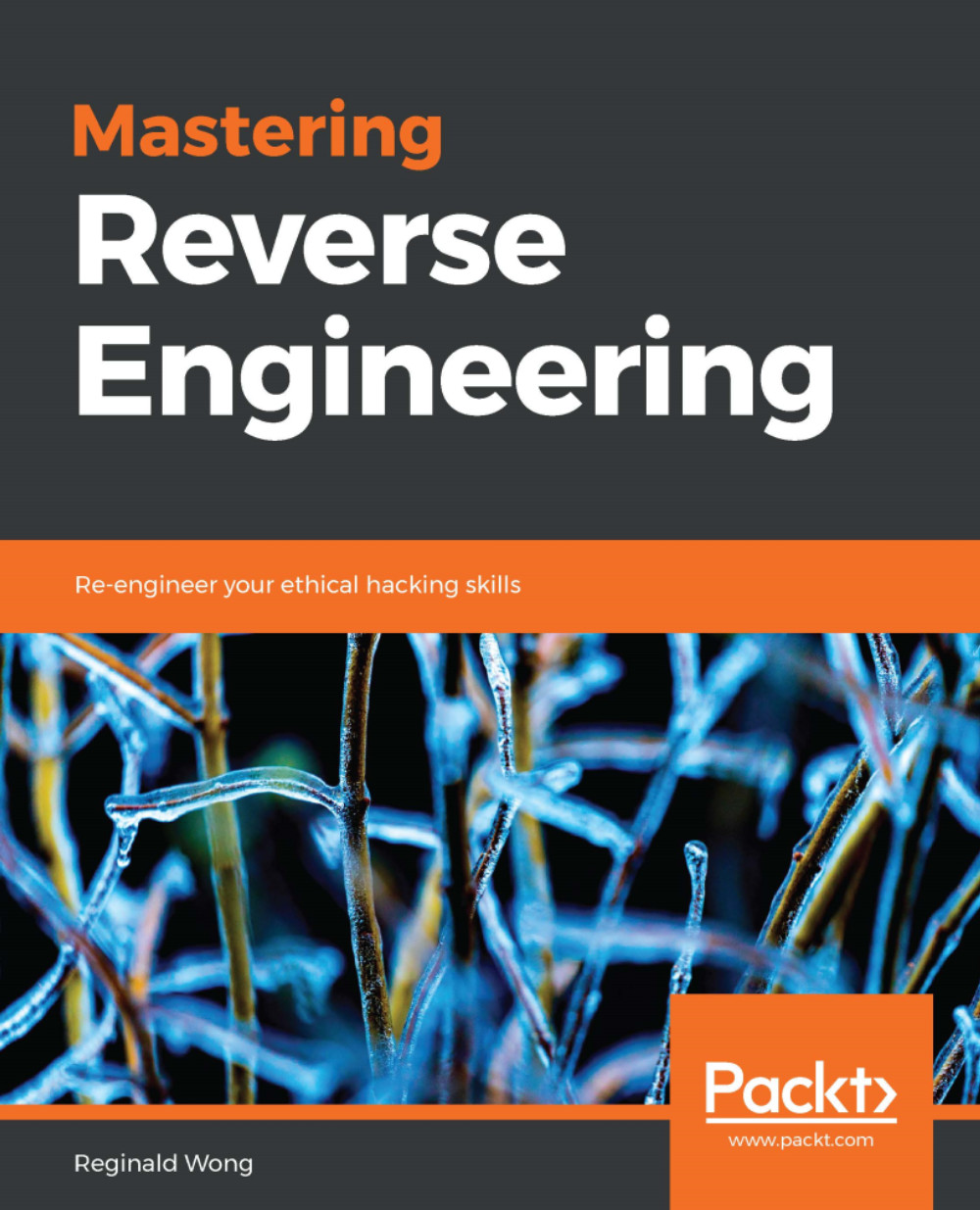
If you want to analyze software in order to exploit its weaknesses and strengthen its defenses, then you should explore reverse engineering. Reverse Engineering is a hackerfriendly tool used to expose security flaws and questionable privacy practices.In this book, you will learn how to analyse software even without having access to its source code or design documents. You will start off by learning the low-level language used to communicate with the computer and then move on to covering reverse engineering techniques. Next, you will explore analysis techniques using real-world tools such as IDA Pro and x86dbg. As you progress through the chapters, you will walk through use cases encountered in reverse engineering, such as encryption and compression, used to obfuscate code, and how to to identify and overcome anti-debugging and anti-analysis tricks. Lastly, you will learn how to analyse other types of files that contain code. By the end of this book, you will have the confidence to perform reverse engineering.
Table of Contents (15 chapters)
close
close

Summary

Reverse engineering has been around for years and has been a useful technique to understand how things work. In the software industry, reverse engineering helps validate and fix code flow and structures. The information from such tasks can improve the security of various aspects of software, network infrastructure, and human awareness. As a core skill requirement for the anti-malware industry, reverse engineering helps create detection and remediation information; the same information that is used to build safeguards for an institution's servers. It is also used by authorities and forensic experts to hunt down syndicates.

There are basic steps that help build reverse engineering information. Once an analyst has approval from the original author to carry out reverse engineering, they can begin with static analysis, dynamic analysis, and then low-level analysis. This is then followed by reporting the overview and details about the software.

When doing analysis, various types of tools are used, including static analysis tools, disassemblers, decompilers, debuggers, and system monitoring tools. When doing reverse engineering on malware, it is best to use these tools in an environment that has limited or no access to the network you use for personal purposes or work. This should prevent your infrastructure from being compromised. Malware should be handled properly, and we listed a couple of ways to prevent accidental double-clicks.

Malware analysis nonetheless requires the internet to get further information on how the malware works and what it does. There may be some legal issues that require you to consult the laws of your country and the policies of your local ISP, to ensure that you are not violating any of them.

The core requirement for the setup of an analysis lab is that the target operating system can be reverted back to its unmodified state.

Malware samples can be obtained from the following link: https://github.com/PacktPublishing/Mastering-Reverse-Engineering/tree/master/tools. These samples will be used throughout this book.

Now that we have our basic setup, let's embark on our journey through reverse engineering.

CONTINUE READING
83
Tech Concepts
36
Programming languages
73
Tech Tools
Icon Unlimited access to the largest independent learning library in tech of over 8,000 expert-authored tech books and videos.
Icon Innovative learning tools, including AI book assistants, code context explainers, and text-to-speech.
Icon 50+ new titles added per month and exclusive early access to books as they are being written.
Mastering Reverse Engineering
notes
bookmark Notes and Bookmarks search Search in title playlist Add to playlist download Download options font-size Font size

Change the font size

margin-width Margin width

Change margin width

day-mode Day/Sepia/Night Modes

Change background colour

Close icon Search
Country selected

Close icon Your notes and bookmarks

Confirmation

Modal Close icon
claim successful

Buy this book with your credits?

Modal Close icon
Are you sure you want to buy this book with one of your credits?
Close
YES, BUY

Submit Your Feedback

Modal Close icon
Modal Close icon
Modal Close icon