Sign In Start Free Trial
Account

Add to playlist

Create a Playlist

Modal Close icon
You need to login to use this feature.
  • Book Overview & Buying Mastering Reverse Engineering
  • Table Of Contents Toc
  • Feedback & Rating feedback
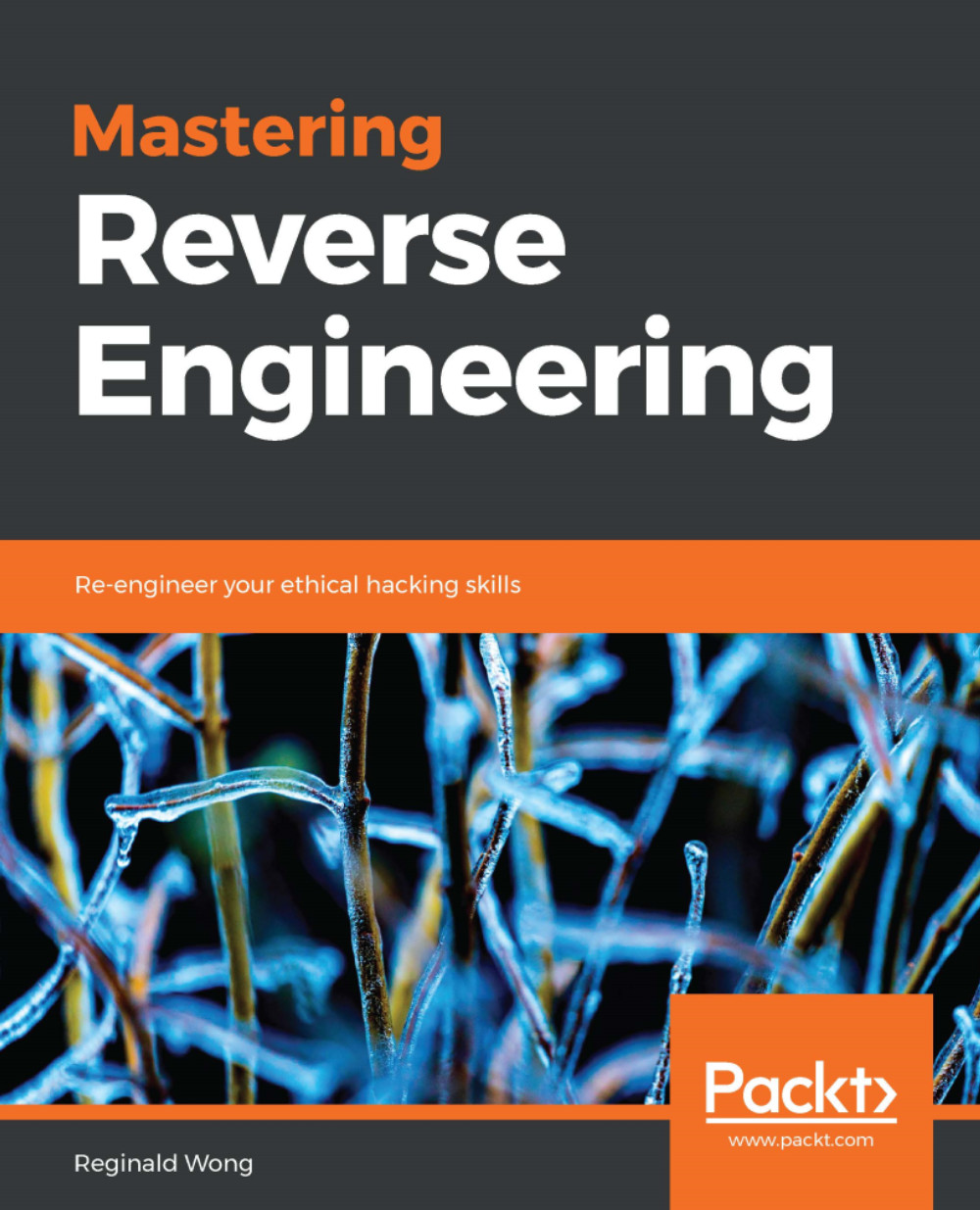
Mastering Reverse Engineering

Mastering Reverse Engineering

By : Wong
3 (5)
close
close
Mastering Reverse Engineering

Mastering Reverse Engineering

3 (5)
By: Wong

Overview of this book

If you want to analyze software in order to exploit its weaknesses and strengthen its defenses, then you should explore reverse engineering. Reverse Engineering is a hackerfriendly tool used to expose security flaws and questionable privacy practices.In this book, you will learn how to analyse software even without having access to its source code or design documents. You will start off by learning the low-level language used to communicate with the computer and then move on to covering reverse engineering techniques. Next, you will explore analysis techniques using real-world tools such as IDA Pro and x86dbg. As you progress through the chapters, you will walk through use cases encountered in reverse engineering, such as encryption and compression, used to obfuscate code, and how to to identify and overcome anti-debugging and anti-analysis tricks. Lastly, you will learn how to analyse other types of files that contain code. By the end of this book, you will have the confidence to perform reverse engineering.
Table of Contents (15 chapters)
close
close

Hello World


Programs in the Windows environment communicate with the system by using Windows APIs. These APIs are built around the file system, memory management (including processes, the stack, and allocations), the registry hive, network communication, and so forth. Regarding reverse engineering, a wide coverage of these APIs and their library modules is a good advantage when it comes to easily understanding how a program works when seen in its low-level language equivalent. So, the best way to begin exploring APIs and their libraries would be to develop some programs ourselves.


There are many high-level languages used by developers like C, C++, C#, and Visual Basic.  C, C++, and Visual Basic (native) compile to an executable that directly executes instructions in the x86 language. C# and Visual Basic (p-code) are usually compiled to use interpreters as a layer that turns the p-code into actual x86 instructions. For this chapter, we will focus on executable binaries compiled from C/C+...

Visually different images
CONTINUE READING
83
Tech Concepts
36
Programming languages
73
Tech Tools
Icon Unlimited access to the largest independent learning library in tech of over 8,000 expert-authored tech books and videos.
Icon Innovative learning tools, including AI book assistants, code context explainers, and text-to-speech.
Icon 50+ new titles added per month and exclusive early access to books as they are being written.
Mastering Reverse Engineering
notes
bookmark Notes and Bookmarks search Search in title playlist Add to playlist download Download options font-size Font size

Change the font size

margin-width Margin width

Change margin width

day-mode Day/Sepia/Night Modes

Change background colour

Close icon Search
Country selected

Close icon Your notes and bookmarks

Confirmation

Modal Close icon
claim successful

Buy this book with your credits?

Modal Close icon
Are you sure you want to buy this book with one of your credits?
Close
YES, BUY

Submit Your Feedback

Modal Close icon
Modal Close icon
Modal Close icon