


-
Book Overview & Buying
-
Table Of Contents

A Day in the Life of a CISO
By :


A Day in the Life of a CISO
By:
Overview of this book
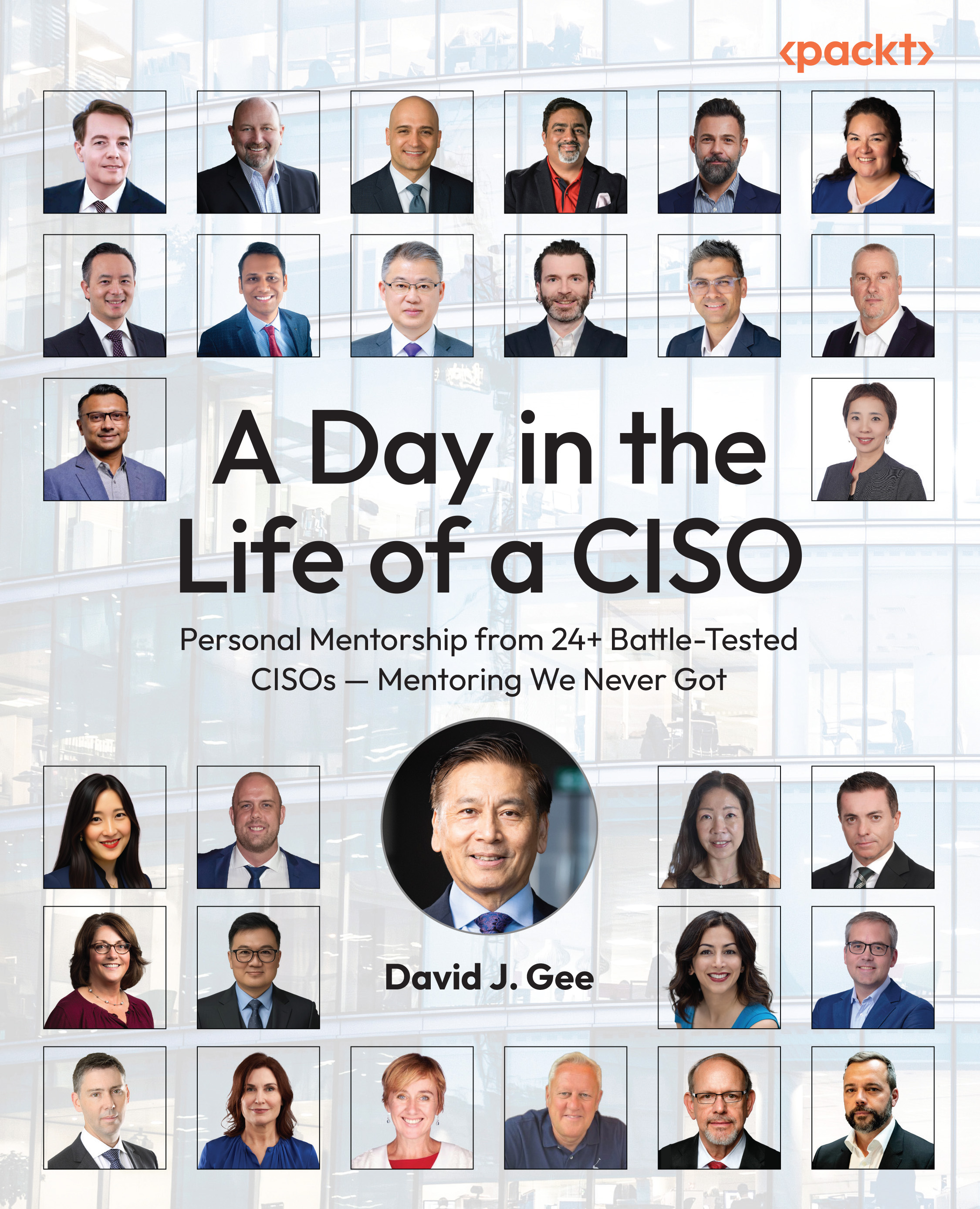
As cyber threats become more complex, effective cybersecurity leadership calls for more than technical expertise; it requires strategic thinking, resilient leadership, and deft communication skills. A Day in the Life of a CISO brings together candid insights from some of the world’s most accomplished CISOs and cybersecurity executives.
With invaluable guidance on managing emerging threats, balancing risk and business needs, leading through crisis, and building elite security teams, this book is a practical, real-world guide for professionals looking to elevate their cybersecurity careers or transition into leadership roles. You’ll benefit from the collective wisdom and hard-earned experiences of 29 contributors representing leading organizations worldwide, and learn how to craft cyber strategies, manage vulnerabilities, lead transformations, and develop long-lasting careers in cybersecurity.
Whether you are an aspiring CISO, a current security leader, or a business executive seeking a deeper understanding of cybersecurity leadership, this book offers you the knowledge and inspiration to thrive in an increasingly challenging digital world.
*Email sign-up and proof of purchase required
Table of Contents (38 chapters)
Preface


 Free Chapter
Sunrise on a New Day

Advice to the New CISO
Hand-to-Hand Combat with Lazarus
Priorities for the New CISO
Cyber Threat Intelligence That Is Actionable
How I Got to Be CISO
The Journey to CISO: From Humble Beginnings to Leadership
Stepping Up into a Global Role
Diverse Paths to Cybersecurity Leadership
Overcoming Doubt
Building Your CISO Skills
How to Defend with Less
Being Brilliant at the Basics
A CISO in Japan
Navigating the C-Suite, Boards and DOPE Dynamics
Systems Thinking for CISOs
The CISO as a Change Agent
Alternative Career Paths to Consider
So, You Got Fired
Advanced CISO Toolkit
Rebuilding after a Breach
Cyber Strategy That Makes a Difference
Do’s and Don’ts for CISOs
Developing Cyber Talent
Managing Critical Vulnerabilities
AI: The Promise and Challenge
Advice from CISO ‘Yoda Masters’
Protecting the USA
Why Risk Management Matters
Driving Cyber Transformation
My Metrics Playbook
Career Resilience
Lessons in Leading Yourself,Cyber Teams and Through Crisis
Unlock Your Book’s Exclusive Benefits
Other Books You May Enjoy
Index


