


-
Book Overview & Buying
-
Table Of Contents

Reverse Engineering Armv8-A Systems
By :


Reverse Engineering Armv8-A Systems
By:
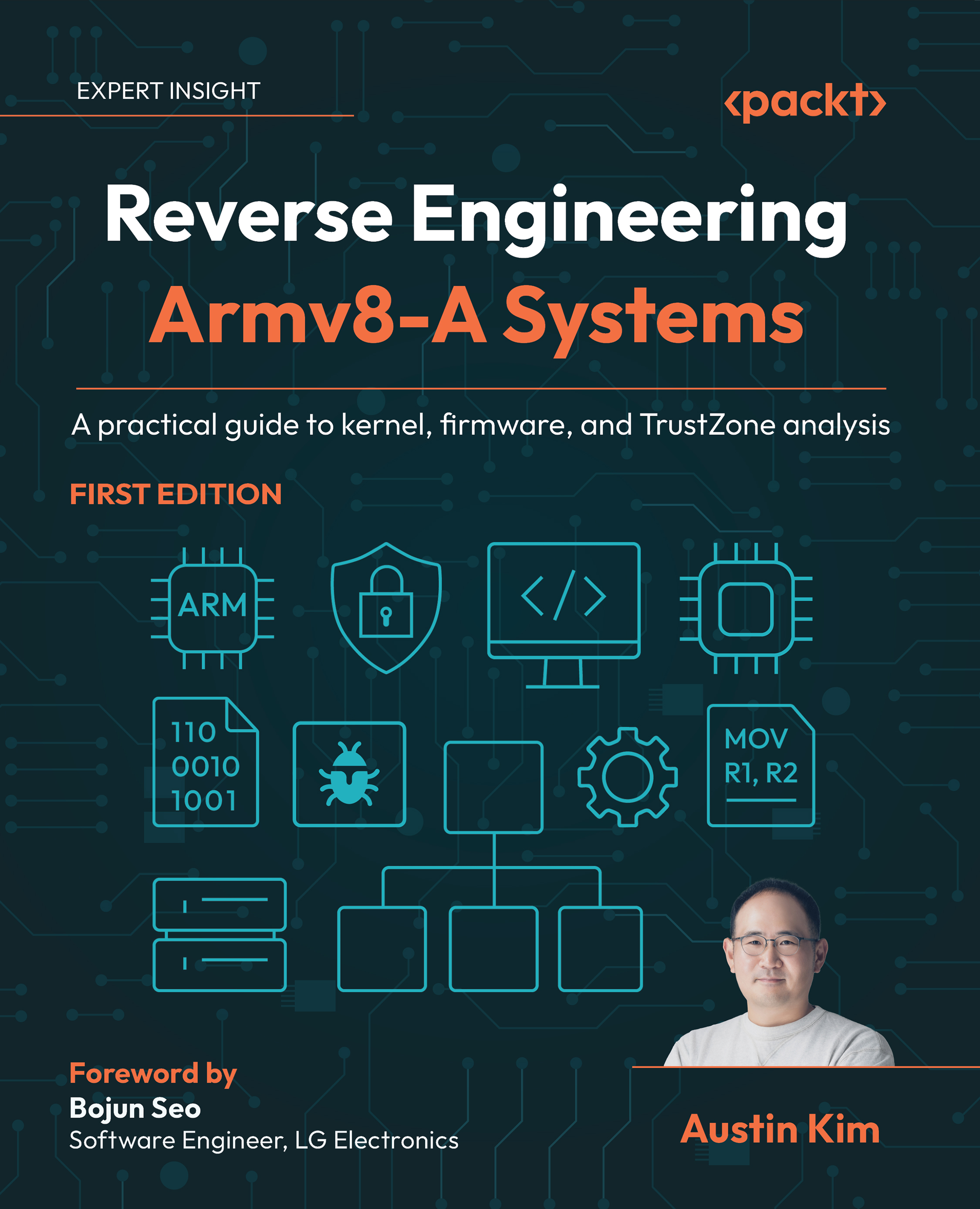
Overview of this book
Unlock the secrets hidden in binary code without needing the source! Written by a Linux kernel engineer and author with over 14 years of industry experience, this book lays a solid foundation in reverse engineering and takes you from curious analyst to expert. You’ll master advanced techniques to dissect kernel binaries, including kernel module files, vmlinux, and vmcore, giving you the power to analyze systems at their core.
This practical, three-part journey starts with the essentials of reverse engineering, introducing the key features of Armv8-A processors and the ELF file format. The second part walks you through the reverse-engineering process, from Arm environment setup to using static and dynamic analysis tools, including innovative methods for analyzing kernel binaries and the powerful debugging tool uftrace. The final part covers security, exploring TrustZone and the latest security techniques to safeguard Arm devices at the hardware level.
By the end of this reverse engineering book, you'll have comprehensive Armv8-A expertise and the practical skills to analyze any binary with confidence while leveraging advanced security features to harden your systems.
Table of Contents (22 chapters)
Preface


 Free Chapter
Part I: Fundamentals of Armv8-A Architecture
Learning Fundamentals of Arm Architecture
Understanding the ELF Binary Format
Manipulating Data with Arm Data Processing Instructions
Reading and Writing with Memory Access Instructions
Controlling Execution with Flow Control Instructions
Part II: Background Knowledge for Binary Analysis
Introducing Reverse Engineering
Setting Up a Practice Environment with an Arm Device
Unpacking the Kernel with Linux Fundamentals
Part III: Unlocking Key Binary Analysis Skills for Reverse Engineering
Understanding Basic Static Analysis
Going Deeper with Advanced Static Analysis
Analyzing Program Behavior with Basic Dynamic Analysis
Expert Techniques in Advanced Dynamic Analysis

Tracing Execution with uftrace
Part IV: Security Features in Armv8-A Systems
Securing Execution with Armv8-A TrustZone
Building Defenses with Key Security Features of Armv8-A
Other Books You May Enjoy
Index


