Sign In Start Free Trial
Account

Add to playlist

Create a Playlist

Modal Close icon
You need to login to use this feature.
  • Book Overview & Buying Building Microservices with Go
  • Table Of Contents Toc
Building Microservices with Go

Building Microservices with Go

By : Jackson
3.1 (12)
close
close
Building Microservices with Go

Building Microservices with Go

3.1 (12)
By: Jackson

Overview of this book

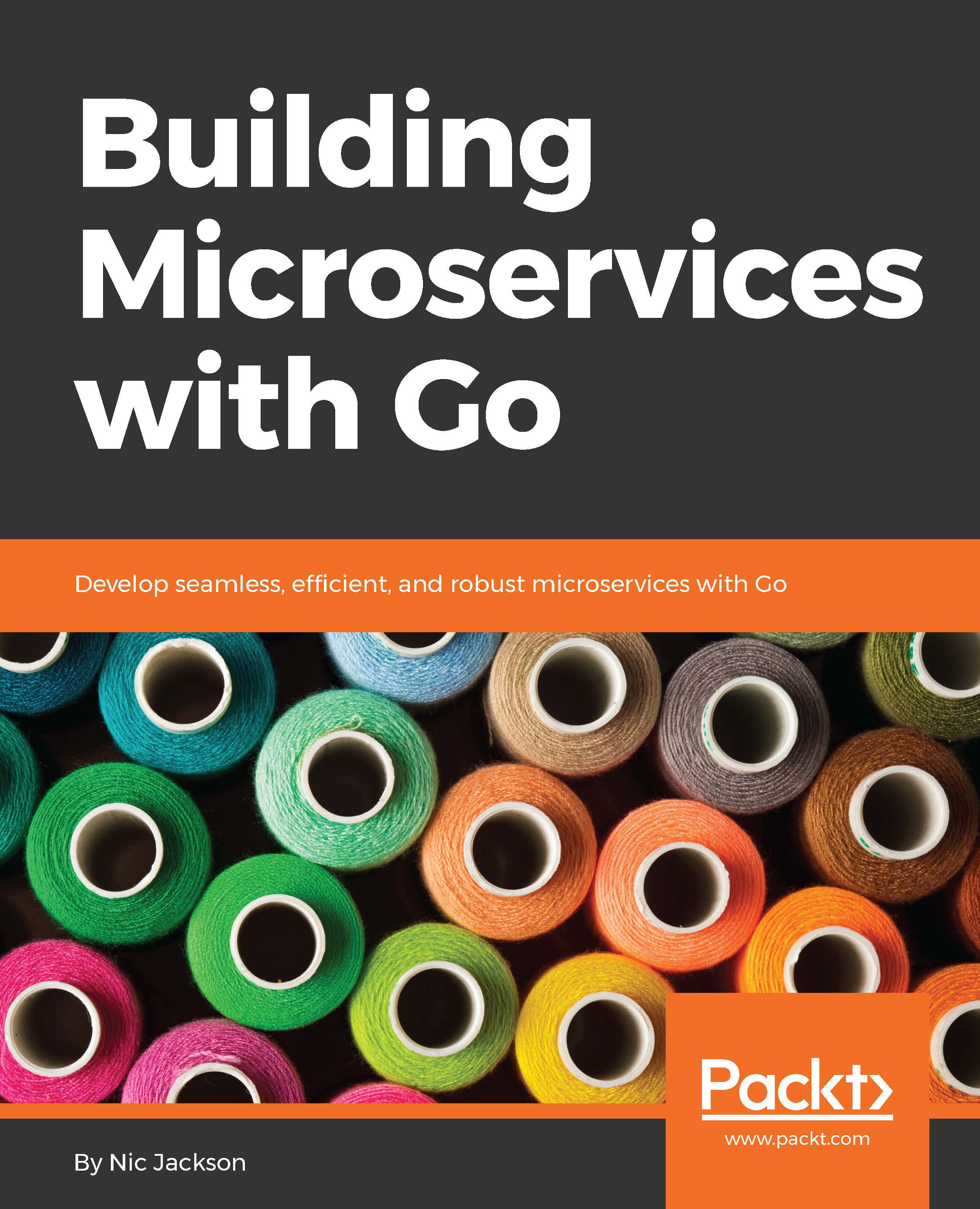
Microservice architecture is sweeping the world as the de facto pattern to build web-based applications. Golang is a language particularly well suited to building them. Its strong community, encouragement of idiomatic style, and statically-linked binary artifacts make integrating it with other technologies and managing microservices at scale consistent and intuitive. This book will teach you the common patterns and practices, showing you how to apply these using the Go programming language. It will teach you the fundamental concepts of architectural design and RESTful communication, and show you patterns that provide manageable code that is supportable in development and at scale in production. We will provide you with examples on how to put these concepts and patterns into practice with Go. Whether you are planning a new application or working in an existing monolith, this book will explain and illustrate with practical examples how teams of all sizes can start solving problems with microservices. It will help you understand Docker and Docker-Compose and how it can be used to isolate microservice dependencies and build environments. We finish off by showing you various techniques to monitor, test, and secure your microservices. By the end, you will know the benefits of system resilience of a microservice and the advantages of Go stack.
Table of Contents (11 chapters)
close
close

Exceptions


One of the great things about Go is that the standard patterns are such that you should always handle errors when they occur, instead of bubbling them up to the top and presenting them to the user. Having said that, there is always a case when the unexpected happens. The secret to this is to know about it and to fix the problem when it occurs. There are many exception logging platforms on the market. However, the two techniques we have discussed are, in my opinion, more than sufficient for tracing the few errors that we hopefully will find in our web application.

Panic and recover

Go has two great methods for handling unexpected errors:

  • panic
  • recover

Panic

The built-in panic function stops the normal execution of the current goroutine. All the deferred functions are run in the normal way; then, the program is terminated:

func panic(v interface{}) 

Recover

The recover function allows an application to manage the behavior of a panicking goroutine. When called inside a deferred function,...

CONTINUE READING
83
Tech Concepts
36
Programming languages
73
Tech Tools
Icon Unlimited access to the largest independent learning library in tech of over 8,000 expert-authored tech books and videos.
Icon Innovative learning tools, including AI book assistants, code context explainers, and text-to-speech.
Icon 50+ new titles added per month and exclusive early access to books as they are being written.
Building Microservices with Go
notes
bookmark Notes and Bookmarks search Search in title playlist Add to playlist font-size Font size

Change the font size

margin-width Margin width

Change margin width

day-mode Day/Sepia/Night Modes

Change background colour

Close icon Search
Country selected

Close icon Your notes and bookmarks

Confirmation

Modal Close icon
claim successful

Buy this book with your credits?

Modal Close icon
Are you sure you want to buy this book with one of your credits?
Close
YES, BUY

Submit Your Feedback

Modal Close icon
Modal Close icon
Modal Close icon