


-
Book Overview & Buying
-
Table Of Contents

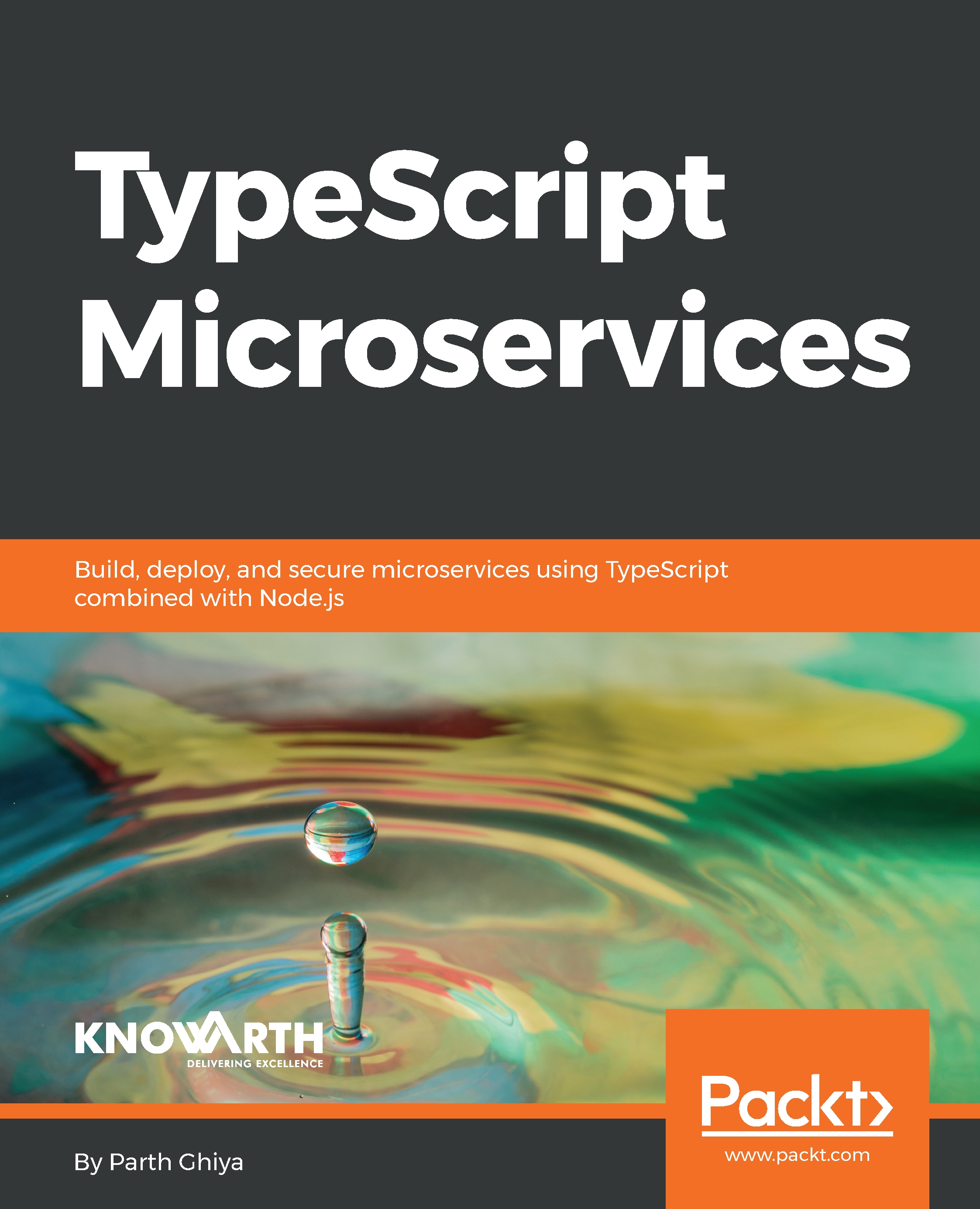
TypeScript Microservices
By :


TypeScript Microservices
By:
Overview of this book
In the last few years or so, microservices have achieved the rock star status and right now are one of the most tangible solutions in enterprises to make quick, effective, and scalable applications. The apparent rise of Typescript and long evolution from ES5 to ES6 has seen lots of big companies move to ES6 stack. If you want to learn how to leverage the power of microservices to build robust architecture using reactive programming and Typescript in Node.js, then this book is for you.
Typescript Microservices is an end-to-end guide that shows you the implementation of microservices from scratch; right from starting the project to hardening and securing your services. We will begin with a brief introduction to microservices before learning to break your monolith applications into microservices. From here, you will learn reactive programming patterns and how to build APIs for microservices. The next set of topics will take you through the microservice architecture with TypeScript and communication between services. Further, you will learn to test and deploy your TypeScript microservices using the latest tools and implement continuous integration. Finally, you will learn to secure and harden your microservice.
By the end of the book, you will be able to build production-ready, scalable, and maintainable microservices using Node.js and Typescript.
Table of Contents (12 chapters)
Preface


 Free Chapter
Debunking Microservices
Gearing up for the Journey
Exploring Reactive Programming
Beginning Your Microservice Journey
Understanding API Gateway
Service Registry and Discovery
Service State and Interservice Communication
Testing, Debugging, and Documenting
Deployment, Logging, and Monitoring

Hardening Your Application
Other Books You May Enjoy


