


-
Book Overview & Buying
-
Table Of Contents

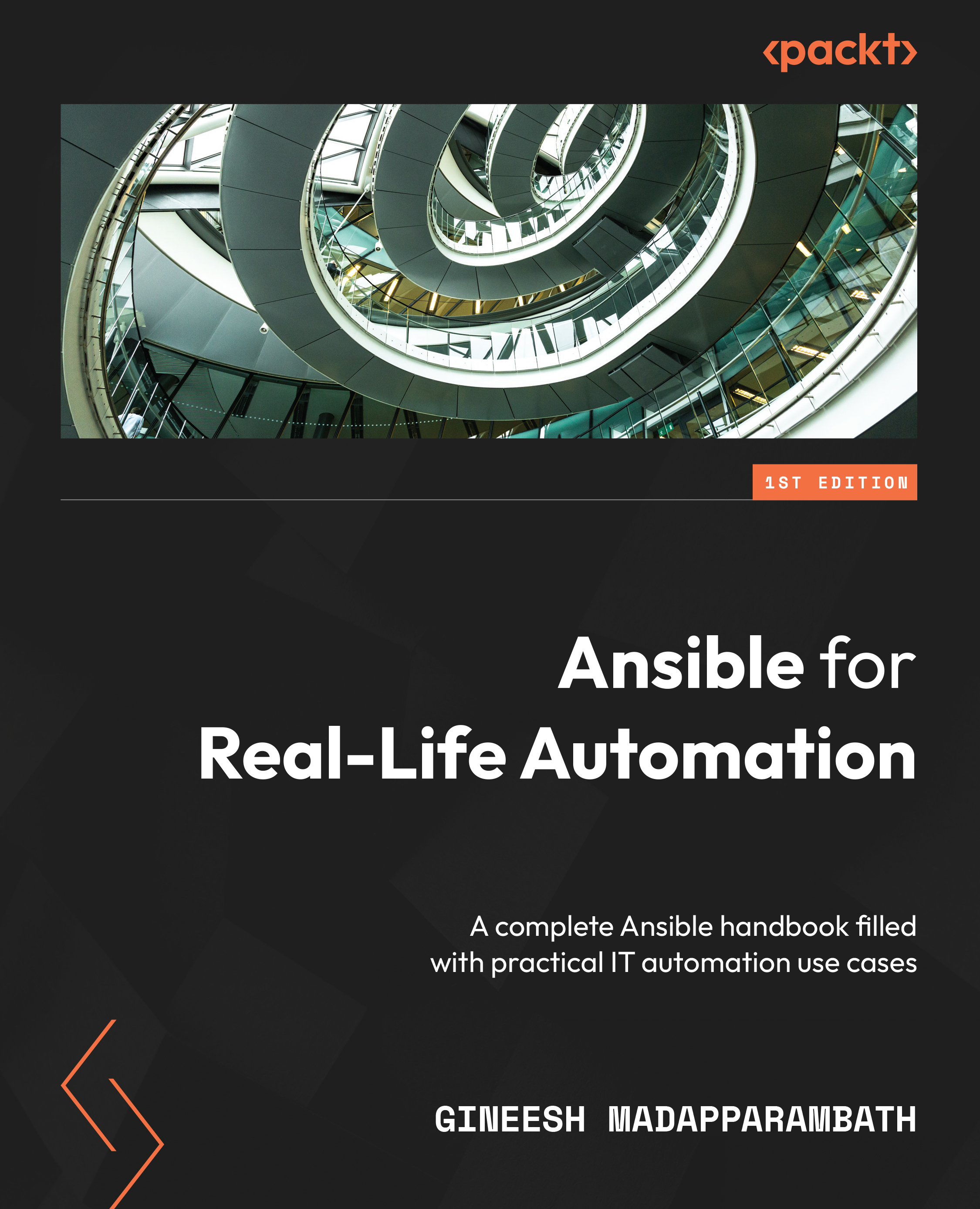
Ansible for Real-Life Automation
By :


Ansible for Real-Life Automation
By:
Overview of this book
Get ready to leverage the power of Ansible’s wide applicability to automate and manage IT infrastructure with Ansible for Real-Life Automation. This book will guide you in setting up and managing the free and open source automation tool and remote-managed nodes in the production and dev/staging environments.
Starting with its installation and deployment, you’ll learn automation using simple use cases in your workplace. You’ll go beyond just Linux machines to use Ansible to automate Microsoft Windows machines, network devices, and private and public cloud platforms such as VMWare, AWS, and GCP. As you progress through the chapters, you’ll integrate Ansible into your DevOps workflow and deal with application container management and container platforms such as Kubernetes. This Ansible book also contains a detailed introduction to Red Hat Ansible Automation Platform to help you get up to speed with Red Hat AAP and integration with CI/CD and ITSM.
What’s more, you’ll implement efficient automation solutions while learning best practices and methods to secure sensitive data using Ansible Vault and alternatives to automate non-supported platforms and operations using raw commands, command modules, and REST API calls.
By the end of this book, you’ll be proficient in identifying and developing real-life automation use cases using Ansible.
Table of Contents (22 chapters)
Preface


Part 1: Using Ansible as Your Automation Tool
 Free Chapter
Chapter 1: Ansible Automation – Introduction
Chapter 2: Starting with Simple Automation
Chapter 3: Automating Your Daily Jobs

Chapter 4: Exploring Collaboration in Automation Development
Part 2: Finding Use Cases and Integrations
Chapter 5: Expanding Your Automation Landscape
Chapter 6: Automating Microsoft Windows and Network Devices
Chapter 7: Managing Your Virtualization and Cloud Platforms
Chapter 8: Helping the Database Team with Automation
Chapter 9: Implementing Automation in a DevOps Workflow
Chapter 10: Managing Containers Using Ansible
Chapter 11: Managing Kubernetes Using Ansible
Chapter 12: Integrating Ansible with Your Tools
Chapter 13: Using Ansible for Secret Management
Part 3: Managing Your Automation Development Flow with Best Practices
Chapter 14: Keeping Automation Simple and Efficient
Chapter 15: Automating Non-Standard Platforms and Operations
Chapter 16: Ansible Automation Best Practices for Production
Index
Other Books You May Enjoy



