


-
Book Overview & Buying
-
Table Of Contents

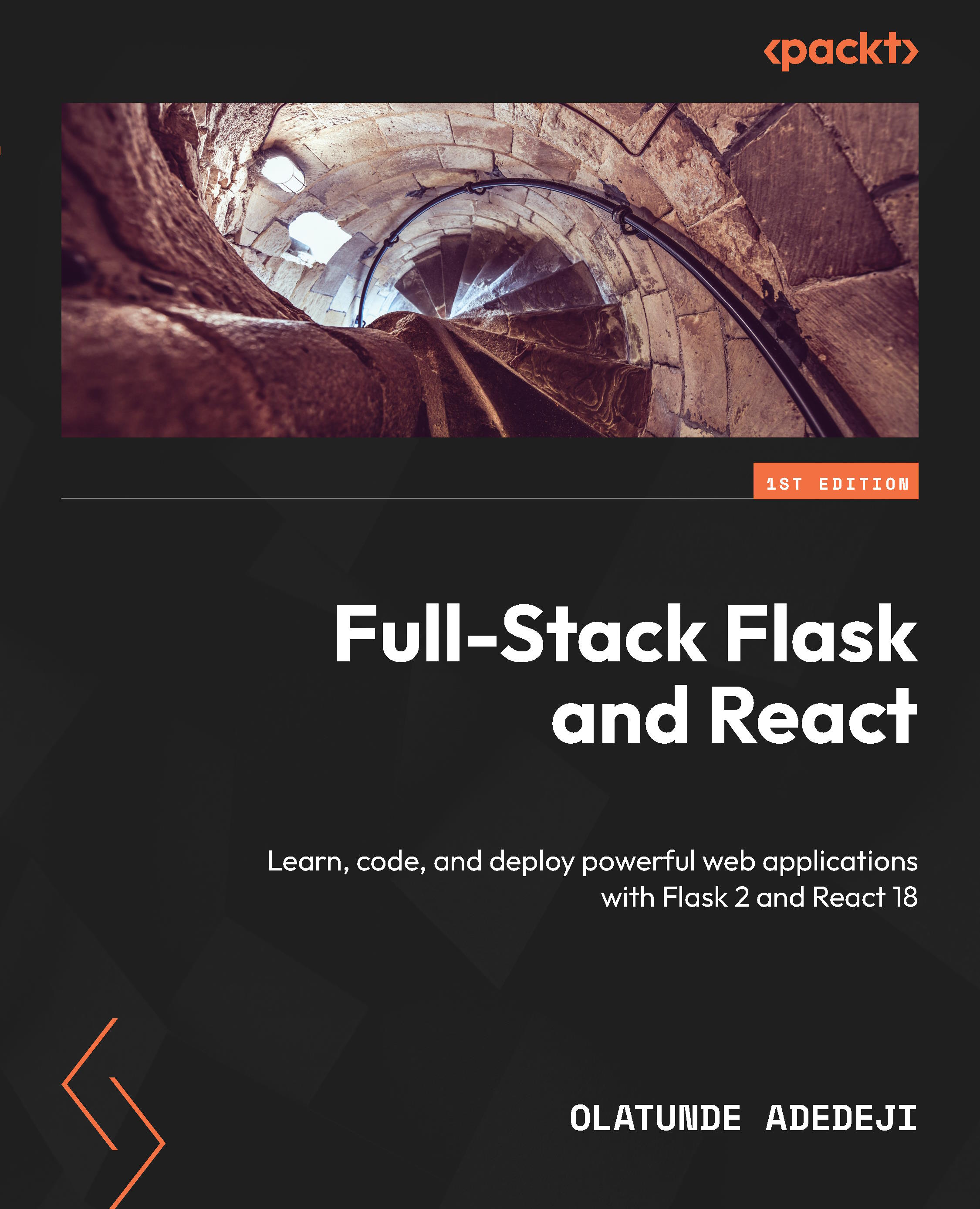
Full-Stack Flask and React
By :


Full-Stack Flask and React
By:
Overview of this book
Developing an interactive, efficient, and fast enterprise web application requires both the right approach and tooling. If you are a web developer looking for a way to tap the power of React’s reusable UI components and the simplicity of Flask for backend development to develop production-ready, scalable web apps in Python, then this book is for you.
Starting with an introduction to React, a JavaScript library for building highly interactive and reusable user interfaces, you’ll progress to data modeling for the web using SQLAlchemy and PostgreSQL, and then get to grips with Restful API development. This book will aid you in identifying your app users and managing access to your web application. You’ll also explore modular architectural design for Flask-based web applications and master error-handling techniques. Before you deploy your web app on AWS, this book will show you how to integrate unit testing best practices to ensure code reliability and functionality, making your apps not only efficient and fast but also robust and dependable.
By the end of this book, you’ll have acquired deep knowledge of the Flask and React technology stacks, which will help you undertake web application development with confidence.
Table of Contents (21 chapters)
Preface


Part 1 – Frontend Development with React
 Free Chapter
Chapter 1: Getting Full Stack Ready with React and Flask
Chapter 2: Getting Started with React
Chapter 3: Managing State with React Hooks
Chapter 4: Fetching Data with React APIs
Chapter 5: JSX and Displaying Lists in React
Chapter 6: Working with React Router and Forms
Chapter 7: React Unit Testing
Part 2 – Backend Development with Flask
Chapter 8: SQL and Data Modeling
Chapter 9: API Development and Documentation
Chapter 10: Integrating the React Frontend with the Flask Backend
Chapter 11: Fetching and Displaying Data in a React-Flask Application

Chapter 12: Authentication and Authorization
Chapter 13: Error Handling
Chapter 14: Modular Architecture – Harnessing the Power of Blueprints
Chapter 15: Flask Unit Testing
Chapter 16: Containerization and Flask Application Deployment
Index
Other Books You May Enjoy


