


-
Book Overview & Buying
-
Table Of Contents

Flask Framework Cookbook - Third Edition
By :


Flask Framework Cookbook
By:
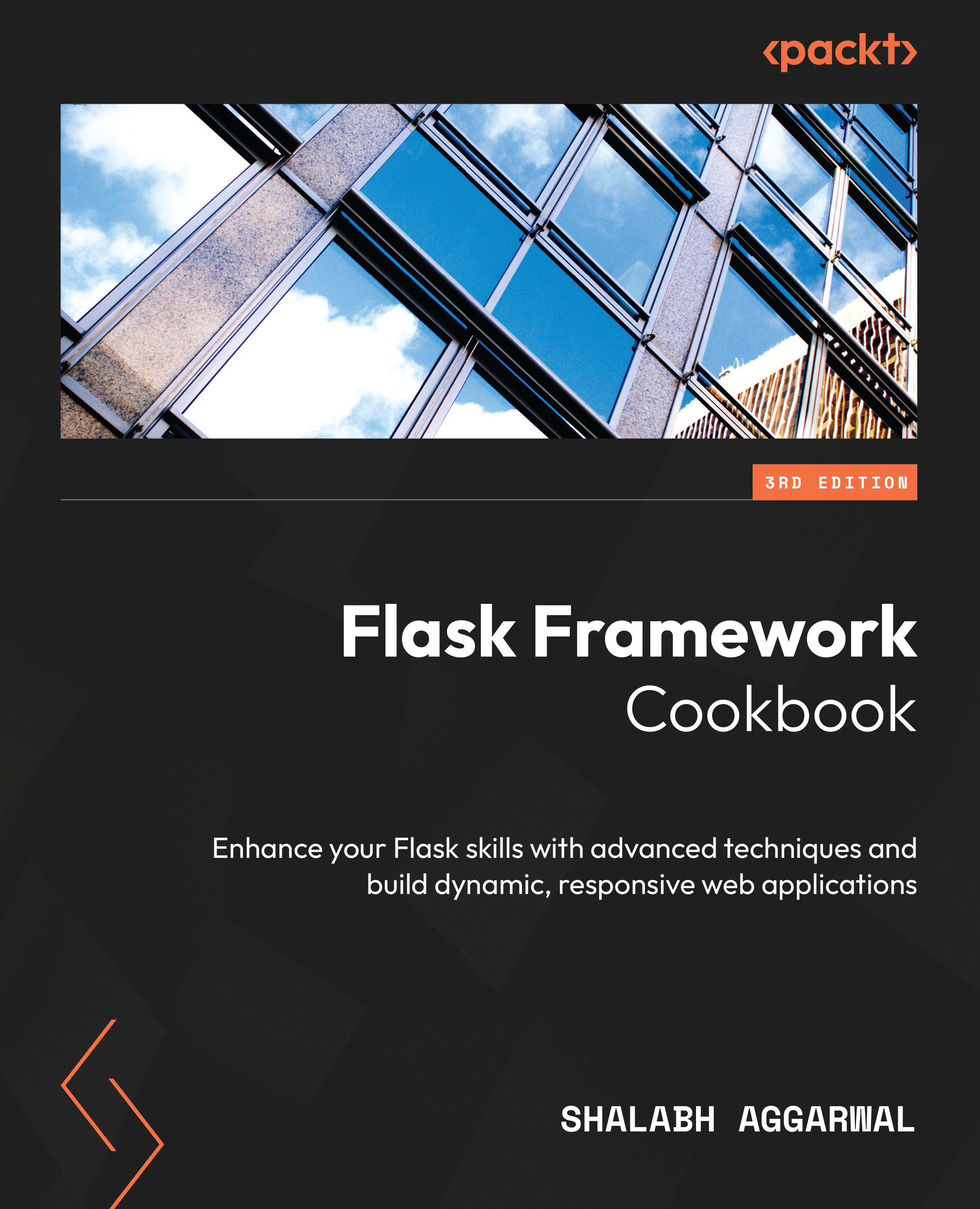
Overview of this book
Discover what makes Flask, the lightweight Python web framework, popular, as you delve into its modular design that enables the development of scalable web apps. With this practical guide, you'll explore modern solutions, recommended design patterns, and best practices for Flask web development.
Updated to the latest version of Flask and Python, this third edition of the Flask Framework Cookbook moves away from the outdated libraries, updates content to incorporate new coding patterns, and introduces recipes for the latest tools. You'll explore different ways to integrate with GPT to build AI-ready Flask applications. The book starts with an exploration of Flask application configurations and then guides you through working with templates and understanding the ORM and view layers. You’ll also be able to write an admin interface and get to grips with testing using the factory pattern, debugging, and logging errors. Then you’ll discover different ways of using Flask to create, deploy, and manage microservices using AWS, GCP, and Kubernetes. Finally, you’ll gain insights into various deployment and post-deployment techniques for platforms such as Apache, Tornado, and Datadog.
By the end of this book, you'll have acquired the knowledge necessary to write Flask applications that cater to a wide range of use cases in the best possible way and scale them using standard industry practices.
Table of Contents (20 chapters)
Preface


Part 1: Flask Fundamentals
 Free Chapter
Chapter 1: Flask Configurations
Chapter 2: Templating with Jinja
Chapter 3: Data Modeling in Flask
Chapter 4: Working with Views
Part 2: Flask Deep Dive
Chapter 5: Web Forms with WTForms
Chapter 6: Authenticating in Flask
Chapter 7: RESTful API Building

Chapter 8: Admin Interface for Flask Apps
Chapter 9: Internationalization and Localization
Part 3: Advanced Flask
Chapter 10: Debugging, Error Handling, and Testing
Chapter 11: Deployment and Post-Deployment
Chapter 12: Microservices and Containers
Chapter 13: GPT with Flask
Chapter 14: Additional Tips and Tricks
Index


