


-
Book Overview & Buying
-
Table Of Contents

You Don't Need JavaScript
By :


You Don't Need JavaScript
By:
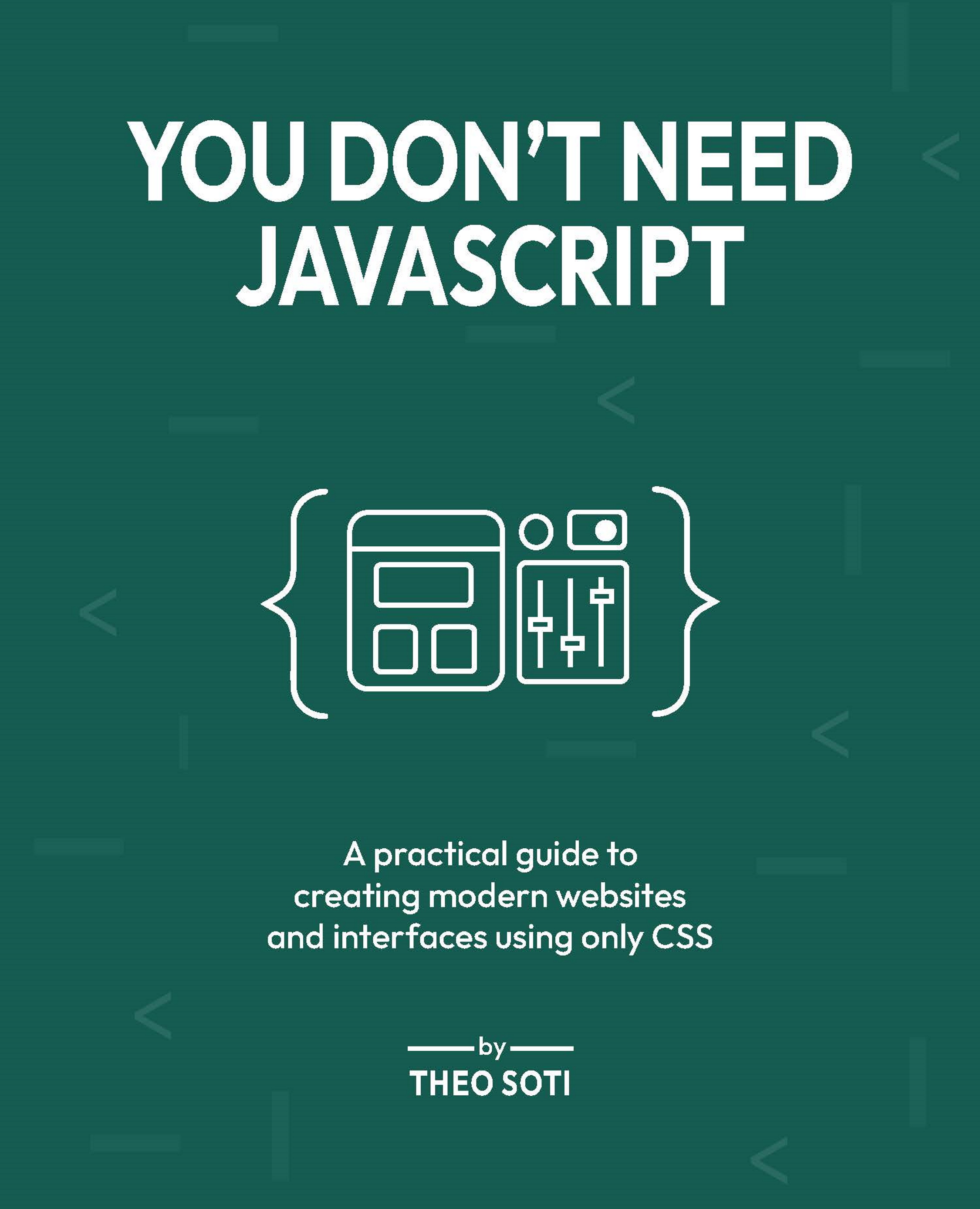
Overview of this book
For years, JavaScript has been the default answer for almost every interactive detail on the web. Need a modal, a dropdown, dark mode, smooth scrolling, or form validation? Most frontend developers reach for JavaScript without thinking twice. But the platform has changed.
This book shows how much modern HTML and CSS can already do on their own. Through practical examples, you will learn how to build real interface patterns with less code, fewer dependencies, and a stronger focus on accessibility, performance, and maintainability.
You will explore features such as :has(), native dialogs, accordions, sliders, counters, dark mode, smooth scrolling, form validation, border animations, view transitions, motion paths, and mask effects. The book also introduces newer browser features like popovers, anchor positioning, scroll-driven animations, customizable selects, and CSS carousels.
The goal is not to avoid JavaScript at all costs. It is to use it when it actually adds value, and not by default. By the end of the book, you will have a clearer sense of what the platform can handle today and how to build interfaces that are lighter, cleaner, and more resilient.
Table of Contents (25 chapters)
Preface


Chapter 1: Conditionally Styling with :has()
Chapter 2: Dark Mode in CSS
Chapter 3: Smooth Scrolling to Sections
Chapter 4: Native Modals with <dialog>
Chapter 5: Accordions with Pure CSS
Chapter 6: Pure-CSS Automatic Slider
Chapter 7: Auto‑Numbered Headings
Chapter 8: Other Use-Case of Counter
Part 2: Modern CSS Power Moves
Chapter 9: Custom Border Animations
Chapter 10: View Transitions
Chapter 11: CSS Motion Path

Chapter 12: CSS Mask Effects
Chapter 13: CSS-Only Form Validation
Part 3: A Glimpse of the Future
Chapter 14: Scroll-Driven Animations
Chapter 15: Native Popovers
Chapter 16: Customized Selects
Chapter 17: Anchor Positioning
Chapter 18: Native CSS Carousels
Chapter 19: And more to come...
Chapter 20: Closing Thoughts
Index



