Sign In Start Free Trial
Account

Add to playlist

Create a Playlist

Modal Close icon
You need to login to use this feature.
  • Book Overview & Buying The Official (ISC)2 Guide to the CCSP CBK
  • Table Of Contents Toc
The Official (ISC)2 Guide to the CCSP CBK

The Official (ISC)2 Guide to the CCSP CBK - Second Edition

By : Adam Gordon
close
close
The Official (ISC)2 Guide to the CCSP CBK

The Official (ISC)2 Guide to the CCSP CBK

By: Adam Gordon

Overview of this book

Globally recognized and backed by the Cloud Security Alliance (CSA) and the (ISC)2 the CCSP credential is the ideal way to match marketability and credibility to your cloud security skillset. The Official (ISC)2 Guide to the CCSPSM CBK second edition is your ticket for expert insight through the 6 CCSP domains. The book starts by focusing on building blocks of cloud-based systems and progresses to explaining concepts, principles, structures, and standards for designing, implementing, monitoring, and securing operating systems (OSs), equipment, networks, and applications. Next, you’ll cover cloud infrastructure components, existing threats, and mitigating and developing plans to deal with those threats. Moving ahead, you’ll ensure that the need for training and awareness in application security, the processes involved with cloud software assurance and validation, and the use of verified secure software are understood. Then, you’ll identify critical information and the execution of selected measures that eliminate adversary exploitation of critical information. In the end chapters, you’ll address ethical behavior and compliance with regulatory frameworks. By the end of this book, you’ll acquire the knowledge you'll need to implement strong information security programs in cloud computing.
Table of Contents (12 chapters)
close
close
Lock Free Chapter
1
Foreword
2
Introduction
9
EULA
2
Appendix B: Glossary
3
Appendix C: Helpful Resources and Links
Cloud Secure Data Lifecycle

Data is the single most valuable asset for most organizations. Depending on the value of the information to their operations, security controls should be applied accordingly.

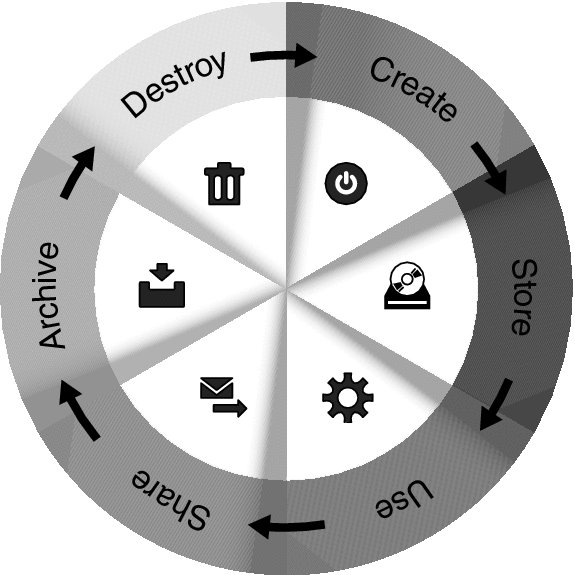
As with systems and other organizational assets, data should have a defined and managed lifecycle across the following key stages (Figure 1.5

  • Create: New digital content is generated or existing content is modified.
  • Store: Data is committed to a storage repository, which typically occurs directly after creation.
  • Use: Data is viewed, processed, or otherwise used in some sort of activity (not including modification).
  • Share: Information is made accessible to others—users, partners, customers, and so on.
  • Archive: Data leaves active use and enters long-term storage.
  • Destroy: Data is permanently destroyed using physical or digital means.
Image described by surrounding text

Figure 1.5 Key stages of the data lifecycle.

The lifecycle is not a single linear operation but a series of smaller lifecycles running in different...

CONTINUE READING
83
Tech Concepts
36
Programming languages
73
Tech Tools
Icon Unlimited access to the largest independent learning library in tech of over 8,000 expert-authored tech books and videos.
Icon Innovative learning tools, including AI book assistants, code context explainers, and text-to-speech.
Icon 50+ new titles added per month and exclusive early access to books as they are being written.
The Official (ISC)2 Guide to the CCSP CBK
notes
bookmark Notes and Bookmarks search Search in title playlist Add to playlist font-size Font size

Change the font size

margin-width Margin width

Change margin width

day-mode Day/Sepia/Night Modes

Change background colour

Close icon Search
Country selected

Close icon Your notes and bookmarks

Confirmation

Modal Close icon
claim successful

Buy this book with your credits?

Modal Close icon
Are you sure you want to buy this book with one of your credits?
Close
YES, BUY

Submit Your Feedback

Modal Close icon
Modal Close icon
Modal Close icon