
Sign In Start Free Trial
Account

Add to playlist

Create a Playlist

Modal Close icon
You need to login to use this feature.
  • Book Overview & Buying Hands-On Data Science and Python Machine Learning
  • Table Of Contents Toc
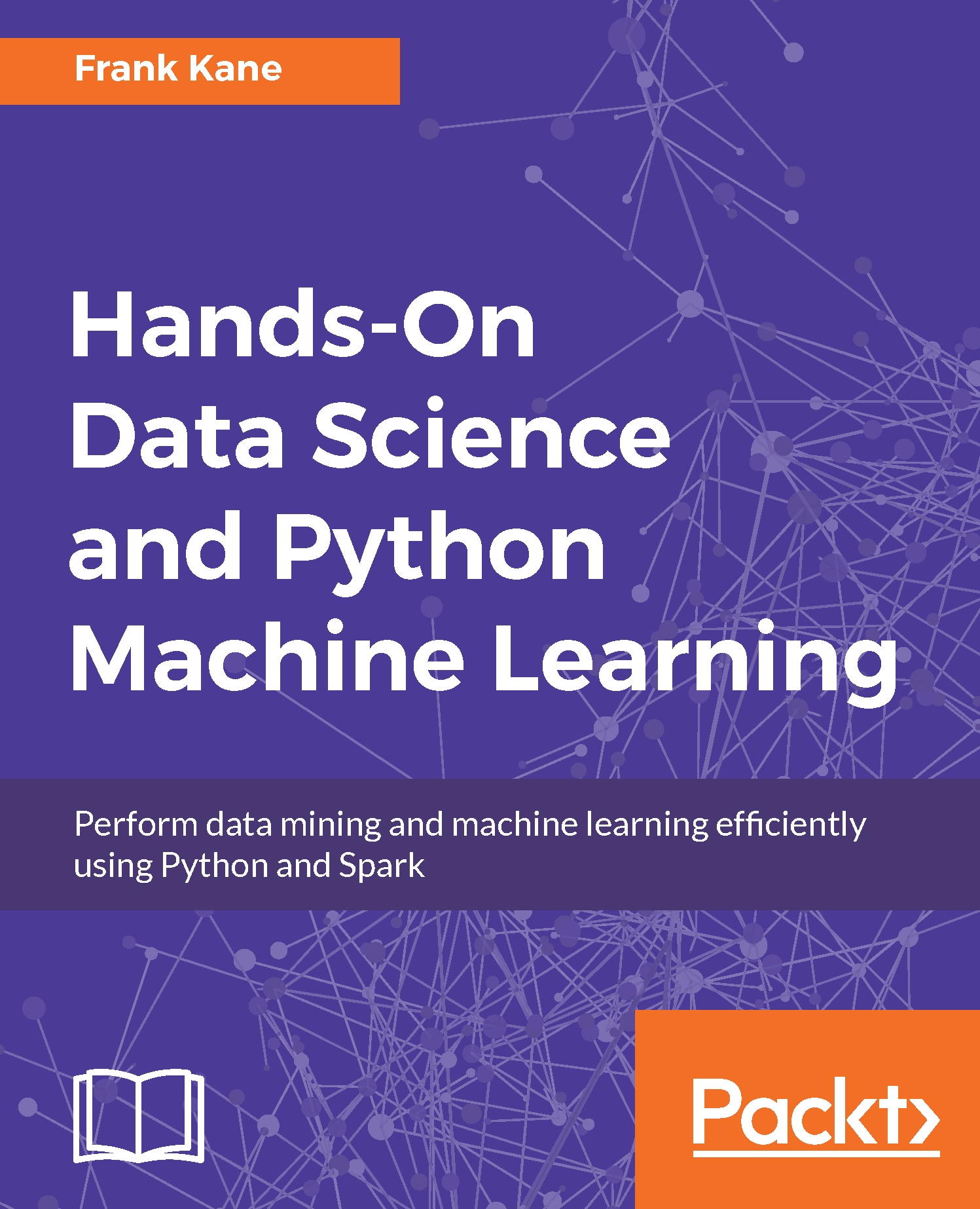
Hands-On Data Science and Python Machine Learning

Hands-On Data Science and Python Machine Learning

By : Frank Kane
3.8 (4)
close
close
Hands-On Data Science and Python Machine Learning

Hands-On Data Science and Python Machine Learning

3.8 (4)
By: Frank Kane

Overview of this book

Join Frank Kane, who worked on Amazon and IMDb’s machine learning algorithms, as he guides you on your first steps into the world of data science. Hands-On Data Science and Python Machine Learning gives you the tools that you need to understand and explore the core topics in the field, and the confidence and practice to build and analyze your own machine learning models. With the help of interesting and easy-to-follow practical examples, Frank Kane explains potentially complex topics such as Bayesian methods and K-means clustering in a way that anybody can understand them. Based on Frank’s successful data science course, Hands-On Data Science and Python Machine Learning empowers you to conduct data analysis and perform efficient machine learning using Python. Let Frank help you unearth the value in your data using the various data mining and data analysis techniques available in Python, and to develop efficient predictive models to predict future results. You will also learn how to perform large-scale machine learning on Big Data using Apache Spark. The book covers preparing your data for analysis, training machine learning models, and visualizing the final data analysis.
Table of Contents (11 chapters)
close
close

Using SVM to cluster people by using scikit-learn

Let's try out some support vector machines here. Fortunately, it's a lot easier to use than it is to understand. We're going to go back to the same example I used for k-means clustering, where I'm going to create some fabricated cluster data about ages and incomes of a hundred random people.

If you want to go back to the k-means clustering section, you can learn more about kind of the idea behind this code that generates the fake data. And if you're ready, please consider the following code:

import numpy as np 
 
#Create fake income/age clusters for N people in k clusters 
def createClusteredData(N, k): 
    pointsPerCluster = float(N)/k 
    X = [] 
    y = [] 
    for i in range (k): 
        incomeCentroid = np.random.uniform(20000.0, 200000.0) 
        ageCentroid = np.random.uniform(20.0, 70.0) 
 ...
CONTINUE READING
83
Tech Concepts
36
Programming languages
73
Tech Tools
Icon Unlimited access to the largest independent learning library in tech of over 8,000 expert-authored tech books and videos.
Icon Innovative learning tools, including AI book assistants, code context explainers, and text-to-speech.
Icon 50+ new titles added per month and exclusive early access to books as they are being written.
Hands-On Data Science and Python Machine Learning
notes
bookmark Notes and Bookmarks search Search in title playlist Add to playlist download Download options font-size Font size

Change the font size

margin-width Margin width

Change margin width

day-mode Day/Sepia/Night Modes

Change background colour

Close icon Search
Country selected

Close icon Your notes and bookmarks

Confirmation

Modal Close icon
claim successful

Buy this book with your credits?

Modal Close icon
Are you sure you want to buy this book with one of your credits?
Close
YES, BUY

Submit Your Feedback

Modal Close icon
Modal Close icon
Modal Close icon