-
Book Overview & Buying
-
Table Of Contents

ARM?? Cortex?? M4 Cookbook
By :


ARM?? Cortex?? M4 Cookbook
By:
Overview of this book
Embedded microcontrollers are at the core of many everyday electronic devices. Electronic automotive systems rely on these devices for engine management, anti-lock brakes, in car entertainment, automatic transmission, active suspension, satellite navigation, etc. The so-called internet of things drives the market for such technology, so much so that embedded cores now represent 90% of all processor’s sold. The ARM Cortex-M4 is one of the most powerful microcontrollers on the market and includes a floating point unit (FPU) which enables it to address applications.
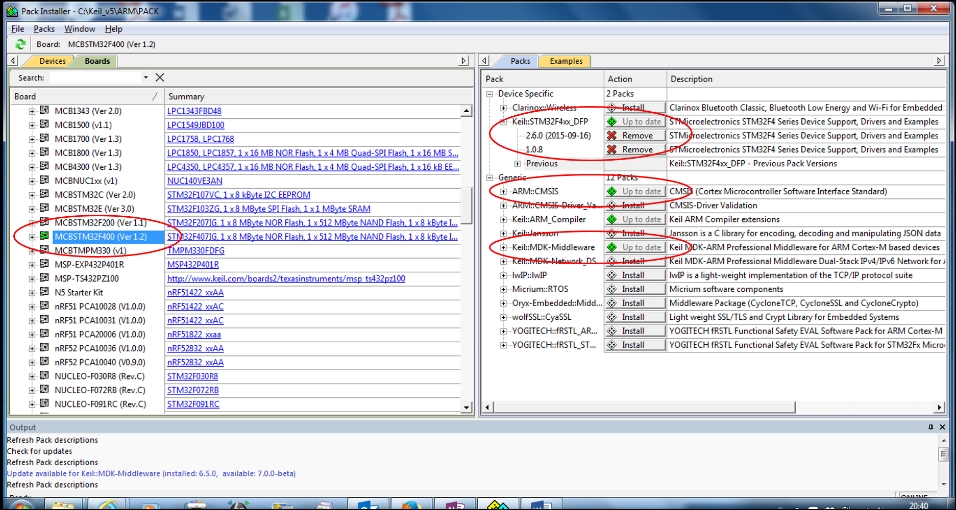
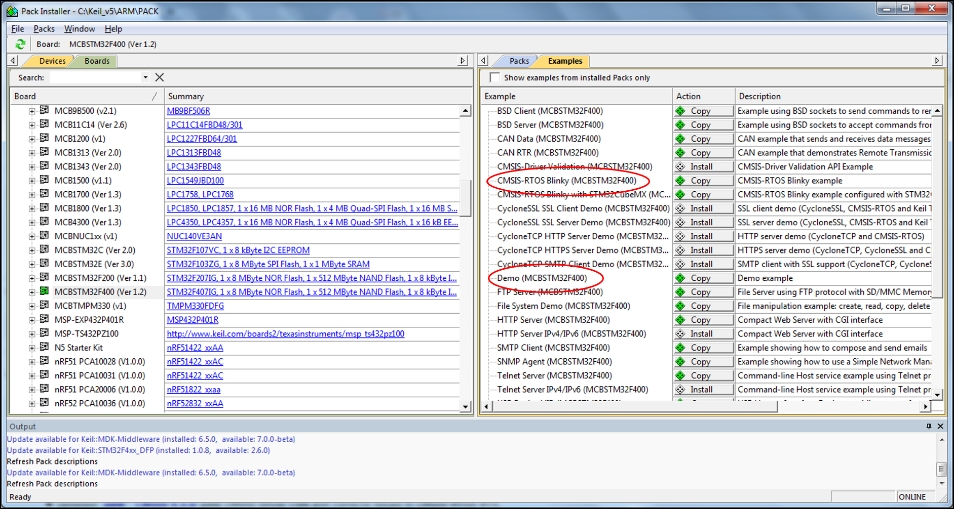
The ARM Cortex-M4 Microcontroller Cookbook provides a practical introduction to programming an embedded microcontroller architecture. This book attempts to address this through a series of recipes that develop embedded applications targeting the ARM-Cortex M4 device family. The recipes in this book have all been tested using the Keil MCBSTM32F400 board. This board includes a small graphic LCD touchscreen (320x240 pixels) that can be used to create a variety of 2D gaming applications. These motivate a younger audience and are used throughout the book to illustrate particular hardware peripherals and software concepts.
C language is used predominantly throughout but one chapter is devoted to recipes involving assembly language. Programs are mostly written using ARM’s free microcontroller development kit (MDK) but for those looking for open source development environments the book also shows how to configure the ARM-GNU toolchain. Some of the recipes described in the book are the basis for laboratories and assignments undertaken by undergraduates.
Table of Contents (11 chapters)
Preface


 Free Chapter
1. A Practical Introduction to ARM® CORTEX®

2. C Language Programming
3. Programming I/O
4. Assembly Language Programming
5. Data Conversion
6. Multimedia Support
7. Real-Time Signal Processing
8. Real-Time Embedded Systems
9. Embedded Toolchain
Index