
Sign In Start Free Trial
Account

Add to playlist

Create a Playlist

Modal Close icon
You need to login to use this feature.
  • Book Overview & Buying PostgreSQL High Availability Cookbook
  • Table Of Contents Toc
  • Feedback & Rating feedback
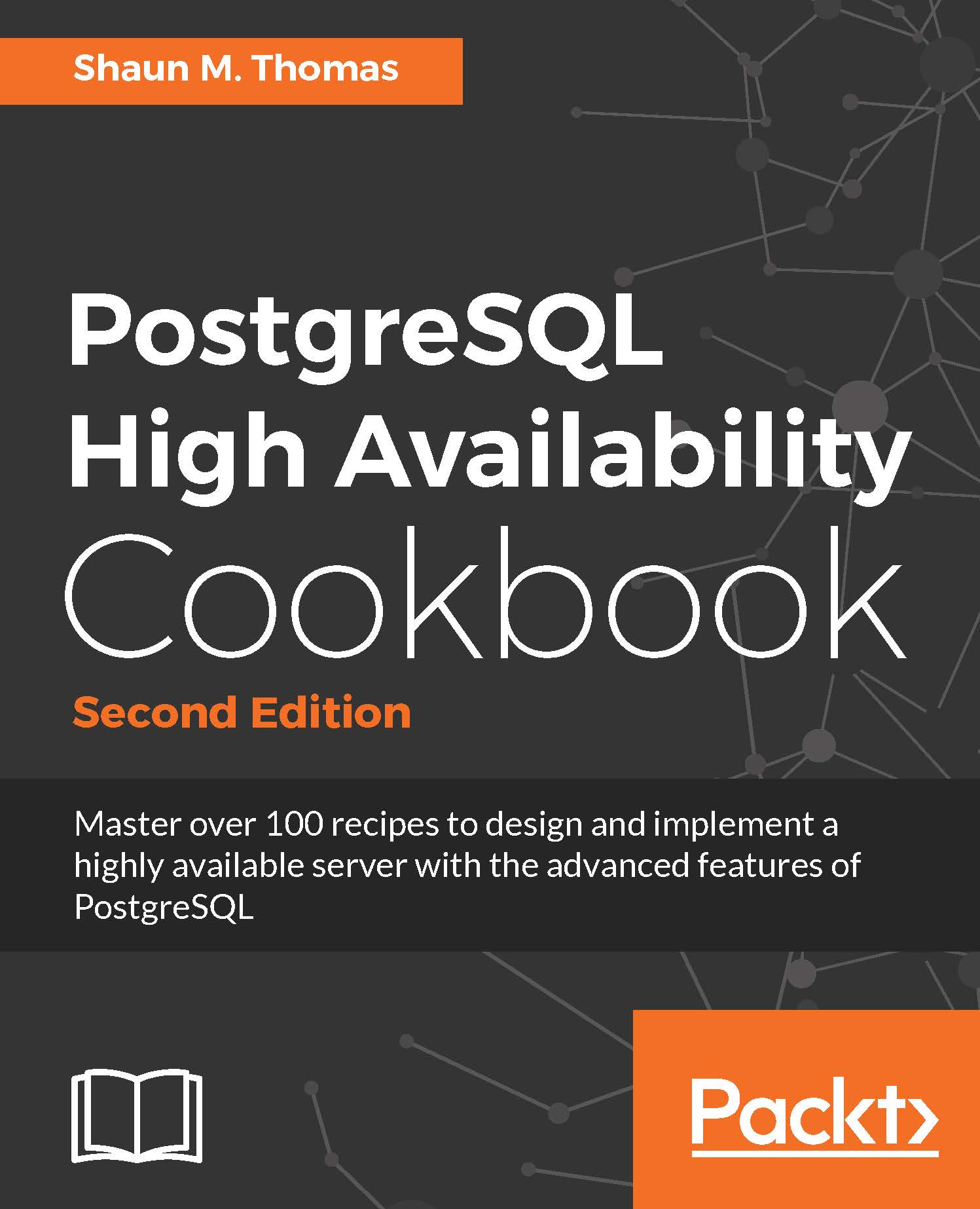
PostgreSQL High Availability Cookbook

PostgreSQL High Availability Cookbook - Second Edition

By : Shaun Thomas
5 (2)
close
close
PostgreSQL High Availability Cookbook

PostgreSQL High Availability Cookbook

5 (2)
By: Shaun Thomas

Overview of this book

Databases are nothing without the data they store. In the event of a failure - catastrophic or otherwise - immediate recovery is essential. By carefully combining multiple servers, it’s even possible to hide the fact a failure occurred at all. From hardware selection to software stacks and horizontal scalability, this book will help you build a versatile PostgreSQL cluster that will survive crashes, resist data corruption, and grow smoothly with customer demand. It all begins with hardware selection for the skeleton of an efficient PostgreSQL database cluster. Then it’s on to preventing downtime as well as troubleshooting some real life problems that administrators commonly face. Next, we add database monitoring to the stack, using collectd, Nagios, and Graphite. And no stack is complete without replication using multiple internal and external tools, including the newly released pglogical extension. Pacemaker or Raft consensus tools are the final piece to grant the cluster the ability to heal itself. We even round off by tackling the complex problem of data scalability. This book exploits many new features introduced in PostgreSQL 9.6 to make the database more efficient and adaptive, and most importantly, keep it running.
Table of Contents (12 chapters)
close
close

Introduction

Every business has the goal of being successful. The consequence of having a successful business when there's a database involved is increasingly high volume. This volume can be composed of query activity, data accumulation, or both. A PostgreSQL database that is not prepared for vast amounts of data or a huge transaction load will slowly falter until the platform suffers.

Customers notice bad performance just as readily as outages. If our database is struggling to service queries, we have three options:

  • Spend time optimizing the platform to reduce database interaction
  • Buy a more capable database server
  • Store data on several PostgreSQL servers

Indeed, we should probably always implement step one in any case. Yet, there is a limit to candidates for optimization. If the platform is using an ORM (Object-relational Mapping), making query changes can be difficult because they are generated from the...

Visually different images
CONTINUE READING
83
Tech Concepts
36
Programming languages
73
Tech Tools
Icon Unlimited access to the largest independent learning library in tech of over 8,000 expert-authored tech books and videos.
Icon Innovative learning tools, including AI book assistants, code context explainers, and text-to-speech.
Icon 50+ new titles added per month and exclusive early access to books as they are being written.
PostgreSQL High Availability Cookbook
notes
bookmark Notes and Bookmarks search Search in title playlist Add to playlist download Download options font-size Font size

Change the font size

margin-width Margin width

Change margin width

day-mode Day/Sepia/Night Modes

Change background colour

Close icon Search
Country selected

Close icon Your notes and bookmarks

Confirmation

Modal Close icon
claim successful

Buy this book with your credits?

Modal Close icon
Are you sure you want to buy this book with one of your credits?
Close
YES, BUY

Submit Your Feedback

Modal Close icon
Modal Close icon
Modal Close icon