Sign In Start Free Trial
Account

Add to playlist

Create a Playlist

Modal Close icon
You need to login to use this feature.
  • Book Overview & Buying PostgreSQL High Availability Cookbook
  • Table Of Contents Toc
  • Feedback & Rating feedback
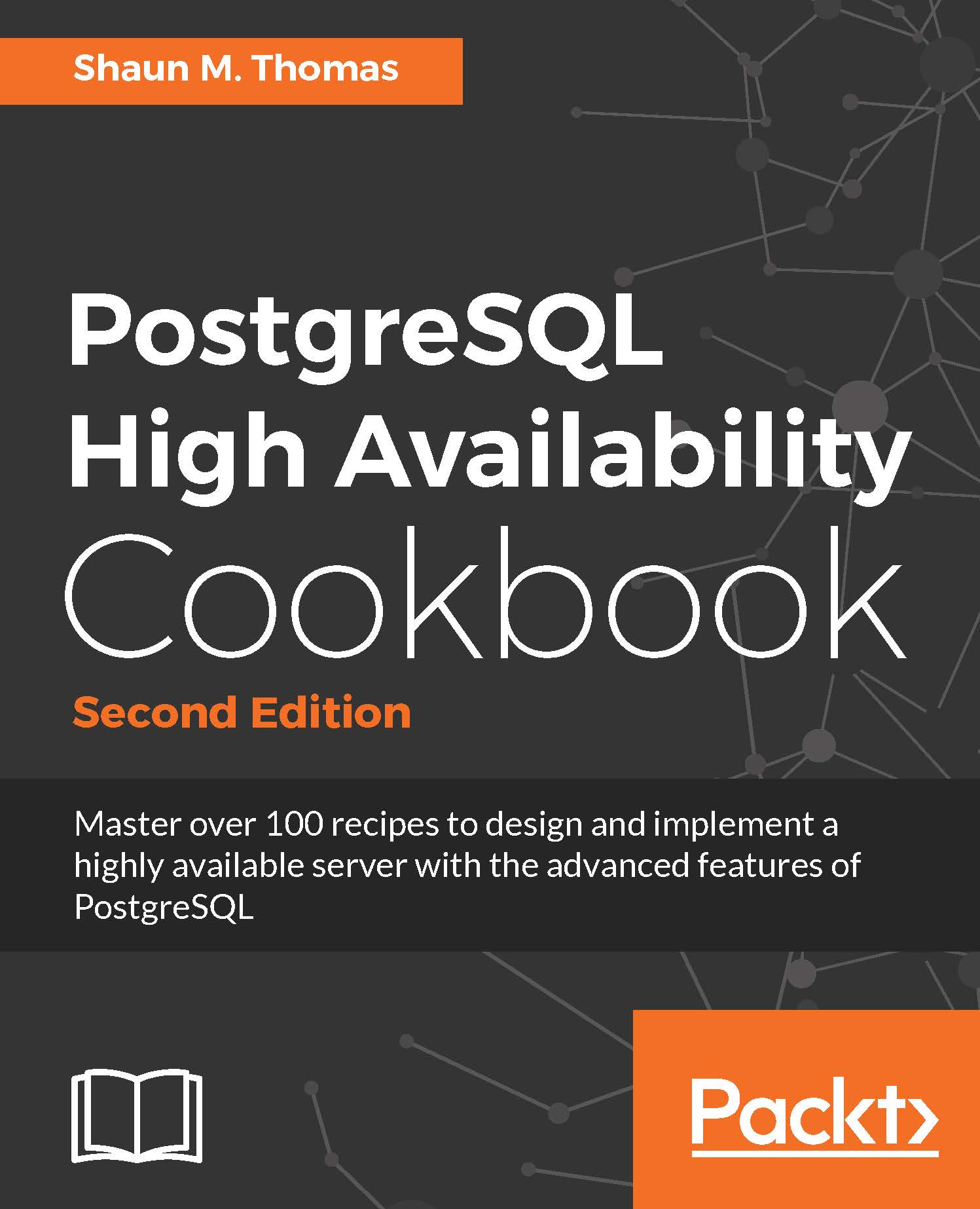
PostgreSQL High Availability Cookbook

PostgreSQL High Availability Cookbook - Second Edition

By : Shaun Thomas
5 (2)
close
close
PostgreSQL High Availability Cookbook

PostgreSQL High Availability Cookbook

5 (2)
By: Shaun Thomas

Overview of this book

Databases are nothing without the data they store. In the event of a failure - catastrophic or otherwise - immediate recovery is essential. By carefully combining multiple servers, it’s even possible to hide the fact a failure occurred at all. From hardware selection to software stacks and horizontal scalability, this book will help you build a versatile PostgreSQL cluster that will survive crashes, resist data corruption, and grow smoothly with customer demand. It all begins with hardware selection for the skeleton of an efficient PostgreSQL database cluster. Then it’s on to preventing downtime as well as troubleshooting some real life problems that administrators commonly face. Next, we add database monitoring to the stack, using collectd, Nagios, and Graphite. And no stack is complete without replication using multiple internal and external tools, including the newly released pglogical extension. Pacemaker or Raft consensus tools are the final piece to grant the cluster the ability to heal itself. We even round off by tackling the complex problem of data scalability. This book exploits many new features introduced in PostgreSQL 9.6 to make the database more efficient and adaptive, and most importantly, keep it running.
Table of Contents (12 chapters)
close
close

Copying a few tables with Londiste


Londiste provides a very capable control mechanism in londiste3. Unlike Bucardo, we don't need to create a herd or sync, nor do we have to launch the process that handles data for a particular herd. With Londiste, it's all about the tables.

In this recipe, we will utilize londiste3 to register all of the tables we want to copy and verify that the data is the same on each PostgreSQL server.

Getting ready

We will be continuing where we left off in the Setting up Londiste recipe. Please make sure that you have completed that recipe before continuing. Once again, we will use the pgbench utility to create an initial set of tables. Execute this command on the primary PostgreSQL server as the postgres user if you haven't already done so:

pgbench -i postgres

How to do it...

Execute all commands in this recipe as the postgres system user. Follow these steps to copy the sample pgbench tables:

  1. Extract the table creation statements from the primary node with the following...
Visually different images
CONTINUE READING
83
Tech Concepts
36
Programming languages
73
Tech Tools
Icon Unlimited access to the largest independent learning library in tech of over 8,000 expert-authored tech books and videos.
Icon Innovative learning tools, including AI book assistants, code context explainers, and text-to-speech.
Icon 50+ new titles added per month and exclusive early access to books as they are being written.
PostgreSQL High Availability Cookbook
notes
bookmark Notes and Bookmarks search Search in title playlist Add to playlist download Download options font-size Font size

Change the font size

margin-width Margin width

Change margin width

day-mode Day/Sepia/Night Modes

Change background colour

Close icon Search
Country selected

Close icon Your notes and bookmarks

Confirmation

Modal Close icon
claim successful

Buy this book with your credits?

Modal Close icon
Are you sure you want to buy this book with one of your credits?
Close
YES, BUY

Submit Your Feedback

Modal Close icon
Modal Close icon
Modal Close icon