


-
Book Overview & Buying
-
Table Of Contents

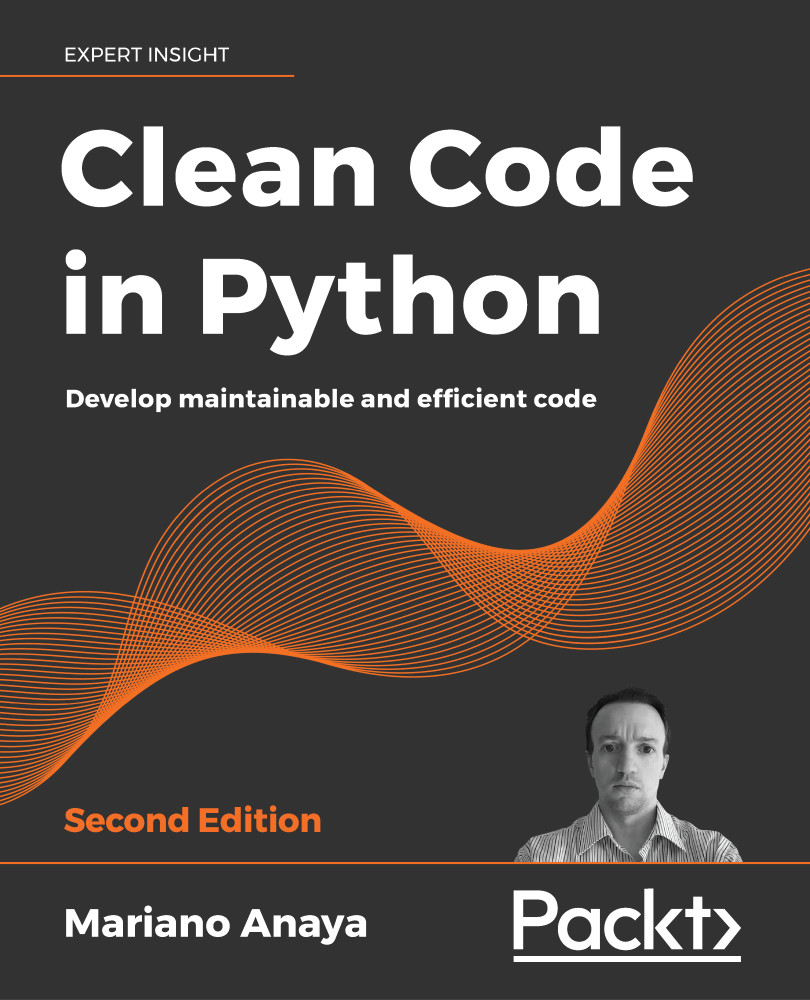
Clean Code in Python - Second Edition
By :


Clean Code in Python
By:
Overview of this book
Experienced professionals in every field face several instances of disorganization, poor readability, and testability due to unstructured code.
This second edition has been updated to reflect new best practices in Python 3.9, helping developers write professional, scalable, and maintainable code. It introduces advanced object-oriented design, decorators, descriptors, and refactoring strategies using SOLID principles. Whether modernizing legacy projects or building new applications, this book provides practical techniques to write cleaner and more efficient Python code using the Python standard library and manage your projects successfully.
The book begins by describing the basic elements of writing clean code and how it plays a key role in Python programming.
The book discusses object-oriented programming in Python and show you the design principles of software testing and how to resolve problems by implementing software design patterns in your code. In the concluding chapter, we break down a monolithic application into a microservices-based one starting from the code as the basis for a solid platform.
By the end of this clean code book, you will be proficient in applying industry-approved coding practices to design clean, sustainable, and readable real-world Python code.
Table of Contents (13 chapters)

Introduction, Code Formatting, and Tools

 Free Chapter
Pythonic Code
General Traits of Good Code
The SOLID Principles
Using Decorators to Improve Our Code

Getting More Out of Our Objects with Descriptors
Generators, Iterators, and Asynchronous Programming
Unit Testing and Refactoring
Common Design Patterns
Clean Architecture
Other Books You May Enjoy
Index


