


-
Book Overview & Buying
-
Table Of Contents

The Platform Engineer's Handbook
By :


The Platform Engineer's Handbook
By:
Overview of this book
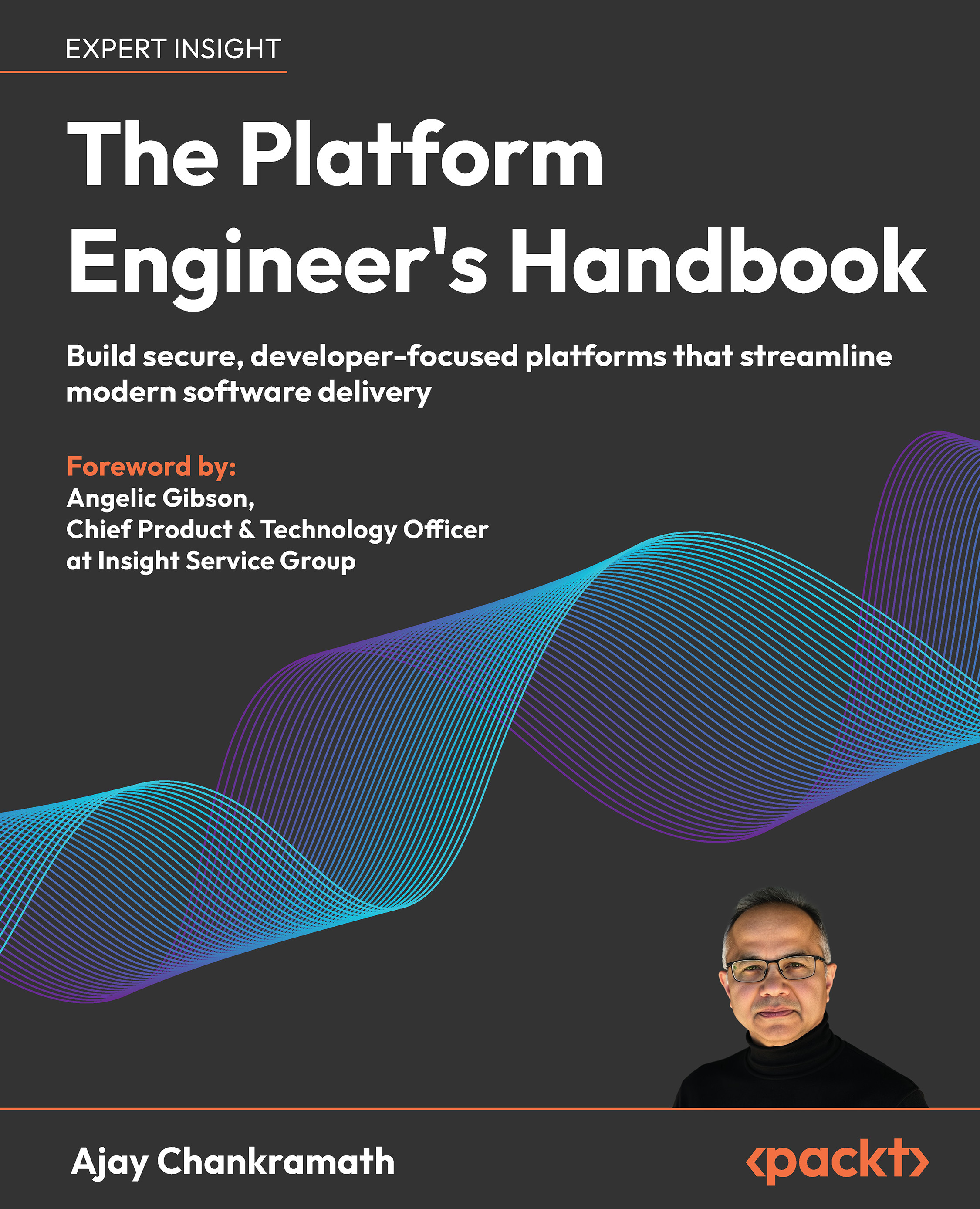
The Platform Engineer’s Handbook equips senior engineers and DevOps professionals to deliver developer-friendly infrastructure with automation, speed, AI acceleration, and intelligence. Starting with a blank slate, you’ll build a complete, modern platform that runs locally on your laptop, learning real-world patterns as you go.
In this handbook, you’ll follow a structured, progressive journey, beginning with source control governance and branching strategies, then deploying a Kubernetes-based runtime, embedding observability, and securing platform access. You’ll implement self-service onboarding, CI/CD as a service, and developer portals with Backstage. Later chapters introduce infrastructure blueprints, policy as code, FinOps observability, and AI-augmented platform services such as agent-based onboarding and copilots for pipeline creation.
Each chapter combines core concepts, lab-based exercises, and production-ready best practices to provide a comprehensive understanding of the subject matter. By the end, you'll have a working MVP platform and the skills to adapt and scale it for your team or organization.
Table of Contents (21 chapters)
Preface


 Free Chapter
Part 1: Designing, Building, and Deploying the Core Engineering Platform
Chapter 1: Platform Engineering: Laying the Groundwork

Chapter 2: Scalable Platform Runtime with Kubernetes and Service Mesh
Chapter 3: Securing Platform Access
Chapter 4: Embedding Observability
Chapter 5: Evaluate the User Experience
Part 2: Enhancing Productivity Through Self-Service Functions
Chapter 6: Accelerating DevEx: Deploying and Curating Your First Developer Portal
Chapter 7: Self-Service Platform Onboarding
Chapter 8: CI/CD as a Platform Service
Chapter 9: Self-service Infrastructure Management
Chapter 10: Publishing Starter Kits
Part 3: Scaling, Maturing, and Evolving Your Platform
Chapter 11: Validating Compliance and Policy as Code
Chapter 12: Optimize Cost, Performance, and Scalability
Chapter 13: Resilience Automation
Chapter 14: Agentic and AI-Augmented platforms
Chapter 15: Appendix A—Comprehensive Setup Guide for macOS, Linux, and Windows
Chapter 16: Unlock Your Exclusive Benefits
Index


