Sign In Start Free Trial
Account

Add to playlist

Create a Playlist

Modal Close icon
You need to login to use this feature.
  • Book Overview & Buying MEAN Web Development
  • Table Of Contents Toc
  • Feedback & Rating feedback
MEAN Web Development

MEAN Web Development

By : Haviv
4.5 (58)
close
close
MEAN Web Development

MEAN Web Development

4.5 (58)
By: Haviv

Overview of this book

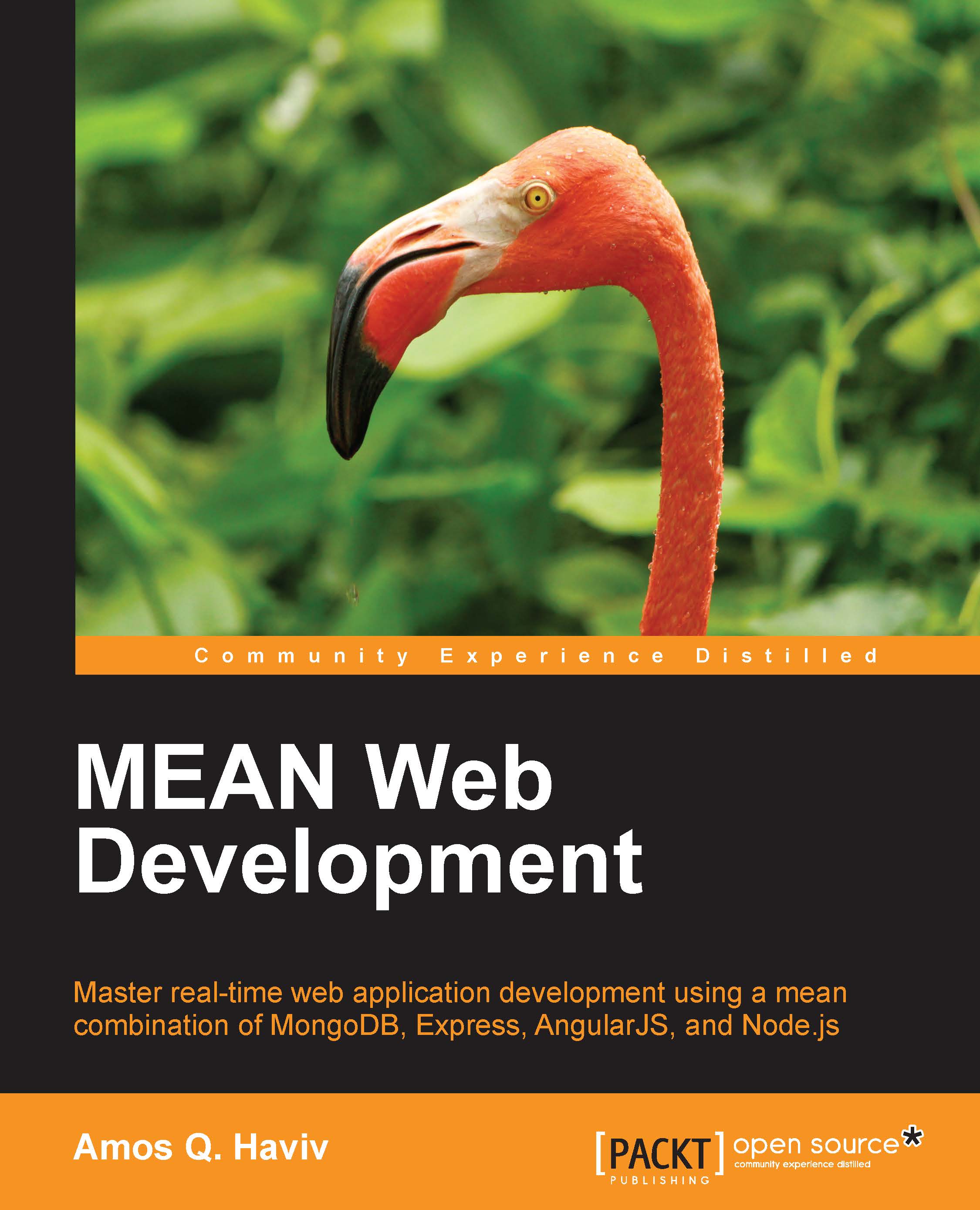
The MEAN stack is a collection of the most popular modern tools for web development; it comprises MongoDB, Express, AngularJS, and Node.js. Starting with MEAN core frameworks, this project-based guide will explain the key concepts of each framework, how to set them up properly, and how to use popular modules to connect it all together. By following the real-world examples shown in this tutorial, you will scaffold your MEAN application architecture, add an authentication layer, and develop an MVC structure to support your project development. Finally, you will walk through the different tools and frameworks that will help expedite your daily development cycles. Watch how your application development grows by learning from the only guide that is solely orientated towards building a full, end-to-end, real-time application using the MEAN stack!
Table of Contents (13 chapters)
close
close
12
Index

The evolution of JavaScript

JavaScript is an interpreted computer programming language that was built for the Web. First implemented by the Netscape Navigator web browser, it became the programming language that web browsers use to execute client-side logic. In the mid 2000s, the shift from websites to web applications, along with the release of faster browsers, gradually created a community of JavaScript developers writing more complex applications. These developers started creating libraries and tools that shortened development cycles, giving birth to a new generation of even more advanced web applications, which in turn created a continuous demand for better browsers. This cycle went on for a few years, where the vendors kept improving their browsers and JavaScript developers kept pushing the boundaries. The real revolution began in 2008, when Google released its Chrome browser, along with its fast JIT-compiling V8 JavaScript engine. Google's V8 engine made JavaScript run so much faster that it completely transformed web application development. More importantly, the release of the engine's source code allowed developers to start reimagining JavaScript outside of the browser. One of the first products of this revolution was Node.js.

After looking into other options for a while, programmer Ryan Dahl found that V8 engine fit his non-blocking I/O experiment called Node.js. The idea was simple: help developers build non-blocking units of code to allow better use of system resources and create more responsive applications. The result was a minimal yet powerful platform, which utilized JavaScript's non-blocking nature outside of the browser. Node's elegant module system enabled developers to freely extend the platform using third-party modules to achieve almost any functionality. The reaction by the online community was a creation of various tools from modern web frameworks to robotics server platforms. However, server-side JavaScript was only the beginning.

When Dwight Merriman and Eliot Horowitz set out to build their scalable hosting solution back in 2007, they already had a lot of experience with building web applications. However, the platform they built did not succeed as planned, so in 2009 they decided to take it apart and open source its components, including a V8-based database called MongoDB. Derived from the word humongous, MongoDB was a scalable NoSQL database that used a JSON-like data model with dynamic schemas. MongoDB gained a lot of traction right away by giving developers the flexibility they needed when dealing with complex data, while providing RDBMS features such as advanced queries and easy scaling—features that eventually made MongoDB one of the leading NoSQL solutions. JavaScript broke another boundary. But the JavaScript revolutionaries haven't forgotten where it all began; in fact, the popularization of modern browsers created a new wave of JavaScript frontend frameworks.

Back in 2009, while building their JSON as a platform service, developers Miško Hevery and Adam Abrons noticed that the common JavaScript libraries weren't enough. The nature of their rich web application raised the need for a more structured framework that would reduce grunt work and maintain an organized code base. Abandoning the original idea, they decided to focus on the development of their frontend framework and open sourced the project, naming it AngularJS. The idea was to bridge the gap between JavaScript and HTML and help popularize single page application development. The result was a rich web framework, which presented frontend web developers with concepts such as two-way data binding, cross-component dependency injection, and MVC-based components. AngularJS along with other MVC frameworks revolutionized web development by transforming the once unmaintainable frontend code base into a structured code base that can support more advanced development paradigms such as TDD.

The rise of open source collaboration tools, along with the devoted involvement of these talented engineers, created one of the richest communities in the world. More importantly, these major advancements allowed the development of three-tier web applications to be unified under JavaScript as the programming language across all three layers—an idea that is commonly referred to as the full-stack JavaScript. The MEAN stack is just a single example of this idea.

Visually different images
CONTINUE READING
83
Tech Concepts
36
Programming languages
73
Tech Tools
Icon Unlimited access to the largest independent learning library in tech of over 8,000 expert-authored tech books and videos.
Icon Innovative learning tools, including AI book assistants, code context explainers, and text-to-speech.
Icon 50+ new titles added per month and exclusive early access to books as they are being written.
MEAN Web Development
notes
bookmark Notes and Bookmarks search Search in title playlist Add to playlist download Download options font-size Font size

Change the font size

margin-width Margin width

Change margin width

day-mode Day/Sepia/Night Modes

Change background colour

Close icon Search
Country selected

Close icon Your notes and bookmarks

Confirmation

Modal Close icon
claim successful

Buy this book with your credits?

Modal Close icon
Are you sure you want to buy this book with one of your credits?
Close
YES, BUY

Submit Your Feedback

Modal Close icon
Modal Close icon
Modal Close icon