


A container can be thought of as a standardized package of code that's needed to run the application and all its dependencies, which allows the application to run uniformly across multiple environments and platforms. Docker is a tool that allows for a standard and easy method of creating, distributing, deploying, and running applications using containers. Docker is essentially a virtualization software, but instead of visualizing the whole operating system, it allows the application to use the underlying host OS and requires applications to package additional dependencies and components as needed. This makes Docker container images very lightweight and easy to distribute.
-
Book Overview & Buying
-
Table Of Contents

Flask Framework Cookbook - Second Edition
By :


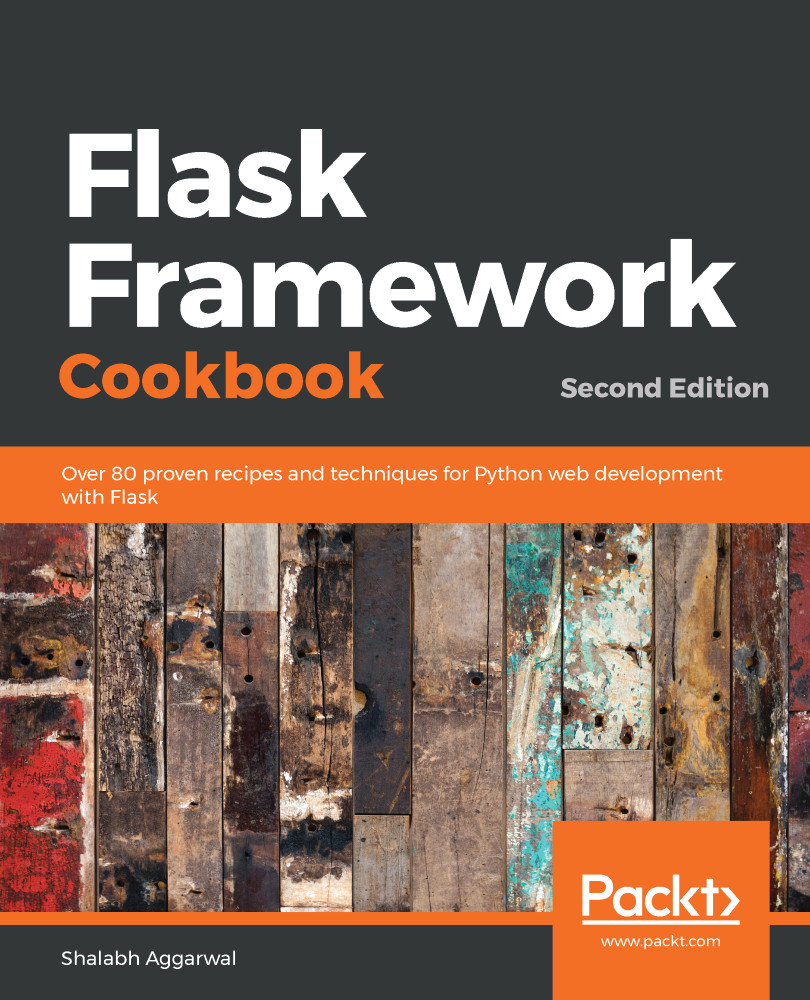
Flask Framework Cookbook
By:
Overview of this book
Flask, the lightweight Python web framework, is popular thanks to its powerful modular design that lets you build scalable web apps. With this recipe-based guide, you’ll explore modern solutions and best practices for Flask web development.
Updated to the latest version of Flask and Python 3, this second edition of Flask Framework Cookbook moves away from some of the old and obsolete libraries and introduces new recipes on cutting-edge technologies. You’ll discover different ways of using Flask to create, deploy, and manage microservices. This Flask Python book starts by covering the different configurations that a Flask application can make use of, and then helps you work with templates and learn about the ORM and view layers. You’ll also be able to write an admin interface and get to grips with debugging and logging errors. Finally, you’ll learn a variety of deployment and post-deployment techniques for platforms such as Apache, Tornado, and Heroku.
By the end of this book, you’ll have gained all the knowledge you need to confidently write Flask applications and scale them using standard industry practices.
Table of Contents (15 chapters)
Preface

 Free Chapter
Flask Configurations
Templating with Jinja2
Data Modeling in Flask
Working with Views
Webforms with WTForms
Authenticating in Flask
RESTful API Building
Admin Interface for Flask Apps
Internationalization and Localization
Debugging, Error Handling, and Testing
Deployment and Post-Deployment
Microservices and Containers

Other Tips and Tricks
Other Books You May Enjoy


