


-
Book Overview & Buying
-
Table Of Contents

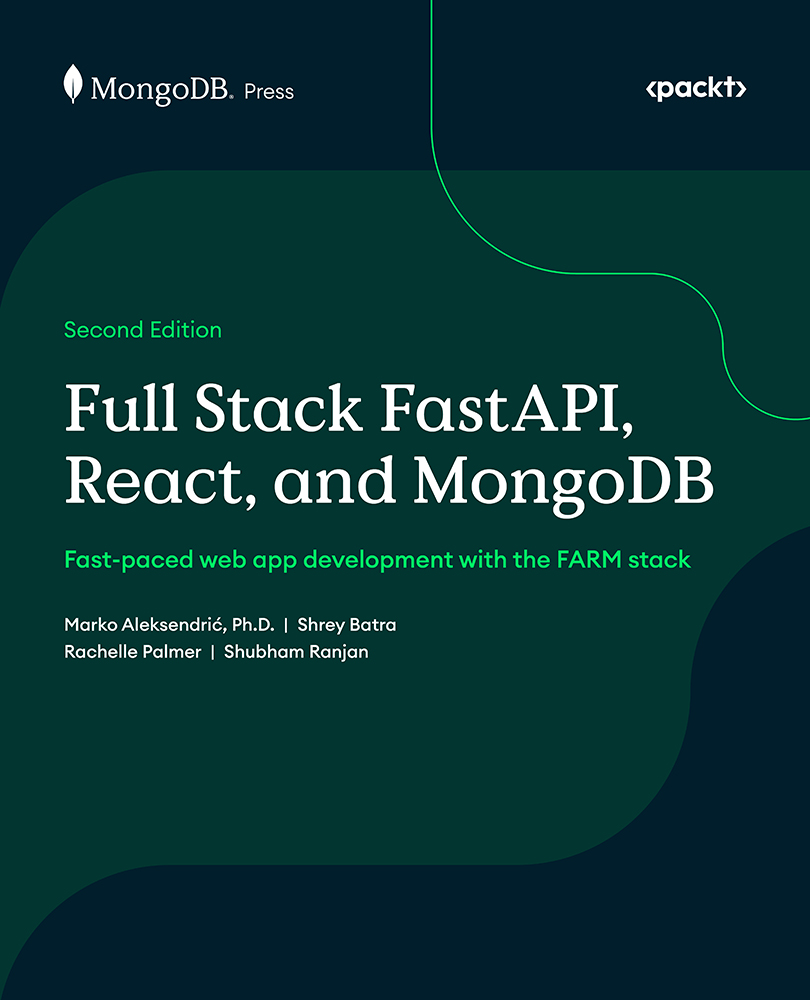
Full Stack FastAPI, React, and MongoDB - Second Edition
By :


Full Stack FastAPI, React, and MongoDB
By:
Overview of this book
Discover how to harness the power of the FARM stack—FastAPI, React, and MongoDB—to develop production-ready web applications of varying complexity. Written by a team of industry experts, including MongoDB champions and product leaders, this fast-paced, hands-on guide equips beginners with essential skills to build web applications efficiently.
Introducing each element of the stack, the book demonstrates how to seamlessly integrate them to create a medium-sized web application. You'll set up MongoDB as a document store, construct a simple API with FastAPI, and build an application using React. The guide also covers enhancing application security through authentication and authorization with JSON Web Tokens.
Beyond mastering the stack, you'll get to grips with integrating Large Language Models (like ChatGPT) for advanced functionality, such as automated email sending. Additionally, you'll learn how to make the most of Next.js 14, a robust full-stack framework offering improved developer experience.
By the end of the book, you'll have created functional applications and gained the foundation to explore diverse and more specialized domains, expanding your development horizons.
Table of Contents (14 chapters)
Preface


 Free Chapter
Chapter 1: Web Development and the FARM Stack
Chapter 2: Setting Up the Database with MongoDB
Chapter 3: Python Type Hints and Pydantic

Chapter 4: Getting Started with FastAPI
Chapter 5: Setting Up a React Workflow
Chapter 6: Authentication and Authorization
Chapter 7: Building a Backend with FastAPI
Chapter 8: Building the Frontend of the Application
Chapter 9: Third-Party Services Integration with FastAPI and Beanie
Chapter 10: Web Development with Next.js 14
Chapter 11: Useful Resources and Project Ideas
Index
Other Books You May Enjoy


