


-
Book Overview & Buying
-
Table Of Contents

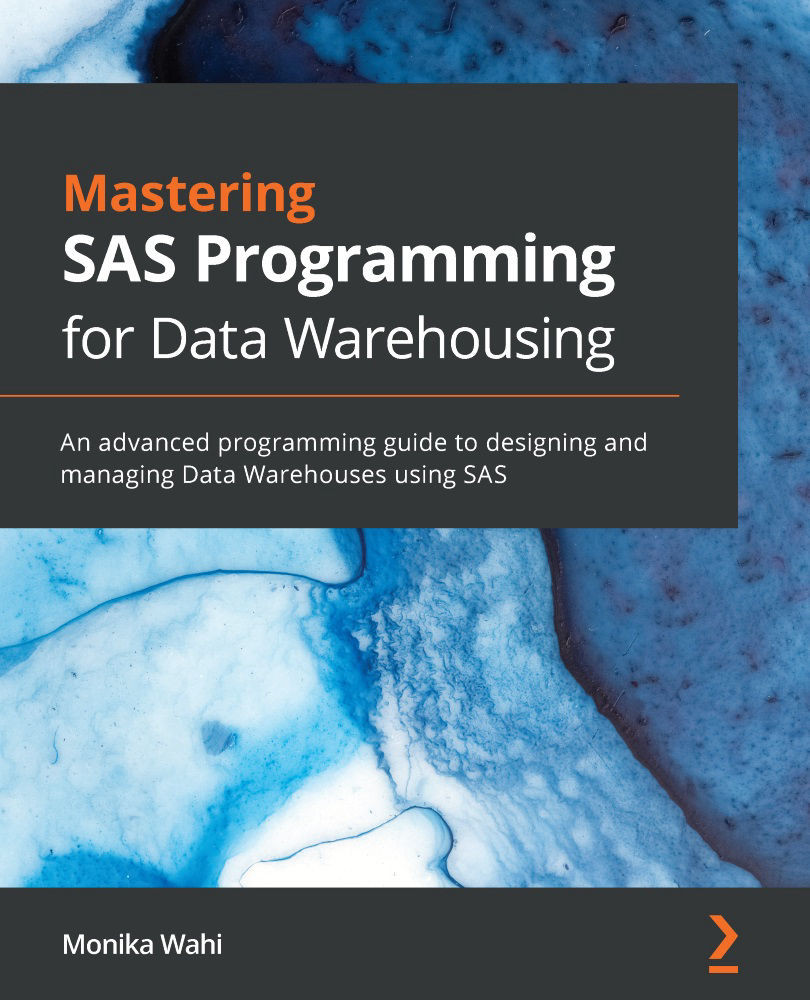
Mastering SAS Programming for Data Warehousing
By :


Mastering SAS Programming for Data Warehousing
By:
Overview of this book
SAS is used for various functions in the development and maintenance of data warehouses, thanks to its reputation of being able to handle ’big data’.
This book will help you learn the pros and cons of storing data in SAS. As you progress, you’ll understand how to document and design extract-transform-load (ETL) protocols for SAS processes. Later, you’ll focus on how the use of SAS arrays and macros can help standardize ETL. The book will also help you examine approaches for serving up data using SAS and explore how connecting SAS to other systems can enhance the data warehouse user’s experience.
By the end of this data management book, you will have a fundamental understanding of the roles SAS can play in a warehouse environment, and be able to choose wisely when designing your data warehousing processes involving SAS.
Table of Contents (18 chapters)
Preface


Section 1: Managing Data in a SAS Data Warehouse
 Free Chapter
Chapter 1: Using SAS in a Data Mart, Data Lake, or Data Warehouse
Chapter 2: Reading Big Data into SAS
Chapter 3: Helpful PROCs for Managing Data
Chapter 4: Managing ETL in SAS
Chapter 5: Managing Data Reporting in SAS

Section 2: Using SAS for Extract-Transform-Load (ETL) Protocols in a Data Warehouse
Chapter 6: Standardizing Coding Using SAS Arrays
Chapter 7: Designing and Developing ETL Code in SAS
Chapter 8: Using Macros to Automate ETL in SAS
Chapter 9: Debugging and Troubleshooting in SAS
Section 3: Using SAS When Serving Warehouse Data to Users
Chapter 10: Considering the User Needs of SAS Data Warehouses
Chapter 11: Connecting the SAS Data Warehouse to Other Systems
Chapter 12: Using the ODS for Visualization in SAS
Assessments
Other Books You May Enjoy


