


-
Book Overview & Buying
-
Table Of Contents

Dancing with Qubits
By :


Dancing with Qubits
By:
Overview of this book
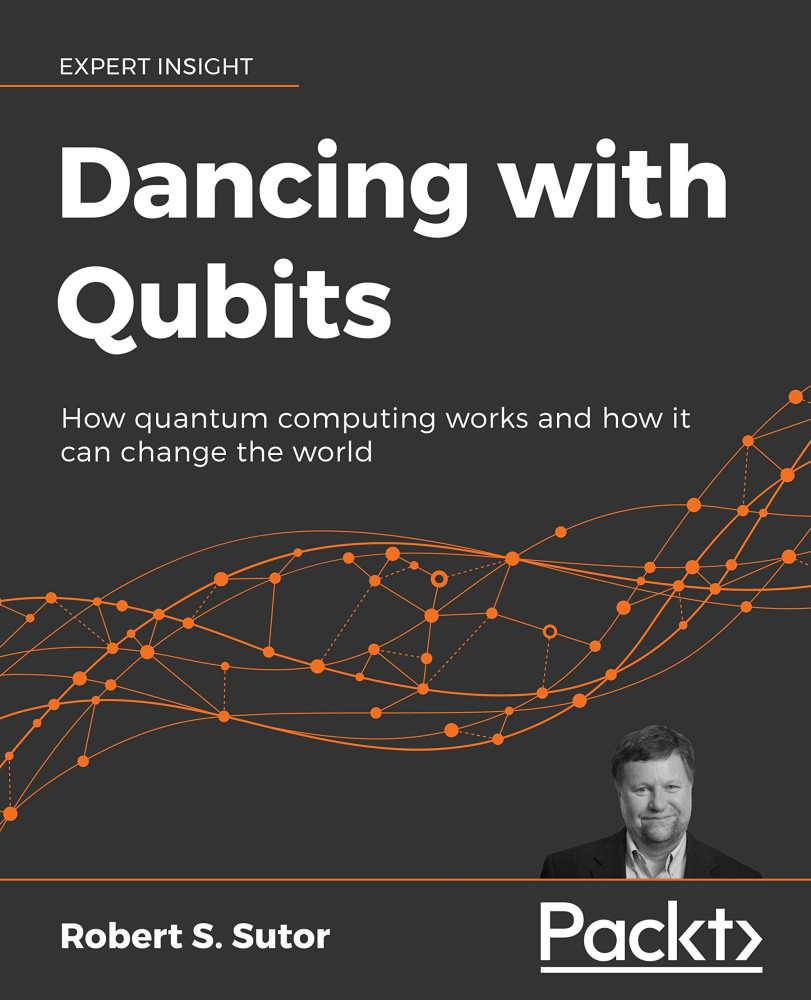
Quantum computing is making us change the way we think about computers. Quantum bits, a.k.a. qubits, can make it possible to solve problems that would otherwise be intractable with current computing technology.
Dancing with Qubits is a quantum computing textbook that starts with an overview of why quantum computing is so different from classical computing and describes several industry use cases where it can have a major impact. From there it moves on to a fuller description of classical computing and the mathematical underpinnings necessary to understand such concepts as superposition, entanglement, and interference. Next up is circuits and algorithms, both basic and more sophisticated. It then nicely moves on to provide a survey of the physics and engineering ideas behind how quantum computing hardware is built. Finally, the book looks to the future and gives you guidance on understanding how further developments will affect you.
Really understanding quantum computing requires a lot of math, and this book doesn't shy away from the necessary math concepts you'll need. Each topic is introduced and explained thoroughly, in clear English with helpful examples.
Table of Contents (16 chapters)
Preface


 Free Chapter
1 Why Quantum Computing?
2 They’re Not Old, They’re Classics
3 More Numbers than You Can Imagine
4 Planes and Circles and Spheres, Oh My
5 Dimensions
6 What Do You Mean ‘‘Probably’’?
7 One Qubit
8 Two Qubits, Three
9 Wiring Up the Circuits

10 From Circuits to Algorithms
11 Getting Physical
12 Questions about the Future
Afterword
Other Books You May Enjoy


