


Like the threading module, the multiprocessing module is also used to provide multitasking capabilities. The threading module is actually a bit deceptive: its implementation in Python is not actually for parallel processing, but instead for processing on a single core with time-sharing. The default Python implementation CPython, at interpreter level, is not thread safe. Whenever threads are used, there is a global interpreter lock (GIL) that is placed over the objects that are accessed within Python threads. This lock executes the threads in time-sharing manner, giving a small quantity of time to every thread, and thus there is no performance gain in our program. The multiprocessing module was developed, therefore, to provide parallel processing to the Python ecosystem. This decreases the execution time by spawning the load across multiple processor...
-
Book Overview & Buying
-
Table Of Contents

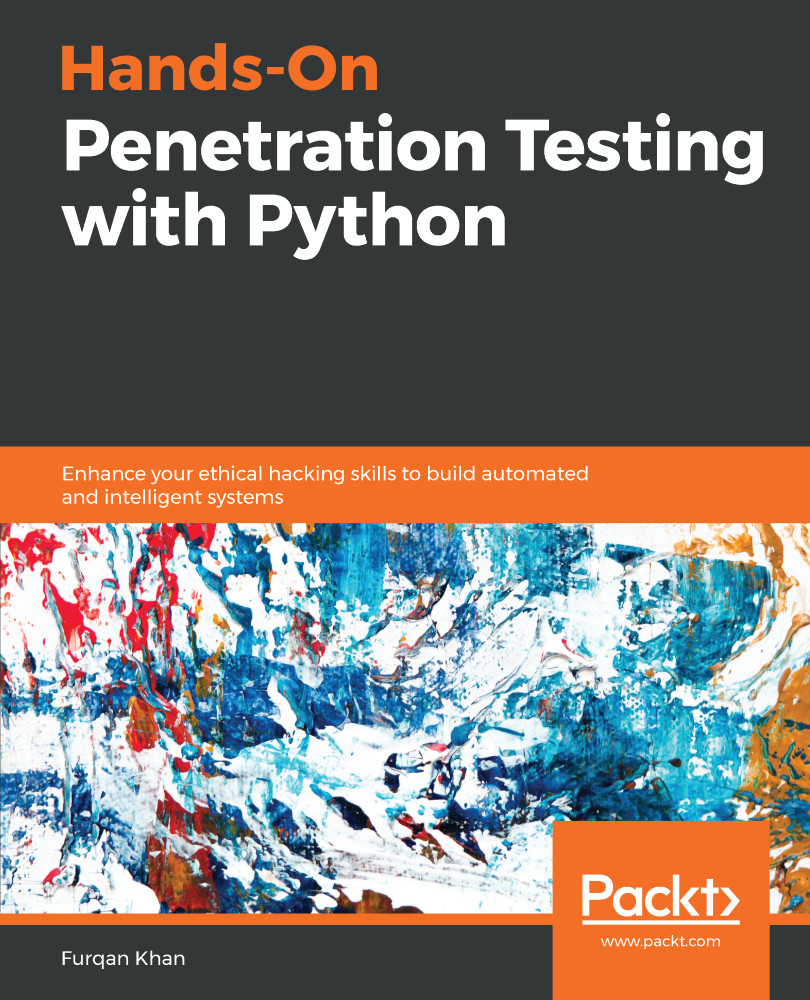
Hands-On Penetration Testing with Python
By :


Hands-On Penetration Testing with Python
By:
Overview of this book
With the current technological and infrastructural shift, penetration testing is no longer a process-oriented activity. Modern-day penetration testing demands lots of automation and innovation; the only language that dominates all its peers is Python. Given the huge number of tools written in Python, and its popularity in the penetration testing space, this language has always been the first choice for penetration testers.
Hands-On Penetration Testing with Python walks you through advanced Python programming constructs. Once you are familiar with the core concepts, you’ll explore the advanced uses of Python in the domain of penetration testing and optimization. You’ll then move on to understanding how Python, data science, and the cybersecurity ecosystem communicate with one another. In the concluding chapters, you’ll study exploit development, reverse engineering, and cybersecurity use cases that can be automated with Python.
By the end of this book, you’ll have acquired adequate skills to leverage Python as a helpful tool to pentest and secure infrastructure, while also creating your own custom exploits.
Table of Contents (18 chapters)
Preface

 Free Chapter
Introduction to Python
Building Python Scripts
Concept Handling
Advanced Python Modules

Vulnerability Scanner Python - Part 1
Vulnerability Scanner Python - Part 2
Machine Learning and Cybersecurity
Automating Web Application Scanning - Part 1
Automated Web Application Scanning - Part 2
Building a Custom Crawler
Reverse Engineering Linux Applications
Reverse Engineering Windows Applications
Exploit Development
Cyber Threat Intelligence
Other Wonders of Python
Assessments
Other Books You May Enjoy


