


-
Book Overview & Buying
-
Table Of Contents

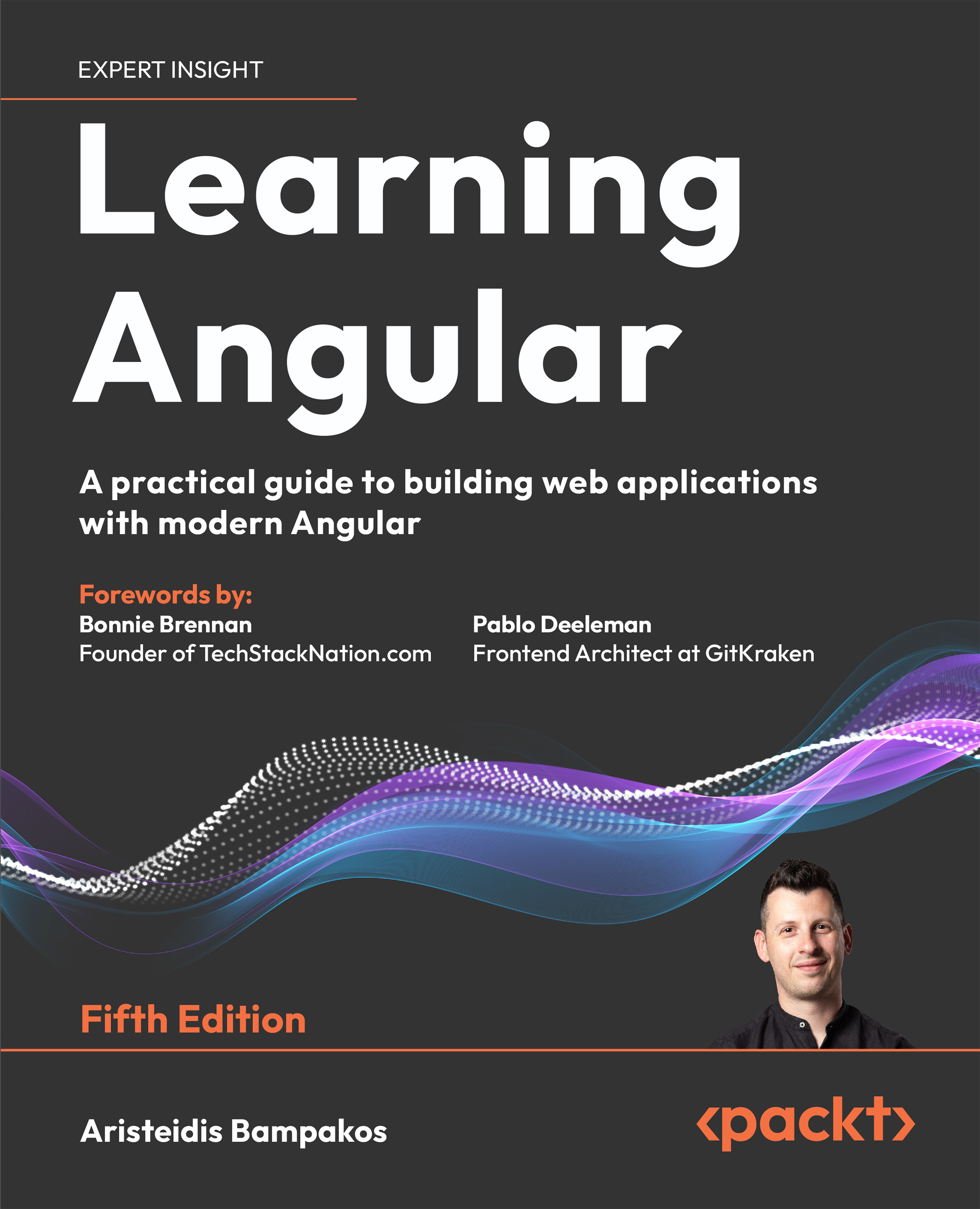
Learning Angular - Fifth Edition
By :


Learning Angular
By:
Overview of this book
Dive into Angular Development — With the Most Trusted Guide in the Industry
Angular is one of the most powerful and widely adopted JavaScript frameworks, and Learning Angular is your go-to guide for building real-world, production-ready web applications. Written by a seasoned Angular developer and Google Developer Expert, this hands-on book takes you through every step of modern frontend development.
This edition reflects the latest “Angular Renaissance,” covering standalone components, Angular Signals, and the new control flow syntax, while showing you how to integrate with legacy code. A new chapter also explores boosting performance with server-side rendering (SSR) and hydration.
More than just a tutorial, Learning Angular builds your confidence chapter by chapter from scaffolding your first project to deploying it, with TypeScript best practices throughout.
Whether you’re new to Angular or sharpening your skills, this book provides a complete path to becoming a productive, future-ready Angular developer. By the end, you’ll be able to build Angular apps from scratch, with clarity, structure, and confidence.
Table of Contents (19 chapters)
Preface


 Free Chapter
Building Your First Angular Application
Introduction to TypeScript
Structuring User Interfaces with Components
Enriching Applications Using Pipes and Directives
Managing Complex Tasks with Services
Reactive Patterns in Angular
Tracking Application State with Signals
Communicating with Data Services over HTTP
Navigating through Applications with Routing
Collecting User Data with Forms
Handling Application Errors

Introduction to Angular Material
Unit Testing Angular Applications
Bringing Applications to Production
Optimizing Application Performance
Unlock Your Book’s Exclusive Benefits
Other Books You May Enjoy
Index


