Sign In Start Free Trial
Account

Add to playlist

Create a Playlist

Modal Close icon
You need to login to use this feature.
  • Book Overview & Buying Ubuntu Server Cookbook
  • Table Of Contents Toc
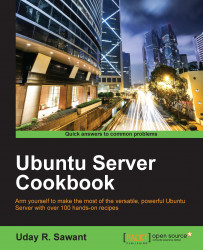
Ubuntu Server Cookbook

Ubuntu Server Cookbook

By : Uday Sawant
5 (2)
close
close
Ubuntu Server Cookbook

Ubuntu Server Cookbook

5 (2)
By: Uday Sawant

Overview of this book

Ubuntu is one of the most secure operating systems and defines the highest level of security as compared other operating system. Ubuntu server is a popular Linux distribution and the first choice when deploying a Linux server. It can be used with a $35 Raspberry Pi to top-notch, thousand-dollar-per-month cloud hardware. Built with lists that there are 4 million + websites built using Ubuntu. With its easy-to-use package management tools and availability of well-known packages, we can quickly set up our own services such as web servers and database servers using Ubuntu. This book will help you develop the skills required to set up high performance and secure services with open source tools. Starting from user management and an in-depth look at networking, we then move on to cover the installation and management of web servers and database servers, as well as load balancing various services. You will quickly learn to set up your own cloud and minimize costs and efforts with application containers. Next, you will get to grips with setting up a secure real-time communication system. Finally, we’ll explore source code hosting and various collaboration tools. By the end of this book, you will be able to make the most of Ubuntu’s advanced functionalities.
Table of Contents (16 chapters)
close
close
15
Index

Managing LXD containers


We have installed LXD and deployed our first container with it. In this recipe, we will learn various LXD commands that manage the container lifecycle.

Getting ready…

Make sure that you have followed the previous recipes and created your first container.

How to do it…

Follow these steps to manage LXD containers:

  1. Before we start with container management, we will need a running container. If you have been following the previous recipes, you should already have a brand new container running on your system. If your container is not already running, you can start it with the lxc start command:

    $ lxc start c1
    
  2. To check the current state of a container, use lxc list, as follows:

    $ lxc list c1
    

    This command should list only containers that have c1 in their name.

  3. You can also set the container to start automatically. Set the boot.autostart configuration option to true and your container will start automatically on system boot. Additionally, you can specify a delay before autostart...

CONTINUE READING
83
Tech Concepts
36
Programming languages
73
Tech Tools
Icon Unlimited access to the largest independent learning library in tech of over 8,000 expert-authored tech books and videos.
Icon Innovative learning tools, including AI book assistants, code context explainers, and text-to-speech.
Icon 50+ new titles added per month and exclusive early access to books as they are being written.
Ubuntu Server Cookbook
notes
bookmark Notes and Bookmarks search Search in title playlist Add to playlist download Download options font-size Font size

Change the font size

margin-width Margin width

Change margin width

day-mode Day/Sepia/Night Modes

Change background colour

Close icon Search
Country selected

Close icon Your notes and bookmarks

Confirmation

Modal Close icon
claim successful

Buy this book with your credits?

Modal Close icon
Are you sure you want to buy this book with one of your credits?
Close
YES, BUY

Submit Your Feedback

Modal Close icon
Modal Close icon
Modal Close icon