
Sign In Start Free Trial
Account

Add to playlist

Create a Playlist

Modal Close icon
You need to login to use this feature.
  • Book Overview & Buying PostgreSQL 10 Administration Cookbook
  • Table Of Contents Toc
  • Feedback & Rating feedback
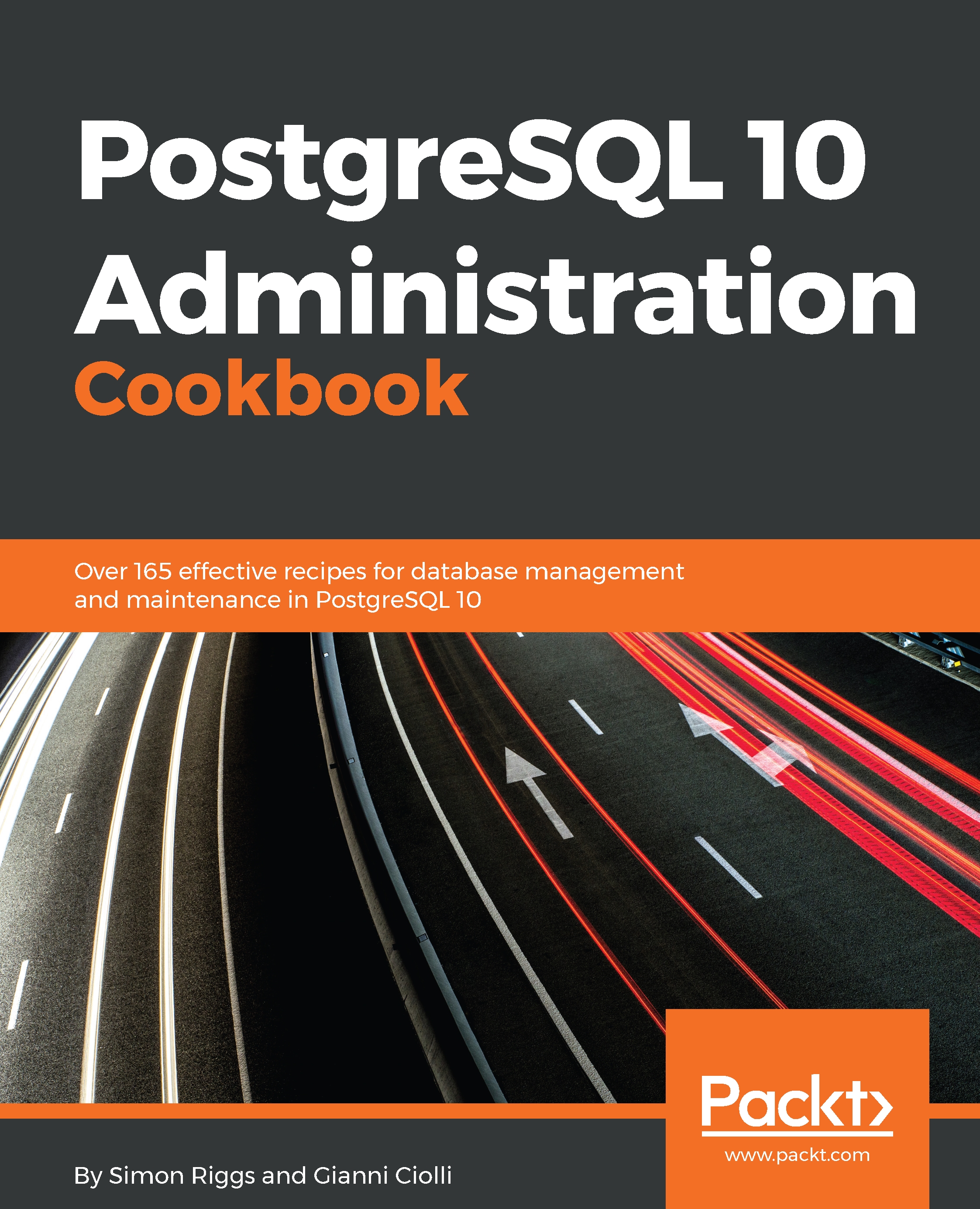
PostgreSQL 10 Administration Cookbook

PostgreSQL 10 Administration Cookbook - Fourth Edition

close
close
PostgreSQL 10 Administration Cookbook

PostgreSQL 10 Administration Cookbook

Overview of this book

PostgreSQL is a powerful, open source database management system with an enviable reputation for high performance and stability. With many new features in its arsenal, PostgreSQL 10 allows users to scale up their PostgreSQL infrastructure. This book takes a step-by-step, recipe-based approach to effective PostgreSQL administration. Throughout this book, you will be introduced to these new features such as logical replication, native table partitioning, additional query parallelism, and much more. You will learn how to tackle a variety of problems that are basically the pain points for any database administrator - from creating tables to managing views, from improving performance to securing your database. More importantly, the book pays special attention to topics such as monitoring roles, backup, and recovery of your PostgreSQL 10 database, ensuring high availability, concurrency, and replication. By the end of this book, you will know everything you need to know to be the go-to PostgreSQL expert in your organization.
Table of Contents (14 chapters)
close
close

Accessing objects in other PostgreSQL databases

Sometimes, you may want to access data in other PostgreSQL databases. The reasons may be as follows:

  • You have more than one database server, and you need to extract data (such as reference) from one server and load it into the other.
  • You want to access data that is in a different database on the same database server, which was split for administrative purposes.
  • You want to perform some changes that you do not wish to rollback in the event of an error or transaction abort. These are known as function side-effects or autonomous transactions.

You might also be considering this because you are exploring the scale out, sharding, or load balancing approaches. If so, read the last part of this recipe, the See also section, and then skip to Chapter 12, Replication and Upgrades.

PostgreSQL includes two separate mechanisms for accessing...
Visually different images
CONTINUE READING
83
Tech Concepts
36
Programming languages
73
Tech Tools
Icon Unlimited access to the largest independent learning library in tech of over 8,000 expert-authored tech books and videos.
Icon Innovative learning tools, including AI book assistants, code context explainers, and text-to-speech.
Icon 50+ new titles added per month and exclusive early access to books as they are being written.
PostgreSQL 10 Administration Cookbook
notes
bookmark Notes and Bookmarks search Search in title playlist Add to playlist download Download options font-size Font size

Change the font size

margin-width Margin width

Change margin width

day-mode Day/Sepia/Night Modes

Change background colour

Close icon Search
Country selected

Close icon Your notes and bookmarks

Confirmation

Modal Close icon
claim successful

Buy this book with your credits?

Modal Close icon
Are you sure you want to buy this book with one of your credits?
Close
YES, BUY

Submit Your Feedback

Modal Close icon
Modal Close icon
Modal Close icon