Sign In Start Free Trial
Account

Add to playlist

Create a Playlist

Modal Close icon
You need to login to use this feature.
  • Book Overview & Buying Fundamentals for Self-Taught Programmers
  • Table Of Contents Toc
  • Feedback & Rating feedback
Fundamentals for Self-Taught Programmers

Fundamentals for Self-Taught Programmers

By : Greenaway
5 (8)
close
close
Fundamentals for Self-Taught Programmers

Fundamentals for Self-Taught Programmers

5 (8)
By: Greenaway

Overview of this book

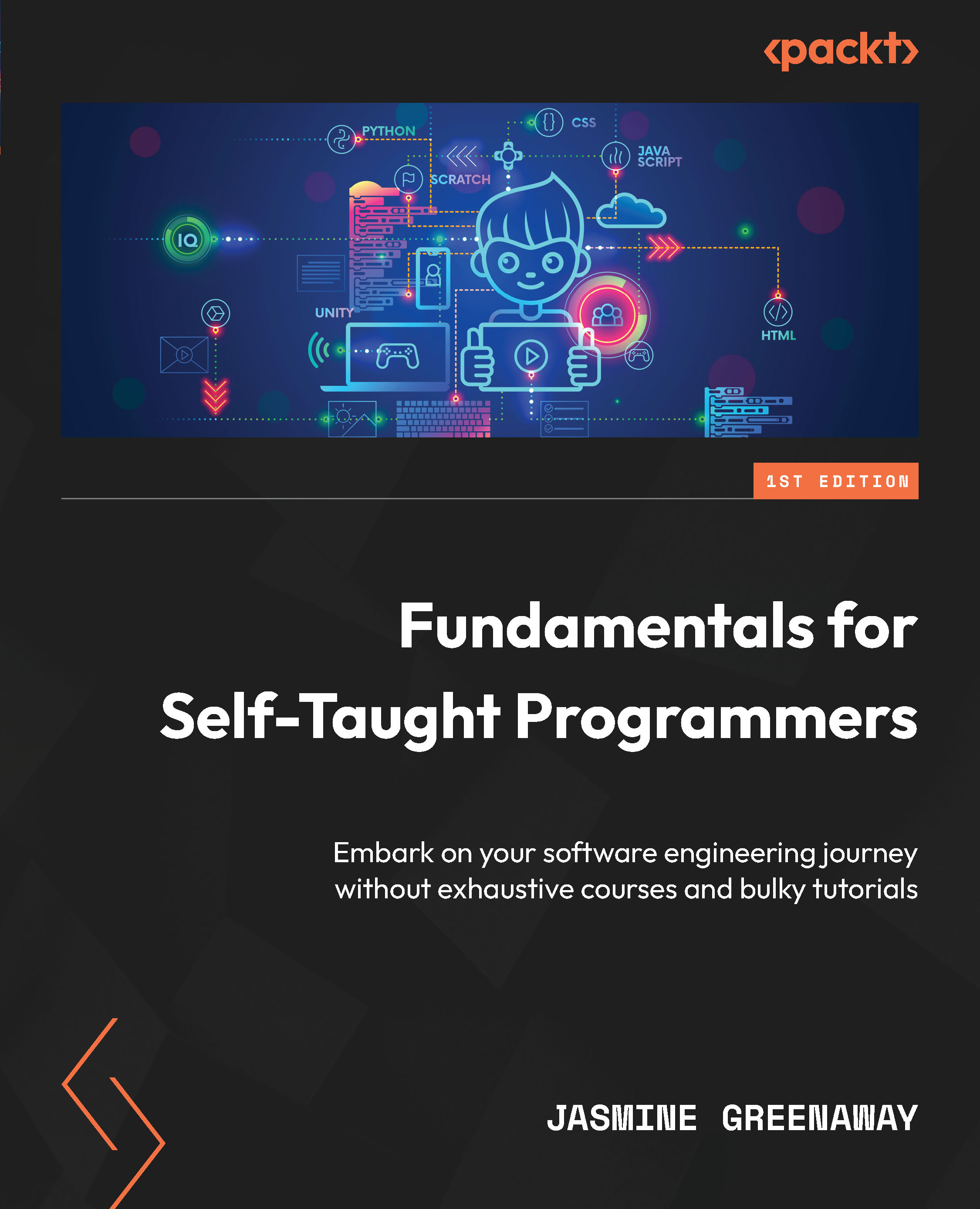
Software engineering is a set of techniques, including programming, within the computer science discipline associated with the development of software products. This practical guide to software engineering will enable aspiring and new developers to satisfy their curiosity about the industry and become ready to learn more about the basics before beginning to explore programming languages, along with helping junior and upcoming developers to effectively apply their knowledge in the field. The book begins by providing you with a comprehensive introduction to software engineering, helping you gain a clear, holistic understanding of its various sub-fields. As you advance, you’ll get to grips with the fundamentals of software engineering, such as flow control, data structures and algorithms. The book also introduces you to C# and guides you in writing your first program. The concluding chapters will cover case studies, including people working in the industry in different engineering roles, as well as interview tips and tricks and coding best practices. By the end of this programming book, you'll have gained practical knowledge of the implementation and associated methodologies in programming that will have you up and running and productive in no time.
Table of Contents (20 chapters)
close
close
1
Part 1: Software Engineering Basics
5
Part 2: Introduction to Programming
13
Part 3: Software Engineering – the Profession

Defining Software Engineering

Think of one of your favorite or one of the most memorable types of software that you have used or use often, something that runs on your mobile phone, computer, browser, or game console. Imagine the first day the team that created it got together to get started on it; how did they go from a blank slate on day 1 to creating something you enjoy using? The team could have started coding at the beginning, but how would they know what they were building? There are many questions to answer before a team can get started on a software project. Software that serves the purpose it was intended for, for a long time, and without failure can be defined as high-quality. Building high-quality software consists of thoughtful decisions to make sure these requirements are met. The creators of your favorite software probably didn’t immediately put all their efforts into writing the code on that first day. Instead, they likely carefully planned how to create and deliver software that someone like you would enjoy. The effort that the team took to make quality software is a discipline within computer science called software engineering.

You may now be wondering how creating software relates to engineering. This chapter will answer this question by defining computer science and software engineering and exploring the relationship between the two. Next, we’ll dive further into software engineering by exploring common practices within the discipline.

This chapter will cover the following topics:

  • Learning what computer science is
  • An introduction to software engineering
  • Reviewing why software engineering is so named by comparing it to another engineering discipline
  • The six phases of the software engineering process and the challenges faced by software engineers in each phase

By the end of this chapter, you will have an understanding of the difference between computer science and software engineering and you’ll learn about the six phases of the software engineering process. You’ll also understand why building software is an engineered process and how software engineers contribute to a project before, during, and after writing code.

Visually different images
CONTINUE READING
83
Tech Concepts
36
Programming languages
73
Tech Tools
Icon Unlimited access to the largest independent learning library in tech of over 8,000 expert-authored tech books and videos.
Icon Innovative learning tools, including AI book assistants, code context explainers, and text-to-speech.
Icon 50+ new titles added per month and exclusive early access to books as they are being written.
Fundamentals for Self-Taught Programmers
notes
bookmark Notes and Bookmarks search Search in title playlist Add to playlist download Download options font-size Font size

Change the font size

margin-width Margin width

Change margin width

day-mode Day/Sepia/Night Modes

Change background colour

Close icon Search
Country selected

Close icon Your notes and bookmarks

Confirmation

Modal Close icon
claim successful

Buy this book with your credits?

Modal Close icon
Are you sure you want to buy this book with one of your credits?
Close
YES, BUY

Submit Your Feedback

Modal Close icon
Modal Close icon
Modal Close icon