


-
Book Overview & Buying
-
Table Of Contents

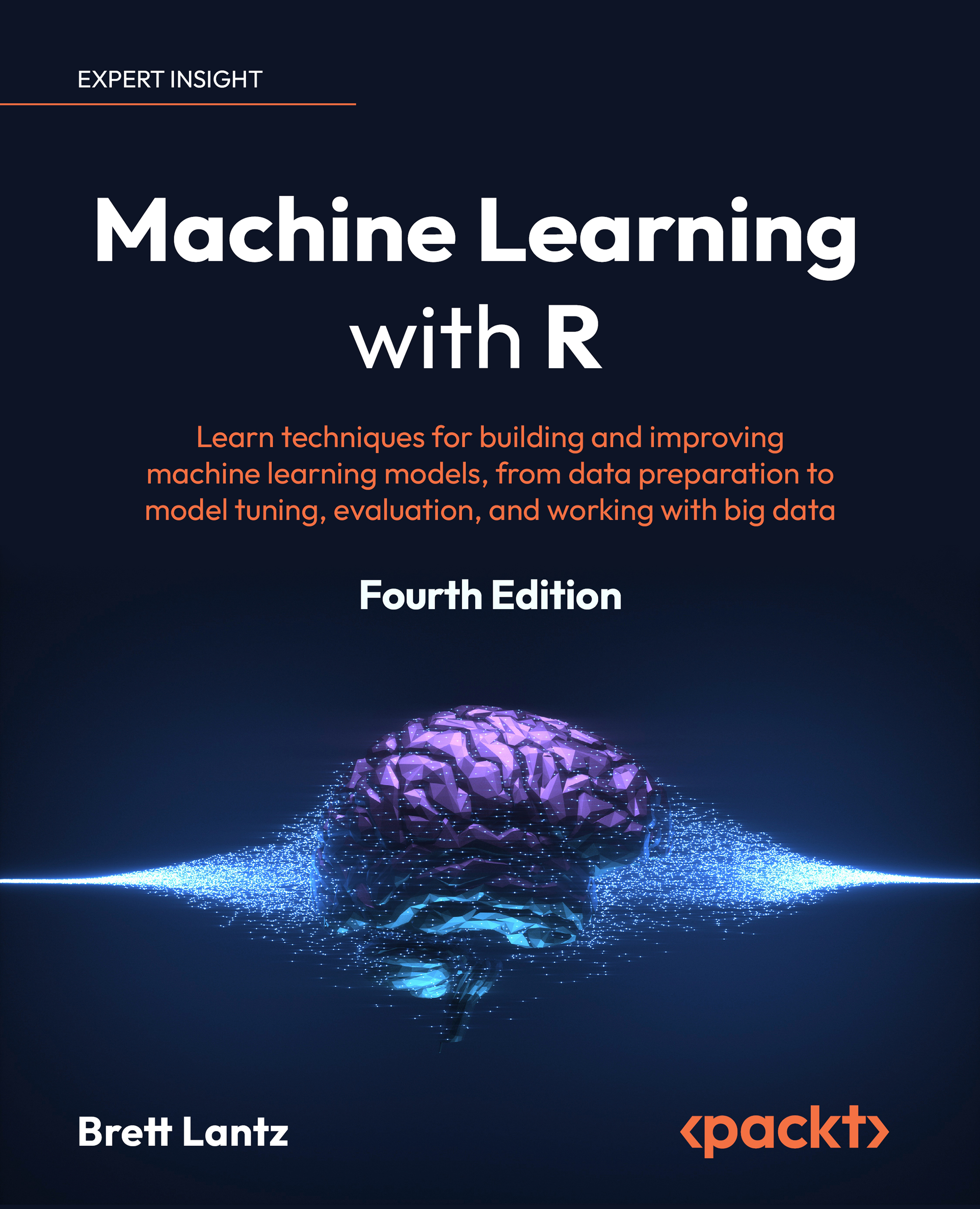
Machine Learning with R - Fourth Edition
By :


Machine Learning with R
By:
Overview of this book
Dive into R with this data science guide on machine learning (ML). Machine Learning with R, Fourth Edition, takes you through classification methods like nearest neighbor and Naive Bayes and regression modeling, from simple linear to logistic.
Dive into practical deep learning with neural networks and support vector machines and unearth valuable insights from complex data sets with market basket analysis. Learn how to unlock hidden patterns within your data using k-means clustering.
With three new chapters on data, you’ll hone your skills in advanced data preparation, mastering feature engineering, and tackling challenging data scenarios. This book helps you conquer high-dimensionality, sparsity, and imbalanced data with confidence. Navigate the complexities of big data with ease, harnessing the power of parallel computing and leveraging GPU resources for faster insights.
Elevate your understanding of model performance evaluation, moving beyond accuracy metrics. With a new chapter on building better learners, you’ll pick up techniques that top teams use to improve model performance with ensemble methods and innovative model stacking and blending techniques.
Machine Learning with R, Fourth Edition, equips you with the tools and knowledge to tackle even the most formidable data challenges. Unlock the full potential of machine learning and become a true master of the craft.
Table of Contents (18 chapters)

Introducing Machine Learning

 Free Chapter
Managing and Understanding Data

Lazy Learning – Classification Using Nearest Neighbors
Probabilistic Learning – Classification Using Naive Bayes
Divide and Conquer – Classification Using Decision Trees and Rules
Forecasting Numeric Data – Regression Methods
Black-Box Methods – Neural Networks and Support Vector Machines
Finding Patterns – Market Basket Analysis Using Association Rules
Finding Groups of Data – Clustering with k-means
Evaluating Model Performance
Being Successful with Machine Learning
Advanced Data Preparation
Challenging Data – Too Much, Too Little, Too Complex
Building Better Learners
Making Use of Big Data
Other Books You May Enjoy
Index


