


-
Book Overview & Buying

-
Table Of Contents

Time Series with PyTorch
By :


Time Series with PyTorch
By:
Overview of this book
Neural networks are powerful tools for time-series forecasting, but applying them effectively requires both practical experience and a clear understanding of architectures, training strategies, and evaluation methods. This book brings these ideas together in a structured and practical way.
Starting with PyTorch fundamentals, you will build neural networks from scratch and progress through recurrent networks, attention mechanisms, and transformers before exploring forecasting architectures such as N-BEATS, N-HiTS, and the Temporal Fusion Transformer. Along the way, you will learn robust hyperparameter tuning, conformal prediction for uncertainty estimation, and reliable evaluation practices.
Unlike most forecasting books, this text also explores topics often overlooked or treated separately, including transfer learning across collections of series, synthetic data generation with diffusion models, and self-supervised representation learning. Beyond forecasting, later chapters cover classification, clustering, anomaly detection, and embeddings for large-scale time-series modeling.
Throughout, the focus is pragmatic: theory is reinforced through experimentation and implementation so you can apply these methods confidently to real-world time-series problems.
Table of Contents (22 chapters)
Preface


 Free Chapter
Time Series for Everyone
The Challenge of Time Series
Evaluating Time-Series Models
PyTorch Fundamentals
Simple Neural Architecture
Optimization
Conformal Prediction
Recurrent Neural Networks
Transformers
Other Neural Structures
Transfer Learning and Global Modelling
Synthetic Time Series Data
Diffusion Models
Time Series Classification
Time Series Clustering
Embeddings for Time Series
Supervised and Unsupervised Anomaly Detection

Self-Supervised Learning for Time Series
Unlock Your Exclusive Benefits
Other Books You May Enjoy
Index
 ) we compute: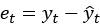
 is a model’s predicted value given available context: seasonality, trend, price, promotional depth. The...


