


-
Book Overview & Buying
-
Table Of Contents

Distributed Data Systems with Azure Databricks
By :


Distributed Data Systems with Azure Databricks
By:
Overview of this book
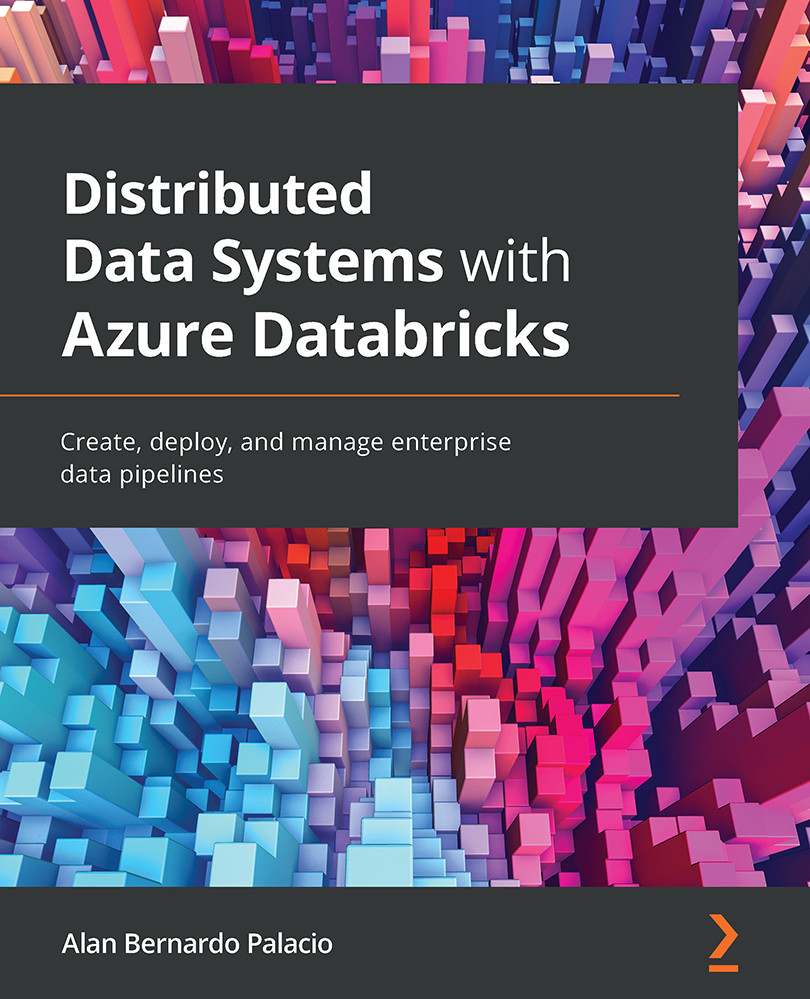
Microsoft Azure Databricks helps you to harness the power of distributed computing and apply it to create robust data pipelines, along with training and deploying machine learning and deep learning models. Databricks' advanced features enable developers to process, transform, and explore data. Distributed Data Systems with Azure Databricks will help you to put your knowledge of Databricks to work to create big data pipelines.
The book provides a hands-on approach to implementing Azure Databricks and its associated methodologies that will make you productive in no time. Complete with detailed explanations of essential concepts, practical examples, and self-assessment questions, you’ll begin with a quick introduction to Databricks core functionalities, before performing distributed model training and inference using TensorFlow and Spark MLlib. As you advance, you’ll explore MLflow Model Serving on Azure Databricks and implement distributed training pipelines using HorovodRunner in Databricks.
Finally, you’ll discover how to transform, use, and obtain insights from massive amounts of data to train predictive models and create entire fully working data pipelines. By the end of this MS Azure book, you’ll have gained a solid understanding of how to work with Databricks to create and manage an entire big data pipeline.
Table of Contents (17 chapters)
Preface


Section 1: Introducing Databricks
 Free Chapter
Chapter 1: Introduction to Azure Databricks
Chapter 2: Creating an Azure Databricks Workspace
Section 2: Data Pipelines with Databricks
Chapter 3: Creating ETL Operations with Azure Databricks
Chapter 4: Delta Lake with Azure Databricks
Chapter 5: Introducing Delta Engine
Chapter 6: Introducing Structured Streaming
Section 3: Machine and Deep Learning with Databricks
Chapter 7: Using Python Libraries in Azure Databricks

Chapter 8: Databricks Runtime for Machine Learning
Chapter 9: Databricks Runtime for Deep Learning
Chapter 10: Model Tracking and Tuning in Azure Databricks
Chapter 11: Managing and Serving Models with MLflow and MLeap
Chapter 12: Distributed Deep Learning in Azure Databricks


