


-
Book Overview & Buying
-
Table Of Contents

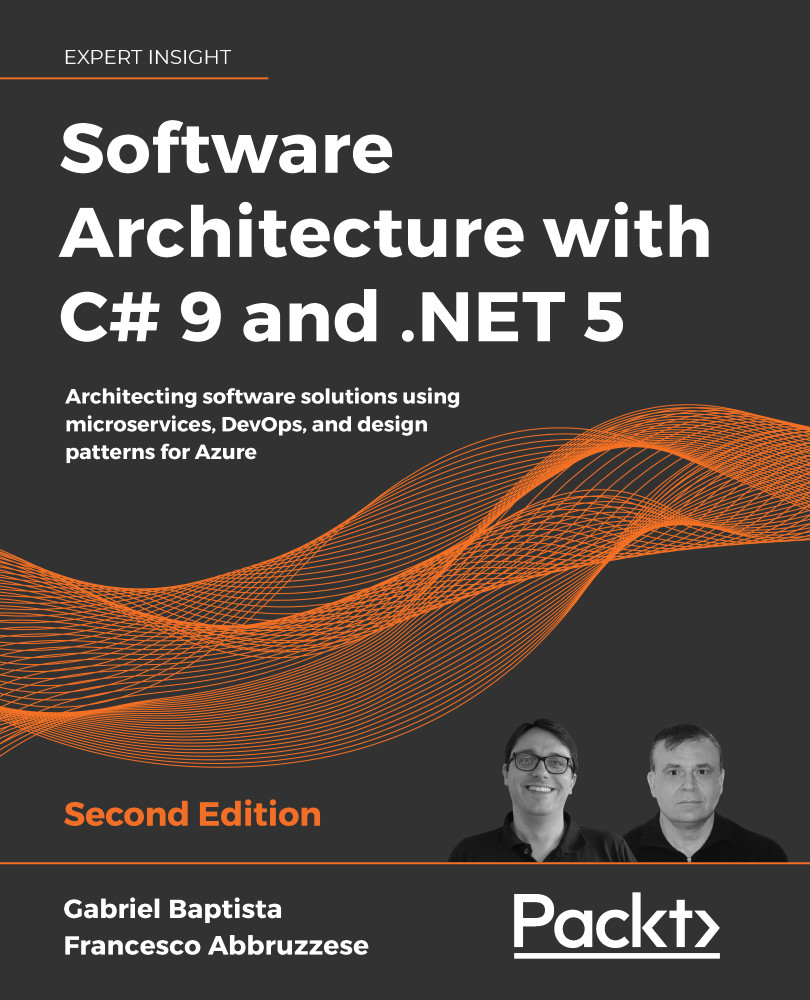
Software Architecture with C# 9 and .NET 5 - Second Edition
By :


Software Architecture with C# 9 and .NET 5
By:
Overview of this book
Software architecture is the practice of implementing structures and systems that streamline the software development process and improve the quality of an app. This fully revised and expanded second edition, featuring the latest features of .NET 5 and C# 9, enables you to acquire the key skills, knowledge, and best practices required to become an effective software architect.
This second edition features additional explanation of the principles of Software architecture, including new chapters on Azure Service Fabric, Kubernetes, and Blazor. It also includes more discussion on security, microservices, and DevOps, including GitHub deployments for the software development cycle.
You will begin by understanding how to transform user requirements into architectural needs and exploring the differences between functional and non-functional requirements. Next, you will explore how to carefully choose a cloud solution for your infrastructure, along with the factors that will help you manage your app in a cloud-based environment.
Finally, you will discover software design patterns and various software approaches that will allow you to solve common problems faced during development.
By the end of this book, you will be able to build and deliver highly scalable enterprise-ready apps that meet your organization’s business requirements.
Table of Contents (26 chapters)
Preface


Understanding the Importance of Software Architecture
 Free Chapter
Non-Functional Requirements
Documenting Requirements with Azure DevOps
Deciding the Best Cloud-Based Solution
Applying a Microservice Architecture to Your Enterprise Application
Azure Service Fabric
Azure Kubernetes Service
Interacting with Data in C# – Entity Framework Core

How to Choose Your Data Storage in the Cloud
Working with Azure Functions
Design Patterns and .NET 5 Implementation
Understanding the Different Domains in Software Solutions
Implementing Code Reusability in C# 9
Applying Service-Oriented Architectures with .NET Core
Presenting ASP.NET Core MVC
Blazor WebAssembly
Best Practices in Coding C# 9
Testing Your Code with Unit Test Cases and TDD
Using Tools to Write Better Code
Understanding DevOps Principles
Challenges of Applying CI Scenarios
Automation for Functional Tests
Answers
Another Book You May Enjoy
Index


