


-
Book Overview & Buying
-
Table Of Contents

Solutions Architect's Handbook - Second Edition
By :


Solutions Architect's Handbook
By:
Overview of this book
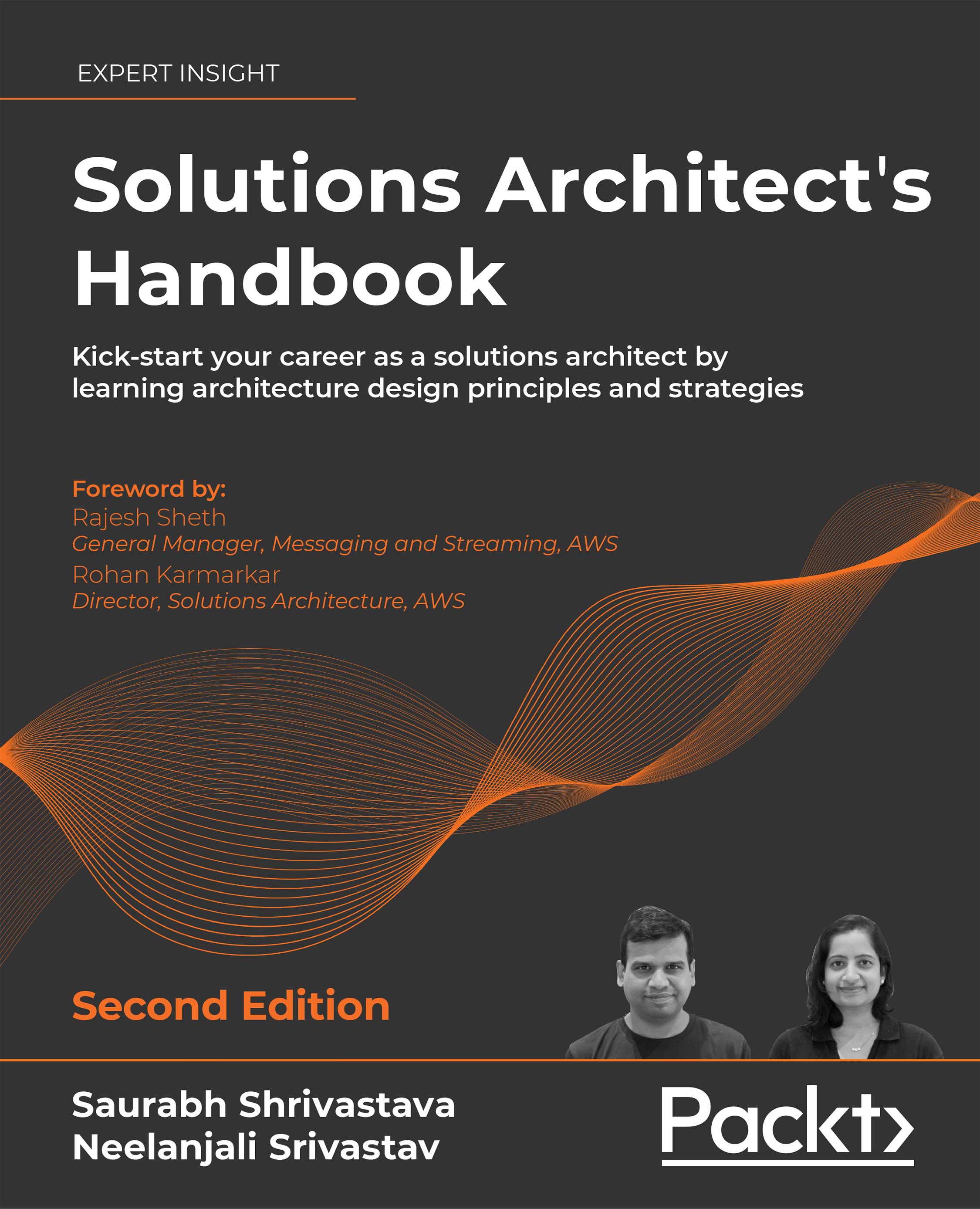
Becoming a solutions architect requires a hands-on approach, and this edition of the Solutions Architect's Handbook brings exactly that. This handbook will teach you how to create robust, scalable, and fault-tolerant solutions and next-generation architecture designs in a cloud environment. It will also help you build effective product strategies for your business and implement them from start to finish.
This new edition features additional chapters on disruptive technologies, such as Internet of Things (IoT), quantum computing, data engineering, and machine learning. It also includes updated discussions on cloud-native architecture, blockchain data storage, and mainframe modernization with public cloud.
The Solutions Architect's Handbook provides an understanding of solution architecture and how it fits into an agile enterprise environment. It will take you through the journey of solution architecture design by providing detailed knowledge of design pillars, advanced design patterns, anti-patterns, and the cloud-native aspects of modern software design.
By the end of this handbook, you'll have learned the techniques needed to create efficient architecture designs that meet your business requirements.
Table of Contents (22 chapters)
Preface


 Free Chapter
The Meaning of Solution Architecture
Solution Architects in an Organization
Attributes of the Solution Architecture
Principles of Solution Architecture Design

Cloud Migration and Hybrid Cloud Architecture Design
Solution Architecture Design Patterns
Performance Considerations
Security Considerations
Architectural Reliability Considerations
Operational Excellence Considerations
Cost Considerations
DevOps and Solution Architecture Framework
Data Engineering for Solution Architecture
Machine Learning Architecture
The Internet of Things Architecture
Quantum Computing
Rearchitecting Legacy Systems
Solution Architecture Document
Learning Soft Skills to Become a Better Solution Architect
Other Books You May Enjoy
Index


